 January 2018 in “Stem cell biology and regenerative medicine”
 The conclusion is that the nuclear lamina and LINC complex in skin cells respond to mechanical signals, affecting gene expression and cell differentiation, which is important for skin health and can impact skin diseases.
A 44-year-old woman with Down's syndrome was diagnosed with both rheumatoid and gouty arthritis and treated with multiple medications.
 2 citations
,
September 2022
2 citations
,
September 2022 The PER3 rs772027021 SNP may cause mild skin pigmentation changes in a new subtype of dyschromatosis universalis hereditaria.
 1 citations
,
January 2013 in “Springer eBooks”
1 citations
,
January 2013 in “Springer eBooks” The document concludes that skin and nail changes can indicate various underlying health conditions.
 1 citations
,
January 2010 in “Elsevier eBooks”
1 citations
,
January 2010 in “Elsevier eBooks” Any drug can cause skin reactions, but antibiotics, NSAIDs, and psychotropic drugs are more common, with some reactions being life-threatening.
There is no cure for myotonic dystrophy type 1, so treatment focuses on managing symptoms and complications.
 199 citations
,
April 2010 in “Nature”
199 citations
,
April 2010 in “Nature” A gene called APCDD1, which controls hair growth, is found to be faulty in a type of hair loss called hereditary hypotrichosis simplex.
 65 citations
,
September 2010 in “Journal of the Neurological Sciences”
65 citations
,
September 2010 in “Journal of the Neurological Sciences” Kennedy's disease leads to muscle weakness and sensory issues, has no cure but manageable symptoms, and future treatments look promising.
 21 citations
,
August 2011 in “Clinics in Dermatology”
21 citations
,
August 2011 in “Clinics in Dermatology” Looking at skin can help find and treat serious diseases early.
 13 citations
,
September 2011 in “Archives of dermatology”
13 citations
,
September 2011 in “Archives of dermatology” A patient with steroid sulfatase deficiency had a unique hair pattern and a brain malformation not previously linked to the condition.
 December 2025 in “Cureus”
 Zinc supplements effectively treat inherited zinc deficiency in infants.
 1 citations
,
March 2015 in “Journal of the European Academy of Dermatology and Venereology”
1 citations
,
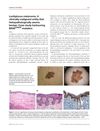
March 2015 in “Journal of the European Academy of Dermatology and Venereology” A clinically suspected melanoma appeared benign under the microscope but was confirmed by specific tests and a rare mutation.
 80 citations
,
March 2004 in “Neuropediatrics”
80 citations
,
March 2004 in “Neuropediatrics” Coats' Plus is a genetic disorder with eye abnormalities, brain calcification, poor growth, bone and skin issues, and movement disorders.
 47 citations
,
March 2016 in “Journal of dermatology”
47 citations
,
March 2016 in “Journal of dermatology” Understanding the genetics of rare inherited ichthyosis syndromes is key for better treatments and genetic counseling.
 326 citations
,
February 2009 in “The American journal of pathology”
326 citations
,
February 2009 in “The American journal of pathology” Lgr5 is a marker for active, self-renewing stem cells in the intestine and skin, important for tissue maintenance.
 11 citations
,
June 2011 in “Expert Review of Dermatology”
11 citations
,
June 2011 in “Expert Review of Dermatology” Skin reactions to drugs are common and can be deadly, usually requiring stopping the drug and may be better prevented with genetic testing in the future.
 291 citations
,
April 2010 in “Gastroenterology”
291 citations
,
April 2010 in “Gastroenterology” Certain proteins, Lgr5 and Lgr6, are important markers of adult stem cells and are involved in tissue repair and cancer development.
 184 citations
,
September 2006 in “PLoS Genetics”
184 citations
,
September 2006 in “PLoS Genetics” The Apc gene is crucial for normal skin and thymus development.
 82 citations
,
June 2020 in “Inflammation Research”
82 citations
,
June 2020 in “Inflammation Research” Skin problems in COVID-19 patients are rare and may be due to the body's complex immune response or blood clotting issues.
 72 citations
,
April 2008 in “Organogenesis”
72 citations
,
April 2008 in “Organogenesis” Wnt signaling is crucial for skin and hair development and its disruption can cause skin tumors.
 47 citations
,
January 2013 in “International Journal of Cosmetic Science”
47 citations
,
January 2013 in “International Journal of Cosmetic Science” Hair diversity is influenced by complex genetics and environmental factors, requiring more research for practical solutions.
 41 citations
,
June 2007 in “British Journal of Dermatology”
41 citations
,
June 2007 in “British Journal of Dermatology” Men with Kennedy disease have less chance of hair loss.
 27 citations
,
July 2017 in “European Journal of Dermatology”
27 citations
,
July 2017 in “European Journal of Dermatology” Certain microRNAs are linked to various skin diseases and could be used to diagnose and treat these conditions.
 22 citations
,
November 2012 in “Journal of cosmetic dermatology”
22 citations
,
November 2012 in “Journal of cosmetic dermatology” Stem cells can rejuvenate skin, restore hair, and aid in wound healing.
 6 citations
,
April 2010 in “Cellular Reprogramming”
6 citations
,
April 2010 in “Cellular Reprogramming” Pig skin cells can turn into mesodermal cells but lose their ability to become neural cells.
 5 citations
,
January 2005 in “Cytotherapy”
5 citations
,
January 2005 in “Cytotherapy” The meeting highlighted important advances in stem cell research and its potential for creating new medical treatments.
 3 citations
,
July 2004 in “SKINmed/Skinmed”
3 citations
,
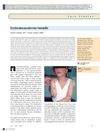
July 2004 in “SKINmed/Skinmed” A 4-year-old girl was diagnosed with erythrokeratodermia variabilis after other treatments failed.
 2 citations
,
February 2019 in “bioRxiv (Cold Spring Harbor Laboratory)”
2 citations
,
February 2019 in “bioRxiv (Cold Spring Harbor Laboratory)” The Asiatic lion has very low genetic diversity and unique genetic traits, highlighting the need for its conservation.
 1 citations
,
September 2015 in “Serbian Journal of Dermatology and Venereology/Serbian Journal of Dermatology and Venerology”
1 citations
,
September 2015 in “Serbian Journal of Dermatology and Venereology/Serbian Journal of Dermatology and Venerology” A 19-year-old male had two rare skin conditions causing scarring and permanent hair loss.
 February 2026 in “Frontiers in Medical Technology”
 Keratinocyte stem cells are crucial for skin renewal and have potential in wound healing and tissue regeneration.