 June 2025 in “Mağallaẗ ʻulūm al-rāfidayn”
 New pyrazole derivatives may help treat hair loss, but more testing is needed.
15 citations
,
July 2009 in “Biomedical Chromatography” A reliable method was developed to measure aristolochic acid-I in rat blood.
 17 citations
,
January 2021 in “Agrobiological Records”
17 citations
,
January 2021 in “Agrobiological Records” Allethrin caused harmful effects and organ damage in rats, worsening with higher doses and longer exposure.
July 2017 in “OPAL (Open@LaTrobe) (La Trobe University)” High-throughput LC-MS screening is effective for finding new autotaxin inhibitors for asthma treatment.
January 2015 in “International Journal of Nanomedicine” Anionic squarticles can effectively counteract amitriptyline overdose, improving survival rates.
23 citations
,
October 2008 in “Journal of medicinal chemistry” PF-998425 is a new, effective, and non-phototoxic treatment for skin conditions related to androgens.
 8 citations
,
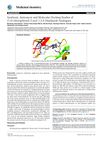
January 2013 in “Medicinal chemistry”
8 citations
,
January 2013 in “Medicinal chemistry” The compound 4c showed strong potential as an anticancer agent.
 May 2024 in “Brain disorders”
 Agmatine may help reduce seizures linked to hormone changes in female rats.
26 citations
,
January 2014 in “ALTEX” Pesticides can cause reproductive and adrenal health issues.
 1 citations
,
October 2020 in “Current Drug Discovery Technologies”
1 citations
,
October 2020 in “Current Drug Discovery Technologies” The research found that compound 6, a newly created steroid, is more effective at inhibiting 5α-reductase (an enzyme) than current treatments, suggesting it could be a better option for treating urinary tract symptoms in men.
 September 2024 in “Journal of the American Academy of Dermatology”
 AH-001 could be a safer and more effective treatment for hair loss.
August 2025 in “International Journal of Molecular Sciences” AVT is highly conserved and may have antimicrobial properties.
Azelaic acid helps with skin pigmentation issues, but its full effects are not completely understood.
 688 citations
,
June 2007 in “Cell Stem Cell”
688 citations
,
June 2007 in “Cell Stem Cell” Removing the ATR gene in adult mice causes rapid aging and stem cell loss.
3 citations
,
May 2007 in “Journal of Heterocyclic Chemistry” A new method to make finasteride for hair loss treatment was developed.
May 2026 in “Journal of Medicinal Chemistry” dAR-6–1 is a promising new treatment for hair loss that works better than minoxidil.
 July 2023 in “Zenodo (CERN European Organization for Nuclear Research)”
 Trazodone and chlorpromazine may help treat sexual dysfunction caused by finasteride and SSRIs.
 18 citations
,
April 2001 in “Bioorganic & Medicinal Chemistry Letters”
18 citations
,
April 2001 in “Bioorganic & Medicinal Chemistry Letters” The nature of the side chain in RU 58841 derivatives greatly affects its AR affinity, with the N-(iodopropenyl) derivative 13 showing the highest AR binding affinity, suggesting its potential for developing high-affinity radioiodinated AR radioligands.
12 citations
,
July 2016 in “Journal of dermatology” Intramuscular triamcinolone acetonide is an effective treatment for severe alopecia areata, especially in males.
36 citations
,
July 2017 in “Journal of controlled release” A new method allows for controlled, long-lasting delivery of retinoic acid through the skin with fewer side effects.
October 2025 in “Pharmaceuticals” Auranofin shows promise as a cancer treatment, especially when combined with other therapies.
 January 2010 in “Yearbook of Endocrinology”
 Two new compounds can block androgen receptor activity in different ways and may lead to new treatments for androgen-related diseases.
 4 citations
,
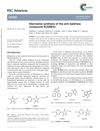
January 2014 in “RSC Advances”
4 citations
,
January 2014 in “RSC Advances” A new, less toxic and more efficient method to create the anti-baldness compound RU58841 was developed in 2014.
July 2021 in “Journal of dermatology & dermatologic surgery” IMTA can help regrow hair in severe alopecia areata when JAK inhibitors don't work well.
 January 2023 in “Postępy Dermatologii i Alergologii”
 Azelaic acid treats acne, rosacea, and hyperpigmentation with minimal side effects.
 November 2023 in “PubMed”
 Pentoxifylline is a safe and effective alternative to triamcinolone acetonide for treating localized alopecia areata.
May 2025 in “Journal of the European Academy of Dermatology and Venereology” Etrasimod is safe but not effective for severe alopecia areata, though it may help milder cases.
July 2024 in “Reactions Weekly”  34 citations
,
October 2024 in “Clinical Cosmetic and Investigational Dermatology”
34 citations
,
October 2024 in “Clinical Cosmetic and Investigational Dermatology” Azelaic acid is effective for treating rosacea, acne, and melasma.
Researchers made new compounds that could potentially be developed into anticancer drugs.