 November 1998 in “Hair transplant forum international”
 The document's conclusion cannot be summarized because the content is not understandable.
 November 2025 in “DOAJ (DOAJ: Directory of Open Access Journals)”
 The choice between belimumab and anifrolumab for treating lupus depends on the patient's specific symptoms.
1 citations
,
December 2013 in “The journal of investigative dermatology. Symposium proceedings/The Journal of investigative dermatology symposium proceedings” New treatments and strategies are needed for Alopecia Areata, focusing on immune response and better trial designs.
 1 citations
,
September 2025 in “Clinical Cosmetic and Investigational Dermatology”
1 citations
,
September 2025 in “Clinical Cosmetic and Investigational Dermatology” Upadacitinib is effective and safe for treating severe Alopecia Areata in adolescents.
2 citations
,
March 2017 in “JAAD case reports” Oral alitretinoin can quickly regrow hair in alopecia universalis.
July 2026 in “Journal of the American Academy of Dermatology”  5 citations
,
January 2018 in “Skin Pharmacology and Physiology”
5 citations
,
January 2018 in “Skin Pharmacology and Physiology” Curcuma aeruginosa extract lotion significantly reduces underarm hair growth.
 January 2025 in “International Journal of Research in Medical Science”
 Homeopathy successfully treated complete hair loss in a man.

Activin A and Follistatin affect how mouse hair follicles grow.
AnnoPharma effectively identifies substances causing adverse drug reactions in medical abstracts.
12 citations
,
July 2017 in “International Journal of Cosmetic Science” N‐AOHPA is a promising alternative to traditional surfactants for better hair conditioning.
 199 citations
,
April 2010 in “Nature”
199 citations
,
April 2010 in “Nature” A gene called APCDD1, which controls hair growth, is found to be faulty in a type of hair loss called hereditary hypotrichosis simplex.
Early and precise nutritional intervention is crucial for managing anorexia nervosa.
July 2026 in “Journal of the American Academy of Dermatology”  November 1993 in “Hair transplant forum international”
 The document's conclusion cannot be provided because the document is not accessible or understandable.
 1 citations
,
May 2026 in “bioRxiv (Cold Spring Harbor Laboratory)”
1 citations
,
May 2026 in “bioRxiv (Cold Spring Harbor Laboratory)” UT-018 speeds up wound healing and boosts hair growth in mice.
March 1998 in “Journal of Dermatological Science” Eccrine gland activity may be linked to alopecia areata.
 January 2024 in “Journal of Microorganism Control”
 The antibacterial toner can effectively kill acne-causing bacteria by penetrating skin plugs.
 April 2024 in “JEADV clinical practice”
 Upadacitinib significantly improved both rheumatoid arthritis and alopecia areata in a patient.
75 citations
,
March 2023 in “JAMA Dermatology” Alopecia areata and its severe forms are becoming more common, especially among females, adults, and people in the Northeast.
 25 citations
,
April 2007 in “Journal of The American Academy of Dermatology”
25 citations
,
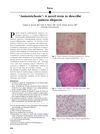
April 2007 in “Journal of The American Academy of Dermatology” The document suggests "anisotrichosis" as a new term for hair thickness variation in common baldness.
 November 2022 in “Research Square (Research Square)”
 Seasonal changes affect hair growth genes in Angora goats, possibly influencing mohair quality.
 5 citations
,
December 1964 in “Australasian journal of dermatology”
5 citations
,
December 1964 in “Australasian journal of dermatology” Congenital atrichia is a rare condition where children are born without hair, and treatment is often ineffective.
41 citations
,
September 1951 in “Annals of Internal Medicine” The anterior pituitary controls adrenal cortex size and activity through ACTH.
December 2005 in “Journal of Medical Regulation” Australia improved medical education and Canada focused on professionalism and patient safety.
 14 citations
,
November 2011 in “Journal of The American Academy of Dermatology”
14 citations
,
November 2011 in “Journal of The American Academy of Dermatology” Alopecia Areata Incognita causes widespread hair thinning, and treatment with systemic corticosteroids and psychiatric support can lead to remission.
15 citations
,
May 1999 in “Journal of Investigative Dermatology” Alopecia areata is complex, with genetic and immune factors, and animal models are key for future treatment research.
October 2024 in “The American Journal of Gastroenterology” Upadacitinib improved both Crohn's ileitis and alopecia universalis in a patient.
1 citations
,
March 2023 in “International Wound Journal” CCN1 may aid wound healing, but more research with larger samples is needed.
October 1966 in “Archives of Dermatology” A 19-year-old female with alopecia universalis experienced total hair loss, and previous treatments were ineffective.