
CD28 is a promising target for treating alopecia areata with belatacept.
November 2025 in “Journal of Investigative Dermatology” Alopecia areata requires addressing both emotional and financial challenges for better patient care.
June 2025 in “Medical alphabet” JAK inhibitors may help treat alopecia areata in children, but their safety needs careful evaluation.
March 2025 in “NATIONS UNIVERSITY INTERNATIONAL JOURNAL OF MULTI-DISCIPLINARY STUDIES” Baricitinib effectively improved skin and hair conditions in a patient with alopecia areata and atopic dermatitis.
January 2025 in “Journal of Dermatology & Dermatologic Surgery” Environmental factors can trigger alopecia areata in identical twins.
Accurate diagnosis of hair loss types is crucial for effective treatment.
January 2024 in “Journal of Biosciences and Medicines” More research is needed to understand genetic causes and create better treatments for alopecia areata.
November 2023 in “Scientific Repository of Open Access of Portugal (RCAAP)” Severe alopecia areata in children can signal future autoimmune issues.
 September 2023 in “Drugs in context”
 Baricitinib is a promising treatment for alopecia areata.
 January 2023 in “Journal of Cosmetic Dermatology”
 Some children may develop hair loss after having COVID-19.
 December 2020 in “bioRxiv (Cold Spring Harbor Laboratory)”
 Stress can cause a type of hair loss in mice lacking the CCHCR1 gene.
August 2019 in “Journal of the American Academy of Dermatology” Depression and hair loss may influence each other.
 April 2022 in “Cermin Dunia Kedokteran”
 Accurate diagnosis and understanding of alopecia areata in children are crucial for proper treatment.
 6 citations
,
April 2017 in “Experimental dermatology”
6 citations
,
April 2017 in “Experimental dermatology” CD80CD86 deficiency causes hair loss by disrupting regulatory T cells.
 1 citations
,
August 2018 in “Journal of the American Academy of Dermatology”
1 citations
,
August 2018 in “Journal of the American Academy of Dermatology” Children with autoimmune hair loss have similar vitamin D levels to healthy kids, suggesting no extra screening is needed.
March 2025 in “JAAD International” Alopecia areata is rare in organ transplant patients and may be linked to the drug tacrolimus.
December 2018 in “International journal of women’s dermatology” Differences in skin and gut bacteria may contribute to alopecia areata.
15 citations
,
May 1999 in “Journal of Investigative Dermatology” Alopecia areata is complex, with genetic and immune factors, and animal models are key for future treatment research.
 May 2025 in “Frontiers in Pharmacology”
 Targeting gut microbiome and metabolome may help treat autoimmune skin diseases like alopecia areata.

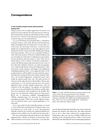
A man's scalp hair loss was due to a combined melanocytic nevus and alopecia areata, suggesting a possible link between the two conditions.
21 citations
,
December 2014 in “Clinics in dermatology” Squaric acid dibutylester effectively treats alopecia areata.
 19 citations
,
March 1997 in “Journal of Cutaneous Pathology”
19 citations
,
March 1997 in “Journal of Cutaneous Pathology” Alopecia areata involves specific T-cells, unlike androgenetic alopecia.
 11 citations
,
July 2008 in “International Journal of Dermatology”
11 citations
,
July 2008 in “International Journal of Dermatology” Greying hairs may be protected from alopecia areata.
5 citations
,
January 2015 in “Saudi journal for health sciences” Alopecia areata in Taif is common, mainly immune-related, and best treated with topical corticosteroids and vitamins.
 4 citations
,
May 2019 in “Journal of The European Academy of Dermatology and Venereology”
4 citations
,
May 2019 in “Journal of The European Academy of Dermatology and Venereology” Hair loss treatment caused more hair loss in a man.
 3 citations
,
January 2021 in “Skin appendage disorders”
3 citations
,
January 2021 in “Skin appendage disorders” Hair color is not a risk factor for developing alopecia areata.
 3 citations
,
July 2013 in “Journal of Cutaneous Pathology”
3 citations
,
July 2013 in “Journal of Cutaneous Pathology” A woman's hair loss, resembling an autoimmune condition, improved after treatment, but requires ongoing checks due to potential serious associations.
 2 citations
,
August 2022 in “JAAD case reports”
2 citations
,
August 2022 in “JAAD case reports” COVID-19 vaccines may rarely worsen hair loss in people with severe alopecia, but the benefits of vaccination still outweigh this risk.
1 citations
,
October 2024 in “The American Journal of Gastroenterology” Switching from infliximab to Ustekinumab improved both hair loss and Crohn's symptoms in the patient.
 1 citations
,
July 2020 in “Journal of cosmetic dermatology”
1 citations
,
July 2020 in “Journal of cosmetic dermatology” A woman on immunosuppressants developed two rare scalp conditions, which improved with specific treatments.