 9 citations
,
December 2023 in “Journal of Neuroimmune Pharmacology”
9 citations
,
December 2023 in “Journal of Neuroimmune Pharmacology” NDP-MSH protects brain cells and reduces inflammation in Parkinson's disease by activating MC1R and involving Tregs.
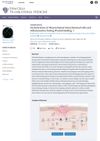 July 2023 in “Stem Cells Translational Medicine”
 Mesenchymal Stem/Stromal Cells (MSCs) help in wound healing and tissue regeneration, but can also contribute to tumor growth. They show promise in treating chronic wounds and certain burns, but their full healing mechanisms and potential challenges need further exploration.
83 citations
,
May 2022 in “Journal of Advanced Research” Enhancing glycolysis in mesenchymal stromal/stem cells boosts their immune functions and therapy potential.
2 citations
,
April 2025 in “Journal of Investigative Dermatology” T cells affect skin cell genes in inflammatory diseases, and therapy can normalize these changes.
 1 citations
,
November 2024 in “Romanian Journal of Morphology and Embryology”
1 citations
,
November 2024 in “Romanian Journal of Morphology and Embryology” Recent findings in cell biology help understand cell roles in health and disease.
18 citations
,
August 2024 in “eLife” JAK inhibition may help manage autoimmune conditions in Down syndrome.
 12 citations
,
August 2022 in “Biochemical Journal”
12 citations
,
August 2022 in “Biochemical Journal” Different types of cell death affect skin health and inflammation, and understanding them could improve treatments for skin diseases.
 9 citations
,
January 2020 in “Critical Reviews in Immunology”
9 citations
,
January 2020 in “Critical Reviews in Immunology” MAIT cells may help fight COVID-19 but also contribute to severe inflammation.
5 citations
,
January 2025 in “Burns & Trauma” PPAR activation can improve diabetic wound healing by enhancing blood vessel function.
4 citations
,
January 2023 in “Pharmacology” Atorvastatin is less effective for women with Hashimoto's thyroiditis.
2 citations
,
December 2024 in “eLife” JAK inhibition reduces autoimmune issues in Down syndrome.
 December 2025 in “Frontiers in Immunology”
 Restoring nerve-macrophage communication may help treat autoimmune diseases.
October 2025 in “Journal of Neurophysiology” BK and Kv4.2 channels help Merkel cells in rat whiskers sense touch.
 March 2024 in “Cell communication and signaling”
 Lack of sleep in mice leads to prostatitis by reducing certain hormones and activating an inflammatory pathway, which can be temporarily fixed with normal sleep.
14 citations
,
January 2023 in “Nature Immunology” iNKT cells help develop and maintain healthy skin in young mice.
3 citations
,
May 2025 in “Stem Cell Research & Therapy” Stem cell therapy from umbilical cords may help treat atopic dermatitis.
 July 2025 in “International Journal of Molecular Sciences”
 Blocking CXCL12 can reverse hair loss and fibrosis in androgenetic alopecia.
105 citations
,
December 2017 in “Journal of Biological Engineering” Artificial skin grafts face immune rejection, but stem cells may improve future designs.
4 citations
,
December 2020 in “Tissue Barriers” Loricrin affects skin immune function and homeostasis.
 87 citations
,
July 2018 in “Biochimica et Biophysica Acta (BBA) - Molecular Cell Research”
87 citations
,
July 2018 in “Biochimica et Biophysica Acta (BBA) - Molecular Cell Research” Mice studies show that Protein Phosphatase 2A is crucial for cell growth, development, and disease prevention.
 150 citations
,
August 1992 in “Genes & Development”
150 citations
,
August 1992 in “Genes & Development” TNF alpha in skin cells causes weight loss, hair and fat issues, and skin inflammation in mice.
10 citations
,
December 2023 in “International Journal of Nanomedicine” Cell membrane-coated nanoparticles could improve gene therapy by enhancing delivery and targeting of nucleic acids.
 December 2024 in “International Journal of Molecular Sciences”
 Human umbilical cord stem cell vesicles may help treat aging and related diseases.

Removing SIX1 in fat cells reduces skin fibrosis.
November 2025 in “Journal of Pharmacy and Pharmacology” PEDF reduces oxidative damage and supports stem cells.
 1 citations
,
April 2018 in “Journal of Investigative Dermatology”
1 citations
,
April 2018 in “Journal of Investigative Dermatology” Oleoylethanolamide (OEA) safely boosts fat production in skin cells and may help treat dry skin and reduce inflammation.
 January 2025 in “Repository of the Academy's Library (Library of the Hungarian Academy of Sciences)”
 Nucleic acids trigger chemokine production in skin cells, affecting skin inflammation.
 September 2024 in “Journal of the Pakistan Medical Association”
 A 589 nm laser increases IL-2 and IFN-y gene expression in human T-cells.
 January 2024 in “Wiadomości Lekarskie”
 Ancient immune and signaling pathways still regulate blood cell development.
 April 2018 in “Journal of Investigative Dermatology”
 Nicotinic acid reduces excessive oil production in skin cells by activating a specific receptor, which could help treat acne.