January 2025 in “Indian Dermatology Online Journal” Early diagnosis and aggressive treatment are essential for managing Vogt-Koyanagi-Harada syndrome effectively.
 January 2025 in “Advances in Clinical Medicine”
 Traditional Chinese medicine external treatments may help manage Hashimoto thyroiditis.
 October 2024 in “Eurasian Journal of Medicine”
 Hashimoto’s thyroiditis is more common in girls, often after puberty, and can cause neck swelling, fatigue, and hair loss.
 October 2024 in “Revista Electronica de Veterinaria”
 Siddha medicine can effectively treat Alopecia areata, leading to significant hair regrowth.
Baricitinib is effective for Alopecia Areata but requires careful patient history evaluation.
 September 2024 in “Cureus”
 Removing breast implants resolved the patient's symptoms.
 August 2024 in “Indian Journal of Skin Allergy”
 Stem-cell therapy shows promise for skin conditions but needs more research.
 August 2024 in “Clinical and Medical Engineering Live”
 Alopecia treatment should use a modern, combined approach to effectively address hair loss.
 May 2024 in “IP International Journal of Periodontology and Implantology”
 Treating gum disease and stress may help improve alopecia.
May 2024 in “The Journal of Immunology” IL-27 can prevent hair loss in alopecia areata.
 March 2024 in “Dermatology and therapy”
 AA patients with comorbid conditions face more severe hair loss and need specific treatments.
 February 2024 in “The Open dermatology journal”
 Alopecia Areata affects people of all ages worldwide, is likely caused by genetic and environmental factors, and can lead to stress and depression, highlighting the need for treatments that address both physical and mental health.
 January 2024 in “Revista de la Asociación Colombiana de Dermatología y Cirugía Dermatológica/Revista de la Asociacion Colombiana de Dermatologia y Cirugia Dermatologica”
 Baricitinib successfully treated severe hair loss.
January 2024 in “Physiotherapia Croatica” New treatments like JAK inhibitors offer hope for hair regrowth in severe alopecia areata.
 January 2024 in “Skin Research and Technology”
 Oral tofacitinib may be an effective future treatment for children with severe alopecia areata, but more research is needed.
 January 2024 in “Clinical and Experimental Vaccine Research”
 Rabies vaccine might cause hair loss due to immune issues.
 January 2024 in “International Journal of Homoeopathic Sciences”
 Homeopathic treatment might help manage alopecia areata.
January 2024 in “Journal of Biosciences and Medicines” More research is needed to understand genetic causes and create better treatments for alopecia areata.
 December 2023 in “EPRA international journal of multidisciplinary research”
 Alopecia areata causes sudden hair loss, has genetic links, and can be managed but not cured.
 October 2023 in “Dermatologie pro praxi”
 Alopecia areata causes hair loss and has various treatment options, but responses differ.
 September 2023 in “Drugs in context”
 Baricitinib is a promising treatment for alopecia areata.
 September 2023 in “Medicina Estética Revista Científica de la Sociedad Española de Medicina Estética (SEME)”
 The FDA approved Litfulo® for treating severe alopecia areata in people aged 12 and older.
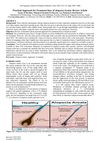 July 2023 in “The Egyptian Journal of Hospital Medicine ”
 The conclusion is that emotional support and a variety of treatments are important for alopecia areata, but more research is needed.
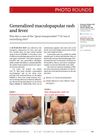 July 2023 in “The Journal of Family Practice”
 The man was diagnosed with lupus and improved with treatment.
 June 2023 in “Dermatology and therapy”
 The Middle East and Africa need better data, treatment consensus, and support for Alopecia Areata.
 May 2023 in “British Journal of Dermatology”
 COVID-19 can cause long-term skin problems and has changed how skin doctors work.
 April 2023 in “International Journal of Research in Dermatology”
 Baricitinib is a promising treatment for severe alopecia areata with minimal side effects.
March 2023 in “Indian Journal of Rheumatology” Testing for various autoantibodies in Indian children with lupus can help predict disease symptoms and risks.
 February 2023 in “Medical Clinical Update”
 Some people with alopecia areata, a hair loss condition, get better within a year without treatment, but it can happen again.
 January 2023 in “International Journal of Research in Medical Sciences & Technology”
 Panchkarma treatment can help manage symptoms of Systemic Lupus Erythematous.