Search
for
Sort by
Research
360-390 / 1000+ results
research RTHP-40. EFFECT OF RIND-BASED DOSIMETRIC TECHNIQUES FOR SCALP DOSE REDUCTION IN BRAIN IRRADIATION
Rind-based techniques can lower scalp radiation dose and reduce hair loss in brain cancer treatment.
research Disease-dependent accessibility of hair follicle compartments revealed by tape-strip transcriptomics
Tape-strip RNA sequencing can better detect inflammation in hair follicles for alopecia areata.
research Photosensitized 2-amino-3-hydroxypyridine-induced mitochondrial apoptosis via Smac/DIABLO in human skin cells
Using A132 hair dye with sunlight can cause skin damage and hair loss.
research The Localization of Label-Retaining Cells in Mouse Nails
Stem cells in mouse nails are found in the nail matrix and may control nail growth.
research Uptake of mercury by the hair of methylmercury-treated newborn mice
Methylmercury accumulates in mouse hair during growth, then decreases when growth stops.
research An experimental study evaluating the effect of minoxidil on the growth cycle of hair follicles.
Minoxidil did not affect hair growth in newborn mice.

research Association of breast cancer in men with exposure to 5-α reductase inhibitors: A RADAR report.
Taking 5-alpha reductase inhibitors might be linked to breast cancer in men.
research Short-Acting Scalp Micropigmentation with Roller and Needle
research 115 AE法による実機水車発電機軸受の診断(セッション4 評価・診断II)
KSR1 is crucial for certain skin tumor formation and could be a cancer therapy target.
research 光治療における光学マイクロニードルに関する研究
research Biochemical and Histopathological Evaluation of the Radioprotective Effects of Melatonin Against Gamma Ray-Induced Skin Damage
Melatonin can help prevent and treat skin damage caused by gamma rays.
research 43853 Case of Reactive Keratoacanthomas arising Eight Years After Multicolored Tattoo Placement
Red tattoo ink may cause skin growths, needing careful monitoring.
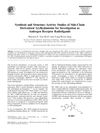
research Synthesis and structure–activity studies of side-chain derivatized arylhydantoins for investigation as androgen receptor radioligands
The nature of the side chain in RU 58841 derivatives greatly affects its AR affinity, with the N-(iodopropenyl) derivative 13 showing the highest AR binding affinity, suggesting its potential for developing high-affinity radioiodinated AR radioligands.
research In-Situ Imaging Mass Spectrometry Analysis of Melanin Granules in the Human Hair Shaft
research Autologous Regenerative Therapy and Bio-photostimulation: A Surprising Combination
Combining regenerative therapy with light treatment can effectively promote hair growth.
research Epidermis reconstructed from the outer root sheath of human hair follicle on de-epidermized dermis. Effect of retinoic acid
research LB1605 3D imaging of cleared ex vivo normal human skin, skin appendages and psoriasiform skin lesion using light-sheet microscopy
The conclusion is that using light-sheet fluorescence microscopy with a special solution can effectively create detailed 3D images of human skin for dermatological research.
research Linear alopecia in pediatrics: RCM and dermoscopy reveal diagnostic cues
RCM and dermoscopy help identify different types of hair loss in children.
research Prevention and correction of radiation dermatitis with basic skin care: doctor and patient consensus
Basic skin care products can effectively prevent and treat radiation dermatitis.
research Concordance Among In-Vivo Reflectance Confocal Microscopy, Trichoscopy, and Histopathology in the Evaluation of Alopecia Areata Incognita
Reflectance confocal microscopy is a promising non-invasive tool for diagnosing alopecia areata incognita.
research 1410 Non-coding double stranded RNA induces retinoic acid synthesis and retinoid signaling to control regeneration
Double-stranded RNA helps regenerate hair follicles by increasing retinoic acid production and signaling.
research TRASER: Acute phase vascular and follicular changes
TRASER effectively targets blood vessels and hair follicles for potential use in vascular and hair removal treatments.
research Features of Irradiated Skeletal Muscle on Mohs Frozen Section Examination
research Stimulation of Hair Growth in Rabbits by Ionizing Radiations
research pMB FLASH - Status and Perspectives of Combining Proton Minibeam with FLASH Radiotherapy
Combining Proton Minibeam with FLASH Radiotherapy may improve cancer treatment by reducing side effects and increasing effectiveness.
research Automated digital image analysis (TrichoScan) in male patients with androgenetic alopecia; comparison with manual marking of hairs on trichoscopic images
TrichoScan needs optimization as it underestimated hair density by 38.9% compared to manual counting.

research Measuring changes in chemistry, composition, and molecular structure within hair fibers by infrared and Raman spectroscopic imaging
Infrared and Raman imaging can non-destructively analyze hair structure and help diagnose hair conditions.
research Ultraviolet-Induced Fluorescence and Sub-Ultraviolet Reflectance Dermatoscopy of Grover’s Disease (Transient Acantholytic Dermatosis): a Retrospective Single-Center Cohort Study
Ultraviolet techniques help identify Grover’s Disease, which may be underdiagnosed in young people and females.
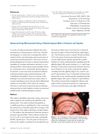
research Advanced Scalp Measurement Using a Phototrichogram With a Protractor and Tapeline
The document concludes that using a phototrichogram with a protractor and tapeline is a reliable and noninvasive way to measure hair loss.