1 citations
,
January 2018 in “Jornal Brasileiro de Patologia e Medicina Laboratorial” Monilethrix causes brittle hair and hair loss, and it runs in families.
1 citations
,
July 2017 in “Skin appendage disorders” A 9-year-old Hispanic girl has Uncombable Hair Syndrome, which may improve with age and biotin treatment.
1 citations
,
June 2016 in “Medicina” Monilethrix is a genetic disorder causing brittle hair, diagnosed using tricoscopy.
 January 2026 in “Cosmoderma”
 A 9-year-old girl has a rare hair disorder causing beaded, sparse hair.
 July 2025 in “International Journal of Dermatology Venereology and Leprosy Sciences”
 Examining Survivin levels may help understand premature greying of hair.
 February 2024 in “BMC genomics”
 The TRPV3 gene variant may cause the long-haired suri alpaca coat.
 September 2022 in “JAAD case reports”
 The man has a genetic skin condition called pachyonychia congenita.
 January 2022 in “International journal of zoology and animal biology”
 Dogs with dermatomyositis, especially Collies and Shetland Sheepdogs, need better treatments for their skin and muscle inflammation.
 September 2021 in “CRC Press eBooks”
 CCCA is a common hair loss condition in African American women, often inherited and influenced by hairstyling, with unique scalp features detectable by special tools.
January 2014 in “Healthy aging research” Polycystic ovarian disease symptoms can continue after menopause, making diagnosis and management in older women challenging.
 33 citations
,
March 2006 in “Seminars in cutaneous medicine and surgery”
33 citations
,
March 2006 in “Seminars in cutaneous medicine and surgery” The document explains how to identify different hair problems using a microscope.
 55 citations
,
November 2018 in “American journal of human genetics”
55 citations
,
November 2018 in “American journal of human genetics” Mutations in the LSS gene cause a rare type of hereditary hair loss.
 1 citations
,
August 2011 in “Dermatology Reports”
1 citations
,
August 2011 in “Dermatology Reports” Two siblings were found to have a genetic condition causing progressive hair loss and woolly hair, which may often be misdiagnosed.
 December 2025 in “Frontiers in Medicine”
 ARWH is a rare hair disorder with no cure, but potential treatments include minoxidil and other therapies.
 12 citations
,
July 2016 in “British journal of dermatology/British journal of dermatology, Supplement”
12 citations
,
July 2016 in “British journal of dermatology/British journal of dermatology, Supplement” Different hair fiber development might explain why hair loss severity varies in patients with a specific genetic mutation, and treatments that thicken hair could help.
 November 2023 in “Frontiers in pharmacology”
 Drug repositioning offers hope for new, affordable treatments for a genetic skin disorder called ARCI.
 April 1974 in “Pediatric Research”
 The Naked (N) trait in mice is linked to lower glycine and tyrosine in hair proteins.
 199 citations
,
April 2010 in “Nature”
199 citations
,
April 2010 in “Nature” A gene called APCDD1, which controls hair growth, is found to be faulty in a type of hair loss called hereditary hypotrichosis simplex.
November 2025 in “Skin Health and Disease” Autosomal recessive woolly hair is rare and involves tightly coiled hair without other health issues.
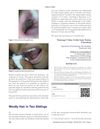 January 2012 in “International Journal of Trichology”
 Two siblings have a rare genetic condition causing curly, coarse hair.
50 citations
,
February 2016 in “Journal of Investigative Dermatology” A mutation in the KRT25 gene causes a rare hair disorder with thin, woolly hair.
22 citations
,
February 2012 in “Journal of Investigative Dermatology” A specific gene mutation causes severe skin and nail issues and hair loss.
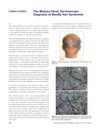 7 citations
,
January 2012 in “International Journal of Trichology”
7 citations
,
January 2012 in “International Journal of Trichology” A man with Woolly Hair Syndrome had very curly, fragile hair, and doctors used a special scalp examination to diagnose him without invasive tests.
July 2025 in “Frontiers in Medicine” Mutations in the LIPH gene cause woolly hair in a child.
 September 2024 in “Journal of Medicine and Life”
 A specific gene mutation causes a severe skin disorder in a family.
 May 2015 in “Journal of Dermatological Science”
 Researchers found a new area on chromosome 2 linked to a genetic hair loss condition.
 89 citations
,
September 2010 in “Annual Review of Genomics and Human Genetics”
89 citations
,
September 2010 in “Annual Review of Genomics and Human Genetics” The document concludes that understanding the genes and pathways involved in hair growth is crucial for developing treatments for hair diseases.
 74 citations
,
January 2006 in “The journal of investigative dermatology/Journal of investigative dermatology”
74 citations
,
January 2006 in “The journal of investigative dermatology/Journal of investigative dermatology” Mutations in the DSG4 gene can cause a rare hair disorder similar to monilethrix.
 19 citations
,
April 1995 in “Clinical Genetics”
19 citations
,
April 1995 in “Clinical Genetics” Two siblings were the first reported cases of inheriting both eye coloboma and loose anagen syndrome together.
 September 2019 in “The journal of investigative dermatology/Journal of investigative dermatology”
 Not having enough cystatin M/E protein causes less hair growth and dry skin.