November 2007 in “Science” Keratin-based hydrogels from human hair help nerve repair better than traditional methods.
December 2020 in “Faculty Opinions – Post-Publication Peer Review of the Biomedical Literature” The KDM1 gene helps Venus flytraps close by managing potassium ions.
 April 2025 in “Revista de Ciências da Saúde Nova Esperança”
 Botulinum Toxin Type A effectively treats various conditions with high patient satisfaction and minimal side effects.
2 citations
,
April 2014 in “PubMed” Epidermal neural crest stem cells from hair follicles can help repair nerve injuries.
 July 2022 in “Journal of Investigative Dermatology”
 Substance P may contribute to hair loss by increasing oxidative stress and mitochondrial activity in hair follicles.
 12 citations
,
February 2021 in “Translational Psychiatry”
12 citations
,
February 2021 in “Translational Psychiatry” Researchers found two new genetic variants linked to Alzheimer's disease.
36 citations
,
January 1994 in “Cell and Tissue Research” 18 citations
,
December 1992 in “Journal of Cutaneous Pathology” Skin tumors and normal skin structures have different lectin-binding patterns.
13 citations
,
December 2005 in “Traffic” Syntaxin 9 helps in transporting and signaling of the EGF receptor in skin and stomach cells.
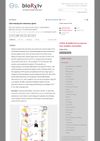 August 2023 in “bioRxiv (Cold Spring Harbor Laboratory)”
 The research found that specific stem cells maintain skin gland openings and that disrupting their activity can cause blockages or early cancer signs, indicating a need for targeted treatments.
March 1995 in “The Journal of Dermatology” Immature hair cells can grow and change into different types of hair cells over time.
9 citations
,
October 1994 in “Brain Research” Fetal sheep develop skin nerve pathways and responses to touch and heat between 75 and 134 days of gestation.
 50 citations
,
February 2007 in “Expert Opinion on Biological Therapy”
50 citations
,
February 2007 in “Expert Opinion on Biological Therapy” Hair follicle stem cells could help repair nerves and avoid ethical issues linked to embryonic stem cells.
2 citations
,
January 2018 in “Biomolecules & therapeutics” Polyamidoamine dendrimers can change the strength and direction of electroosmotic flow through the skin, affecting drug delivery.
Arabidopsis Formin 2 stabilizes actin filaments, affecting cell-to-cell movement and virus susceptibility.
January 2005 in “Zhonghua chuangshang guke zazhi” Human hair keratin is a promising material for nerve repair.
1 citations
,
July 2008 in “PubMed” Human hair keratin helps regenerate rat sciatic nerves by transforming Schwann cells and protecting axons.
10 citations
,
April 2022 in “Critical reviews in food science and nutrition” Skin odorant receptors respond to flavors and could be targeted to improve skin health and treat diseases.
80 citations
,
September 2007 in “Cell Cycle” Stem cells in hair follicles can become various cell types, including neurons.
4 citations
,
January 2016 in “Methods in molecular biology” HAP stem cells can repair nerves, grow hair follicle nerves, and become heart muscle cells, making them useful for regenerative medicine.
1 citations
,
August 2025 in “Frontiers in Neuroscience” Cellular senescence may play a role in ALS, and anti-senescence therapies could be a promising treatment.
 November 2025 in “Stem Cell Reviews and Reports”
 The error in figures didn't affect the study's results or conclusions.
1 citations
,
October 2015 in “OakTrust (Texas A&M University Libraries)” Harp seals have different innervation patterns in their whiskers, with lateral whiskers having more axons than medial ones.
33 citations
,
March 2015 in “Experimental Dermatology” LHX2 and SOX9 identify unique hair follicle cell groups, crucial for hair maintenance.
January 2024 in “Neuroscience Applied” Oxytocin receptor changes in hair cells may help identify autism, especially in males.
9 citations
,
January 2005 in “Experimental Dermatology” Human hair follicles can produce stress hormones like the body's main stress response system.
104 citations
,
July 1994 in “The Journal of Cell Biology” Basonuclin helps keratinocytes multiply and prevents them from fully maturing.
July 2026 in “bioRxiv (Cold Spring Harbor Laboratory)” FAKΔe4 helps cells sense and respond to different stiffness levels in their environment.
March 2006 in “The FASEB Journal” Two methods improved nerve regeneration and touch recovery in skin grafts for burn patients.
25 citations
,
May 2006 in “Annals of Botany” Root hair growth in wheat needs a specific G-actin gradient and high Ca2+ concentration at the tips.