July 2023 in “Indian Journal of Sexually Transmitted Diseases and AIDS” "Moth-eaten alopecia" can be a sign of secondary syphilis, treatable with penicillin.
82 citations
,
May 2010 in “PLoS neglected tropical diseases” Secondary syphilis in Cali, Colombia, shows high Treponema pallidum presence and challenges in early diagnosis, needing better public health strategies.
 January 2021 in “Journal of Entomology and Zoology Studies”
 The piglets fully recovered from psoroptic mange after treatment.
 2 citations
,
January 2000 in “Journal of Toxicologic Pathology”
2 citations
,
January 2000 in “Journal of Toxicologic Pathology” A single recessive gene causes sparse hair in certain Japanese White rabbits.
 2 citations
,
October 2010 in “Reviews in Medical Microbiology”
2 citations
,
October 2010 in “Reviews in Medical Microbiology” Syphilis is becoming more common and remains a major health problem due to challenges in prevention and treatment.
 1 citations
,
January 2013 in “Mayo Clinic Proceedings”
1 citations
,
January 2013 in “Mayo Clinic Proceedings” A woman's chronic headaches and hair loss were cured by treating her syphilis.
 4 citations
,
January 2009 in “Acta agriculturae Serbica”
4 citations
,
January 2009 in “Acta agriculturae Serbica” Selenium imbalance can cause hair loss and skin issues.
 February 2025 in “Buletin Veteriner Udayana”
 A dog named Boby recovered from a skin infection and anemia after treatment, highlighting the need for pet cleanliness.
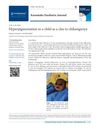 November 2024 in “Karnataka Pediatric Journal”
 Chikungunya can cause hyperpigmentation in children and should be considered in diagnosis.
 January 2025 in “Epsilon Archive for Student Projects (University of Southampton)”
 Mange and orf are present in some goat herds in Zambia, but more research is needed.
12 citations
,
August 2004 in “Veterinary Dermatology” Fipronil effectively treats Lynxacarus radovskyi in outdoor cats.
July 2021 in “Veterinary record/The veterinary record” A calf in Scotland likely had Schmallenberg virus from its mother.
 December 2025 in “Journal of Mycology and Infection”
 Griseofulvin effectively treats tinea capitis in infants.
 January 2024 in “Editora In Vivo eBooks”
 Giardiasis in dogs poses a public health risk, requiring better diagnosis, treatment, and sanitation.
 August 2025 in “JURNAL PEMBELAJARAN DAN BIOLOGI NUKLEUS”
 Alopecia in bats is more common in urban areas due to habitat conditions.

A woman and her guinea pig were successfully treated for a fungal infection.
 September 2024 in “Seven Editora eBooks”
 Dermatophylosis sporadically affects adult sheep in Sertão da Paraíba, causing alopecic and crusty skin lesions.
 1 citations
,
January 2020 in “E3S web of conferences”
1 citations
,
January 2020 in “E3S web of conferences” The study found that injecting spores directly into rabbit skin effectively caused fungal skin infections, with symptoms worsening over time.
19 citations
,
January 1974 in “Laboratory animals” Zinc deficiency in female rabbits causes poor health and reproductive issues.
13 citations
,
March 2011 in “Acta Paediatrica” Tinea capitis needs systemic treatment to avoid severe outcomes.
5 citations
,
January 2022 in “Pesquisa Veterinária Brasileira” Copper deficiency in goats and kids caused health and reproductive problems due to excess iron intake.
 December 2014 in “Bangladesh Journal of Veterinary Medicine”
 Ectoparasites cause skin issues in Egyptian lesser blind mole rats, affecting their population.
 September 2024 in “Cermin Dunia Kedokteran”
 Improving medical training is key to eradicating frambusia by 2030.
 June 2024 in “ACTA SCIENTIAE VETERINARIAE”
 qPCR is effective for quickly diagnosing fungal infections in horses.
 April 2024 in “Iranian journal of veterinary medicine”
 43.1% of rabbits in Mosul City had mange, with Sarcoptes scabiei var. cuniculi being the most common.
 5 citations
,
May 2018 in “PloS one”
5 citations
,
May 2018 in “PloS one” Both classical and L-type atypical BSE from cattle can infect goats with different incubation times, and tests can distinguish between the two strains.
12 citations
,
September 2011 in “BMJ Case Reports” Quick diagnosis and biotin treatment can dramatically improve biotinidase deficiency symptoms.
 October 2024 in “Journal of the Endocrine Society”
 Ayme-Gripp Syndrome was confirmed in a woman through genetic testing, highlighting the need to consider rare genetic conditions in diagnoses.
2 citations
,
October 1931 in “Archives of Dermatology and Syphilology” A rare scalp infection in a child developed into a kerion with additional skin symptoms.