
Tridax procumbens may boost the immune system.

Polarized microscopy helps identify hair irregularities in genetic disorders.
 January 2025 in “International Journal of Advanced Biochemistry Research”
 Microsporum spp. is the most common fungus causing skin infections in dogs.
 January 2025 in “Scripta Medica”
 Natural hydrolates may improve burn healing and fight antibiotic resistance.
 January 2025 in “Repository of the Academy's Library (Library of the Hungarian Academy of Sciences)”
 Nucleic acids trigger chemokine production in skin cells, affecting skin inflammation.
 January 2025 in “Bright Sky Publications eBooks”
 Balanced diets and informed food choices are crucial for better health.
 January 2025 in “Epsilon Archive for Student Projects (University of Southampton)”
 Mange and orf are present in some goat herds in Zambia, but more research is needed.
 December 2024 in “International Journal of experimental research and review”
 Ultrasonic vibrations create a superior fir and cedar oil emulsion, enhancing antibacterial and other beneficial properties for food, cosmetics, and pharmaceuticals.
 December 2024 in “Deleted Journal”
 New therapies show promise for wound healing, but more research is needed for safe, affordable options.
 December 2024 in “Cermin Dunia Kedokteran”
 Prompt treatment of intraocular foreign bodies is crucial to prevent blindness and improve outcomes.
 September 2024 in “Cureus”
 Removing breast implants resolved the patient's symptoms.
 August 2024 in “Life Science Alliance”
 Helminth protein helps wounds heal better by reducing scarring and promoting tissue growth.
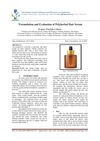 June 2024 in “International Journal of Pharmaceutical Research and Applications”
 Polyherbal hair serum can hydrate the scalp and promote hair growth safely.
 May 2024 in “International journal of nanomedicine”
 Plant-derived extracellular vesicles show promise for treating diseases like cancer and inflammation.
 April 2024 in “Current journal of applied science and technology”
 The organic hair ointment is safe, promotes hair growth in male rabbits, and has good stability and pH for human use.
 January 2024 in “International Research Journal of Modernization in Engineering Technology and Science”
 Nanotechnology improves the effectiveness of herbal hair products.
 January 2024 in “Journal of Pharmacognosy and Phytochemistry”
 Rosemary hair serum promotes healthier, stronger, and shinier hair.
 January 2024 in “International Journal of Pharmaceutical Research and Development”
 Herbal hair gels with natural ingredients can reduce dandruff and hair loss while repairing damage.
 December 2023 in “Sains Malaysiana”
 The enzyme Rand protease works well for leather dehairing and its stability is important, with Leu75 playing a key role.
 November 2023 in “Linköping University medical dissertations”
 Keratinocytes and adipose-derived stem cells can effectively heal difficult skin wounds.
 October 2023 in “Biomedical science and engineering”
 Innovative methods are reducing animal testing and improving biomedical research.
 October 2023 in “bioRxiv (Cold Spring Harbor Laboratory)”
 A protein called EGFR protects hair follicle stem cells, and when it's disrupted, hair follicles can be damaged, but blocking certain pathways can restore hair growth.
 September 2023 in “Journal of pharmacognosy and phytochemistry”
 Plumbago zeylanica has valuable medicinal properties but needs sustainable cultivation methods.

Fetal environments contain various chemicals that may disrupt hormones.
 September 2022 in “Institutional Repositories DataBase (IRDB)”
 3D-oxy exosomes may significantly boost hair growth, offering new treatment options for hair loss.
 March 2022 in “Marmara University Open Access System”
 Digital games are part of new media but need a deeper look at their complex nature and cultural roots.

No single biomarker is reliable enough for diagnosing and assessing SLE.

Human hair keratins can be turned into useful 3D biomedical scaffolds through a freeze-thaw process.
 March 2021 in “bioRxiv (Cold Spring Harbor Laboratory)”
 A specific immune response helps control mite populations on the skin, maintaining healthy hair follicles.

Exposure to toxic elements like mercury and lead may be linked to autism, and a higher zinc to copper ratio might help protect against it.