 3 citations
,
January 2010 in “Actas Dermo-Sifiliográficas”
3 citations
,
January 2010 in “Actas Dermo-Sifiliográficas” Immunization and throat bacteria may increase the risk of a hair loss condition called alopecia areata.
Unhealthy lifestyle habits may worsen hair loss by affecting scalp bacteria.
 December 2025 in “Babcock University Medical Journal”
 CD27 and IL-35 can help diagnose alopecia areata linked to bacterial infections.
48 citations
,
April 2019 in “PloS one” Alopecia areata patients have more Propionibacterium acnes and less Staphylococcus epidermidis on their scalps.
 January 2025 in “Annals of Dermatology”
 PCA patients have more harmful bacteria and antibiotic resistance, needing specific testing for treatment.
 September 2024 in “South Eastern European Journal of Public Health”
 Alopecia areata patients have higher IgE and IL-13 levels, suggesting immune involvement.
 4 citations
,
September 2020 in “Frontiers in Microbiology”
4 citations
,
September 2020 in “Frontiers in Microbiology” Algal oligosaccharides help prevent hair loss and promote hair growth.
 1 citations
,
November 2018 in “International research journal of pharmacy”
1 citations
,
November 2018 in “International research journal of pharmacy” Platelet Rich Plasma (PRP) treatment is safe and effective for hair growth in people with androgenic alopecia, and can also help treat bacterial infections.
 March 2021 in “Actas Dermo-Sifiliográficas”
 The microbiome may be linked to hair loss and could be a target for new treatments.
 51 citations
,
September 2015 in “Medical Clinics of North America”
51 citations
,
September 2015 in “Medical Clinics of North America” The conclusion is that acne, alopecia, and hyperhidrosis are common skin issues with various treatments available, and accurate diagnosis is key for effective management.
 2 citations
,
January 2015 in “Springer eBooks”
2 citations
,
January 2015 in “Springer eBooks” Early diagnosis and aggressive treatment are crucial for Cicatricial Alopecia, and treatment effectiveness varies among patients.
 1 citations
,
July 2018 in “Elsevier eBooks”
1 citations
,
July 2018 in “Elsevier eBooks” FAPD and possibly CCCA may be AGA subtypes, and treatments combining antiandrogens, hair growth agents, hair transplants, and anti-inflammatories could be effective.
 1 citations
,
January 2008 in “Elsevier eBooks”
1 citations
,
January 2008 in “Elsevier eBooks” The document concludes that various disorders can cause hair loss in dogs, each requiring different treatments, and some may heal on their own.
 1 citations
,
January 2006 in “Elsevier eBooks”
1 citations
,
January 2006 in “Elsevier eBooks” Cats lose fur due to various reasons, including allergies, infections, genetics, hormones, diet, cancer, stress, and some conditions are treatable while others are not.
 March 2026 in “Brazilian Journal of Microbiology”
 Restoring skin bacteria may help reduce hair loss.

Microbial imbalances on the scalp can help diagnose and manage hair loss early.
 September 2010 in “Companion Animal”
 The guide explains how to diagnose and treat hair loss in dogs, covering causes and treatments, with some conditions lacking treatment options.
 June 2026 in “Revista Brasileira de Saúde”
 The scalp microbiome may be a key factor in treating hair loss.
4 citations
,
October 2021 in “Microorganisms” Men with androgenetic alopecia have different scalp oils and microbes compared to those without.
 January 2025 in “Universidad de Córdoba Insitutional Repository (Universidad de Córdoba)”
 An imbalanced scalp microbiome may worsen alopecia areata severity and inflammation, but treatment can partially restore balance.
37 citations
,
February 2023 in “Gut Microbes” Gut bacteria can lower androgen levels in male mice.
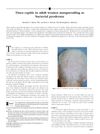 32 citations
,
August 2003 in “Journal of the American Academy of Dermatology”
32 citations
,
August 2003 in “Journal of the American Academy of Dermatology” Tinea capitis can be misdiagnosed as bacterial infection in adult women but is treatable with antifungal medication.
7 citations
,
September 2020 in “Bioscience Biotechnology and Biochemistry” The scalp has more diverse bacteria, while hair has more bacteria and unique types.
7 citations
,
October 2017 in “Journal of exotic pet medicine” A guinea pig with ovarian cysts had a uterine infection and abnormal uterus lining due to a piece of hay inside it.
 1 citations
,
January 2024 in “Journal of applied pharmaceutical science”
1 citations
,
January 2024 in “Journal of applied pharmaceutical science” Bacteria from Xylocarpus fruit can be used in hair creams to treat hair loss and fight infections.
1 citations
,
January 2013 in “INTAS POLIVET” Cephalexin effectively treats canine bacterial dermatitis, showing improvement within 72 hours.
March 2026 in “International Journal of Dermatology” Changes in scalp microbes may contribute to hair loss, suggesting new treatment options.
Alopecia in dogs requires identifying the cause for effective treatment.
 July 2024 in “Advancements in Life Sciences”
 Fungal infections are the most common skin disease in cats, especially white ones.
March 2026 in “Current Topics in Medicinal Chemistry” Gut microbiota and exosomal miRNAs may help treat hair loss.