 April 2026 in “Microsystems & Nanoengineering”
 HA-gel-dex hydrogels help heal wounds and regenerate tissue effectively.
 April 2026 in “International Journal of Drug Delivery Technology”
 Nanoparticle-based dressings and theranostic innovations improve chronic wound care by effectively targeting biofilms and offering precise treatment.
 April 2026 in “Frontiers in Bioengineering and Biotechnology”
 Cellulose membranes heal venous leg ulcers faster than standard dressings.
 March 2026 in “Panacea Journal of Medical Sciences”
 The technique successfully reconstructed a functional neo-vagina with 100% survival and patency, but lacked mucus secretion.
 March 2026 in “Tissue Engineering and Regenerative Medicine”
 Dopamine-modified adhesives are improving for sticking tissues underwater.
 February 2026 in “Bioimpacts”
 3D bioprinted hydrogels could improve diabetic wound healing but face challenges like limited blood supply and scalability.
 February 2026 in “Journal of Dermatology and Skin Science”
 Dermatologists are key in detecting and managing OCD and BFRBs by working with psychiatrists.
 February 2026 in “Frontiers in Bioengineering and Biotechnology”
 Liposome-based systems improve skin wound healing effectively.
 January 2026 in “Indus journal of bioscience research.”
 Hibiscus extract is a safe, effective, and stable ingredient for moisturizing creams.
 January 2026 in “Biomaterials Science”
 The formulation helps improve wound healing and skin repair.
Women's hair treatments in ancient Mesopotamia involved amulets, while men's treatments used topical applications.
 July 2025 in “Scientific Reports”
 RG and RJ gels speed up burn wound healing better than other treatments.
 July 2025 in “Bulgarian Portal for Open Science”
 Granulation and epithelialization are crucial for healing large skin wounds.
 December 2024 in “Deleted Journal”
 New therapies show promise for wound healing, but more research is needed for safe, affordable options.
The Chromolaena odorata patch significantly speeds up wound healing.
 December 2022 in “Indian Journal of Animal Research”
 Both fluoxetine and clomipramine effectively treat dog lick dermatitis, but fluoxetine works faster with lower recurrence, while clomipramine has fewer side effects.
 July 2022 in “Journal of Veterinary Medical Research”
 Fluconazole is effective against animal strains, while Itraconazole works for some human strains, and longer contact with disinfectants like iodine and Virkon S is crucial.
 April 2021 in “Advances in Cosmetic Surgery”
 Hair restoration can be achieved through non-surgical treatments like minoxidil, antiandrogens, phototherapy, and PRP procedures, or through surgical methods like hair transplantation. Continued treatment is needed to maintain results, and full results are visible after 12-18 months.

Silk sericin dressing with collagen heals wounds faster and improves scar quality better than Bactigras.
 November 2019 in “Harper's Textbook of Pediatric Dermatology”
 The document is a detailed medical reference on skin and genetic disorders.
 September 2019 in “University of Huddersfield Repository (University of Huddersfield)”
 Nanoemulsions can effectively deliver antiseptic agents deep into the skin.
 April 2018 in “The journal of investigative dermatology/Journal of investigative dermatology”
 Researchers created a 3D-printed skin model that grew human hair when grafted onto mice by improving blood supply to the grafts.
 April 2018 in “Deleted Journal”
 Skin grafts are a common, minimally invasive way to close wounds in dogs, but better methods are still being sought.
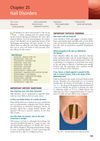 January 2018 in “Elsevier eBooks”
 Different nail disorders are treated by targeting their specific causes and using appropriate medications or protective measures.
 January 2017 in “Springer eBooks”
 The document explains various skin conditions and their treatments.
 January 2009 in “Springer eBooks”
 The document concludes that treating skin conditions should include psychological care and a multidisciplinary approach is essential for effective management.
 July 2008 in “Baylor University Medical Center Proceedings”
 Global oil use will rise, US corn-to-ethanol policy is flawed, and various social and economic issues need attention.
 June 2008 in “Springer eBooks”
 The document concludes that permanent hair loss conditions are complex, require early specific treatments, and "secondary permanent alopecias" might be a more accurate term than "secondary cicatricial alopecia."
 July 1997 in “Journal of Cutaneous Medicine and Surgery”
 Finasteride significantly increases scalp hair and prevents hair loss in young and middle-aged men.
 October 1987 in “Clinics in Dermatology”
 Hair transplantation is beneficial if the right patients are chosen and the procedure is done carefully.