 1 citations
,
April 2018 in “The journal of investigative dermatology/Journal of investigative dermatology”
1 citations
,
April 2018 in “The journal of investigative dermatology/Journal of investigative dermatology” Topical patidegib gel effectively treats basal cell carcinoma in Gorlin syndrome patients without causing the side effects seen with oral treatments.
 1 citations
,
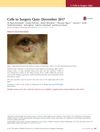
November 2017 in “The journal of investigative dermatology/Journal of investigative dermatology”
1 citations
,
November 2017 in “The journal of investigative dermatology/Journal of investigative dermatology” Mohs micrographic surgery is effective for treating basal cell carcinoma on the eyelid, while radiotherapy has higher recurrence rates, and topical vitamin D3 may reduce and delay BCC formation in mice.
1 citations
,
May 2017 in “InTech eBooks” The chapter explains common scalp conditions, including infections, infestations, and tumors.
 1 citations
,
April 2017 in “Journal of Investigative Dermatology”
1 citations
,
April 2017 in “Journal of Investigative Dermatology” A new one-step test can quickly identify skin cancer during surgery.
 1 citations
,
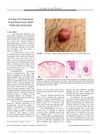
February 2017 in “The American journal of dermatopathology/American journal of dermatopathology”
1 citations
,
February 2017 in “The American journal of dermatopathology/American journal of dermatopathology” A man with a skin nodule was diagnosed with a rare skin condition called cutaneous focal mucinosis, which can be confused with other skin cancers.
1 citations
,
April 2016 in “Journal of the American Academy of Dermatology” Autoimmune conditions can be linked to trichoepitheliomas, with treatment focusing on cosmetic concerns.
 1 citations
,
April 2016 in “Journal of Investigative Dermatology”
1 citations
,
April 2016 in “Journal of Investigative Dermatology” UV photography can help identify people at higher risk for skin cancer, and male pattern baldness at age 45 is linked to a higher risk of certain skin cancers.
 1 citations
,
March 2015 in “Journal of Cutaneous Medicine and Surgery”
1 citations
,
March 2015 in “Journal of Cutaneous Medicine and Surgery” Eyebrow hair transplants can regrow after high-dose radiation therapy.
 1 citations
,
June 2008 in “The Journal of Urology”
1 citations
,
June 2008 in “The Journal of Urology” Dihydrotestosterone gel before hypospadias surgery led to less scarring but raised concerns about potential psychological effects and skin changes.
1 citations
,
October 2007 in “The Cancer Handbook” Malignant melanoma is the deadliest skin cancer, while BCC is the most common but rarely spreads, and SCC is more aggressive than BCC.
May 2026 in “Frontiers in Oncology” Alopecia areata may lower melanoma risk and does not increase overall skin cancer risk.
 March 2026 in “Scientific Journal”
 Early recognition and evaluation of nevus sebaceus are crucial to detect and manage potential cancerous changes.
 March 2026 in “Dermatology Online Journal”
 Cystic panfolliculoma is a rare, harmless tumor that can be confused with other skin tumors.
November 2025 in “Journal of Investigative Dermatology” TEDAR is crucial for skin cell differentiation and barrier formation.
June 2025 in “British Journal of Dermatology” Melanocytic matricoma can look like skin cancer but is usually harmless; surgery and follow-up are advised.
June 2025 in “Indian Journal of Dermatology” A rare skin condition was identified and planned for treatment in an elderly man.
May 2025 in “International Journal of Women’s Dermatology” 5-alpha reductase inhibitors and spironolactone don't increase gynecological tumor risk, glucagon-like-peptide-1 receptor agonists may increase alopecia risk, sanitary pads can cause dermatitis, early hidradenitis suppurativa intervention is crucial for Hispanic patients, community education boosts skin cancer awareness, metformin may improve skin cancer survival, LNG-IUDs can increase acne risk, machine learning accurately detects basal cell carcinoma, JAK-inhibitors may raise miscarriage risk, inclusive skincare ads affect those with darker skin, and CCCA in Black women might involve autoimmunity.
January 2025 in “Indian Journal of Dermatopathology and Diagnostic Dermatology” Nevus sebaceous is identified by unique skin changes, including thickened skin, fewer hair follicles, and many sebaceous glands.
January 2025 in “Surgical & Cosmetic Dermatology” Forehead reduction surgery can fix forehead defects and improve appearance.
 March 2024 in “IP Indian journal of clinical and experimental dermatology”
 Giant solitary trichoepithelioma is a rare, usually non-cancerous hair follicle tumor that can sometimes turn into skin cancer.
 February 2023 in “Benha Journal of Applied Sciences”
 R-Spondin-1 is important for skin health and could help diagnose and treat various skin conditions.
 September 2022 in “TURKDERM”
 A rare benign skin nodule was found on the buttock, a unique location for this condition.
 March 2022 in “Ophthalmology Journal”
 A woman's rare benign eyelid tumor was correctly identified through detailed tissue analysis.
January 2022 in “Optometric clinical practice” A woman had a non-cancerous skin tumor on her eyelid removed successfully.
Hedgehog signaling can create new hair follicles in adult skin but may increase cancer risk.
Hedgehog signaling can create new hair follicles but may also cause tumors.
January 2019 in “Journal of the American Academy of Dermatology” Childhood cancer survivors need better skin care and sun protection.
 January 2019 in “Elsevier eBooks”
 Early detection and skin biopsies are crucial for treating skin cancer and diagnosing various skin conditions.
 April 2018 in “Journal of Investigative Dermatology”
 BLZ-100 is safe for use in skin cancer surgery and may help identify cancerous tissue.
 April 2018 in “Journal of Investigative Dermatology”
 Nonmelanoma skin cancers have higher levels of certain osteopontin variants than normal skin.