 16 citations
,
October 2012 in “The Journal of Dermatology”
16 citations
,
October 2012 in “The Journal of Dermatology” The BASP classification is more reliable than the Norwood-Hamilton for classifying hair loss in men and women.
 11 citations
,
December 2018 in “Journal of Dermatology”
11 citations
,
December 2018 in “Journal of Dermatology” Finasteride effectively treats hair loss in Korean men for at least 5 years, with V type responding better.
 July 2007 in “Faculty Opinions – Post-Publication Peer Review of the Biomedical Literature”
 The BASP classification is a detailed system for categorizing hair loss in both men and women, but it may be complex for beginners and not fully suitable for grading female hair loss.
 2 citations
,
June 2019 in “International Journal of Dermatology”
2 citations
,
June 2019 in “International Journal of Dermatology” The modified hair loss classification is more detailed but less user-friendly.
January 2016 in “프로그램북(구 초록집)” The revised BASP classification for hair loss is less accurate and harder to use but could still be a viable option.
 8 citations
,
January 2013 in “International Journal of Trichology”
8 citations
,
January 2013 in “International Journal of Trichology” The BASP classification is effective for diagnosing pattern hair loss in Indian men and women.
 125 citations
,
May 2007 in “Journal of The American Academy of Dermatology”
125 citations
,
May 2007 in “Journal of The American Academy of Dermatology” The BASP classification is a detailed and accurate way to categorize hair loss in both men and women.
 18 citations
,
March 2011 in “Journal of The American Academy of Dermatology”
18 citations
,
March 2011 in “Journal of The American Academy of Dermatology” Familial factors affect hair loss types in Koreans, with M type in men, L type in women, and paternal factors influencing male hair loss more.
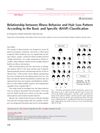 1 citations
,
January 2023 in “Annals of Dermatology”
1 citations
,
January 2023 in “Annals of Dermatology” The BASP classification helps predict patient behavior and improve treatment for hair loss.
 June 2026 in “Indian Journal of Dermatology Venereology and Leprology”
 Trichoscopy helps detect and monitor androgenetic alopecia by identifying key scalp signs.
December 2021 in “Acta dermato-venereologica” A deep learning model accurately predicts male hair loss types using scalp images.
 1 citations
,
September 2016 in “Journal of Dermatology”
1 citations
,
September 2016 in “Journal of Dermatology” Baldness is common in Korean men (60.5%), and those with a family history are 3.1 times more likely to have hairline recession.
 9 citations
,
January 2017 in “International Journal of Trichology”
9 citations
,
January 2017 in “International Journal of Trichology” No current system perfectly classifies male-pattern hair loss, indicating a need for a new system for better diagnosis and treatment.
39 citations
,
February 2005 in “Anais Brasileiros de Dermatologia” Alopecia areata is an autoimmune disease with genetic roots, and treatments include specific topical therapies.
 3 citations
,
October 2017 in “Journal of Cosmetic Dermatology”
3 citations
,
October 2017 in “Journal of Cosmetic Dermatology” Dr. Muhammad Ahmad created a hair classification system to help improve hair restoration surgery outcomes.

Korean patients with androgenetic alopecia may have a higher risk of heart-related health issues and could benefit from early heart screening and healthier lifestyles.
 September 2023 in “Journal of The American Academy of Dermatology”
 Dutasteride is safe and effective long-term for male hair loss.
 February 2024 in “The Journal of Dermatology”
 Dutasteride 0.5 mg is safe and effective for long-term use in Korean men with hair loss.
 1 citations
,
October 2021 in “Journal of The American Academy of Dermatology”
1 citations
,
October 2021 in “Journal of The American Academy of Dermatology” The document concludes that treatments for hair loss in transgender and gender-diverse individuals include topical solutions, oral medications, laser therapy, and hair restoration procedures, with progress assessed after 6-12 months.
 May 2026 in “International Journal of Drug Delivery Technology”
 Machine learning can accurately predict PCOS phenotypes using lifestyle and symptom data.
 September 2017 in “Springer eBooks”
 FUE hair transplants have improved to give more natural results with less scarring and pain.
 4 citations
,
October 2012 in “Archives of Dermatology”
4 citations
,
October 2012 in “Archives of Dermatology” Hair diameter diversity is a key sign for diagnosing and managing male pattern baldness.
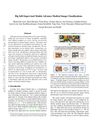 January 2021 in “arXiv (Cornell University)”
 Self-supervised learning improves medical image classification accuracy.
 85 citations
,
August 2015 in “Journal of Applied Genetics”
85 citations
,
August 2015 in “Journal of Applied Genetics” Mutations in specific genes disrupt development of sweat glands, teeth, hair, skin, and nails in HED.
 12 citations
,
August 2011 in “European Journal of Endocrinology”
12 citations
,
August 2011 in “European Journal of Endocrinology” Anti-Müllerian hormone is a specific marker for ovarian issues in women with conditions like PCOS.
Cichlid fish regenerate teeth quickly due to specific cell interactions and gene expressions.
 101 citations
,
January 2016 in “Journal of Cutaneous and Aesthetic Surgery”
101 citations
,
January 2016 in “Journal of Cutaneous and Aesthetic Surgery” Different types of hair loss need specific treatments, and while many classification systems exist, each has its flaws; more research is needed to refine these systems and treatments.
44 citations
,
February 2023 in “Cell” Fingerprints form uniquely before birth due to specific genetic pathways and local signals.
 1 citations
,
May 2023 in “Journal of molecular evolution”
1 citations
,
May 2023 in “Journal of molecular evolution” Pangolins have lost some skin-related genes, but kept others, leading to their unique scales and skin features.
 1 citations
,
December 2022 in “bioRxiv (Cold Spring Harbor Laboratory)”
1 citations
,
December 2022 in “bioRxiv (Cold Spring Harbor Laboratory)” Pangolins have lost some skin-related genes, but kept others, showing complex skin evolution.