 2 citations
,
June 2019 in “International Journal of Dermatology”
2 citations
,
June 2019 in “International Journal of Dermatology” The modified hair loss classification is more detailed but less user-friendly.
 1 citations
,
January 2023 in “Annals of Dermatology”
1 citations
,
January 2023 in “Annals of Dermatology” The BASP classification helps predict patient behavior and improve treatment for hair loss.
January 2016 in “프로그램북(구 초록집)” The revised BASP classification for hair loss is less accurate and harder to use but could still be a viable option.
 May 2026 in “Frontiers in Medicine”
 Androgenetic alopecia is linked to factors like age, family hair loss history, diet, and health conditions.
 May 2021 in “Pakistan Journal of Medical and Health Sciences”
 M type hair loss is the most common in Pakistani men.
November 2020 in “Дерматовенерология, косметология” The M-type is the most common form of male hair loss, and the BASP-classification is easy for different medical professionals to use.
 16 citations
,
October 2012 in “The Journal of Dermatology”
16 citations
,
October 2012 in “The Journal of Dermatology” The BASP classification is more reliable than the Norwood-Hamilton for classifying hair loss in men and women.
 9 citations
,
January 2017 in “International Journal of Trichology”
9 citations
,
January 2017 in “International Journal of Trichology” No current system perfectly classifies male-pattern hair loss, indicating a need for a new system for better diagnosis and treatment.
 8 citations
,
January 2013 in “International Journal of Trichology”
8 citations
,
January 2013 in “International Journal of Trichology” The BASP classification is effective for diagnosing pattern hair loss in Indian men and women.
 6 citations
,
December 2014 in “Clinical and Experimental Dermatology”
6 citations
,
December 2014 in “Clinical and Experimental Dermatology” Hair density and thickness decrease in all scalp areas for East Asians with AGA.
 2 citations
,
January 2010 in “International Journal of Trichology”
2 citations
,
January 2010 in “International Journal of Trichology” The Hair India 2010 conference introduced a new hair loss classification and highlighted advanced diagnostic techniques in trichology.
1 citations
,
January 2022 in “Annals of Dermatology” Dutasteride is more effective than finasteride for long-term hair growth in men with androgenic alopecia.
 1 citations
,
September 2016 in “Journal of Dermatology”
1 citations
,
September 2016 in “Journal of Dermatology” Baldness is common in Korean men (60.5%), and those with a family history are 3.1 times more likely to have hairline recession.
 1 citations
,
May 2016 in “Dermatologic Surgery”
1 citations
,
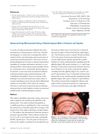
May 2016 in “Dermatologic Surgery” The document concludes that using a phototrichogram with a protractor and tapeline is a reliable and noninvasive way to measure hair loss.
 June 2024 in “Skin Research and Technology”
 Severe male pattern hair loss is linked to lower hair density in the back of the head.
 March 2024 in “Skin research and technology”
 New dermoscopic criteria accurately diagnose and grade the severity of hair loss in androgenetic alopecia.

Cetosomal minoxidil is safer and as effective as alcohol-based minoxidil for male hair loss treatment.
 September 2023 in “Journal of The American Academy of Dermatology”
 Dutasteride is safe and effective long-term for male hair loss.
January 2015 in “프로그램북(구 초록집)” Many Korean women with female-pattern hair loss have reduced hair density at the temples.
 March 2017 in “Journal of Dermatology”
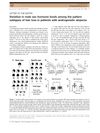
 Different hair loss patterns may be linked to varying male hormone levels.
 13 citations
,
January 2018 in “Annals of Dermatology”
13 citations
,
January 2018 in “Annals of Dermatology” Alopecia areata and androgenetic alopecia affect quality of life similarly.
 7 citations
,
January 2018 in “International Journal of Dermatology”
7 citations
,
January 2018 in “International Journal of Dermatology” AGA risk factors include age, smoking, hypertension for men, and age, dyslipidemia for women; lifestyle changes may help prevention.
 6 citations
,
July 2011 in “British Journal of Dermatology”
6 citations
,
July 2011 in “British Journal of Dermatology” A man with KID syndrome developed a rare cancer in a long-term skin infection.
 5 citations
,
January 2012 in “Dermatology”
5 citations
,
January 2012 in “Dermatology” Adapted classification better assesses male pattern hair loss and its link to heart disease.
 4 citations
,
September 2019 in “Journal of Cosmetic Dermatology”
4 citations
,
September 2019 in “Journal of Cosmetic Dermatology” FUE megasession effectively treats severe hair loss with natural-looking results in one operation.
 July 2016 in “Journal of Cutaneous Medicine and Surgery”
 Receding hairlines in men are uneven, with the right side larger than the left.
 July 2011 in “British Journal of Dermatology”
 Hormone treatment caused hair loss, finasteride helped regrowth.
 105 citations
,
January 2009 in “Medicine”
105 citations
,
January 2009 in “Medicine” Hirsutism is more linked to high androgen levels than acne or hair loss, and a mix of hormonal tests is best for diagnosis; certain treatments can reduce symptoms.
 100 citations
,
April 2010 in “Expert Opinion on Pharmacotherapy”
100 citations
,
April 2010 in “Expert Opinion on Pharmacotherapy” Hair loss in men treated best with early medication or transplant, new treatments researched.
 52 citations
,
June 2009 in “Current Opinion in Endocrinology, Diabetes and Obesity”
52 citations
,
June 2009 in “Current Opinion in Endocrinology, Diabetes and Obesity” The document concludes that hair transplantation and gene therapy may be important for future hair loss treatment.