Deleting the MAD2L1 gene in mice led to rapid tumor growth despite chromosomal instability.
41 citations
,
December 1988 in “Journal of Investigative Dermatology” 27 citations
,
July 1997 in “PubMed” The harlequin ichthyosis mouse mutation causes thick skin and early death, resembling a human skin disorder.
 May 2024 in “Animal genetics”
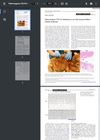
 A cat's poor wound healing was linked to a genetic deletion in the COL5A1 gene.

Lhx2 is a crucial regulator of the Sonic Hedgehog signaling in early mouse retinal development.
 58 citations
,
February 2016 in “Scientific reports”
58 citations
,
February 2016 in “Scientific reports” Blocking BACE1 and BACE2 enzymes causes hair color loss in mice.
136 citations
,
March 1998 in “Oncogene” Overexpression of E2F1 can lead to skin tumors and disrupt hair growth.
 April 2018 in “Journal of Investigative Dermatology”
 Older mice healed wounds better but lost more weight and might have weaker immune systems afterward.
 16 citations
,
April 1978 in “Genetics Research”
16 citations
,
April 1978 in “Genetics Research” Mice with the ab gene have abnormal sebaceous gland development, affecting sebum production.
64 citations
,
March 2004 in “Journal of Clinical Investigation” Targeting ornithine decarboxylase can help prevent skin cancer.
 July 2024 in “Journal of Investigative Dermatology”
 Losing both ERBB2 and ERBB3 receptors in mice causes significant skin problems and inflammation.
 5 citations
,
January 2024 in “The International Journal of Developmental Biology”
5 citations
,
January 2024 in “The International Journal of Developmental Biology” Mouse models help target specific genes in lymphatic cells for research.
63 citations
,
April 2005 in “Mechanisms of development” Mice with too much Claudin-6 have skin barrier problems and abnormal hair growth.
16 citations
,
January 2019 in “Aging” Lack of functional CYLD in mice leads to early aging and cancer.
 2 citations
,
June 2023 in “Journal of cell science”
2 citations
,
June 2023 in “Journal of cell science” Mutations in iRhom2 affect hair and skin in mice and are linked to esophageal cancer, with ADAM17 playing a crucial role.
 April 2016 in “The journal of investigative dermatology/Journal of investigative dermatology”
 MPZL3 is crucial for seborrheic dermatitis development.
3 citations
,
March 2023 in “Annals of the New York Academy of Sciences” Mutations in claudin-1 and claudin-3 cause hair loss in baby mice.
37 citations
,
June 2004 in “Human molecular genetics online/Human molecular genetics” The HCR gene contributes to psoriasis risk.
April 2018 in “Journal of Investigative Dermatology” Mutations in Far2 mice cause hair loss due to sebaceous gland issues.
178 citations
,
June 1994 in “Journal of Investigative Dermatology” Alopecia areata in these mice is inherited, more common in young females, and can be treated with triamcinolone acetonide.
694 citations
,
April 2000 in “Nature genetics” Msx2 deficiency in mice leads to bone growth and organ development problems.
 January 2026 in “MDPI (MDPI AG)”
 The hairy ear mutation in mice is linked to changes in gene expression affecting hair growth.
29 citations
,
January 2003 in “Genomics” A new mouse mutation causes skin and hair issues, influenced by another gene.
 23 citations
,
February 2020 in “PLOS genetics”
23 citations
,
February 2020 in “PLOS genetics” Mice with LSS deficiency showed hair loss and cataracts, similar to humans, and can help in understanding and treating this condition.
14 citations
,
September 1999 in “Mammalian genome” The scraggly mutation causes hair loss and skin defects in mice.
 April 2017 in “Journal of Dermatological Science”
 B cells can both help and hinder the body's defense against melanoma.
3 citations
,
September 2022 in “European Journal of Dermatology” Gene sequencing is crucial for diagnosing Junctional epidermolysis bullosa.
 June 2023 in “Journal of biological chemistry/The Journal of biological chemistry”
 Sdr16c5 and Sdr16c6 genes regulate a key point in lipid production that affects eye and skin gland function.
Deleting the MAD2L1 gene is tolerated in certain mouse cancer models.
April 2010 in “Cancer Research” Mcl-1 can activate Wnt signaling in skin cells, promoting growth and possibly cancer.