 26 citations
,
December 2006 in “Endocrinology”
26 citations
,
December 2006 in “Endocrinology” A cream with a specific hormone blocker increases hair growth in mice.
 June 2020 in “Journal of Investigative Dermatology”
 More research with diverse participants is needed to determine the effectiveness of photobiomodulation devices for hair loss treatment.
September 2023 in “Journal of the American Academy of Dermatology” BAP1 mutations are rare in pediatric melanocytic tumors and may develop later in life.
7 citations
,
December 1981 in “International Journal of Dermatology” Understanding genes can help diagnose and treat skin color disorders.
September 2015 in “Photodiagnosis and Photodynamic Therapy” 54 citations
,
November 2014 in “JEADV. Journal of the European Academy of Dermatology and Venereology/Journal of the European Academy of Dermatology and Venereology” Combining LFQS and IPL is more effective and faster for treating melasma than LFQS alone.
54 citations
,
January 1995 in “Human Molecular Genetics” Monilethrix is linked to a gene cluster on chromosome 12.
 April 2026 in “Cosmetics”
 The formulation significantly increased hair density and thickness safely in people with androgenetic alopecia.
1 citations
,
February 2025 in “Archives of Dermatological Research” Using Excimer light with topical steroids is the most effective treatment for alopecia areata.
 April 2017 in “Journal of Investigative Dermatology”
 Deep phenotyping helps distinguish between xeroderma pigmentosum and trichothiodystrophy, aiding in diagnosis and treatment.
 7 citations
,
March 2012 in “Journal of Investigative Dermatology”
7 citations
,
March 2012 in “Journal of Investigative Dermatology” Some thymic peptides can increase human hair growth, while others may inhibit it.
 May 2025 in “Pediatric Dermatology”
 Topical and oral minoxidil are the best treatments for monilethrix.
 4 citations
,
August 2014 in “Journal of molecular structure”
4 citations
,
August 2014 in “Journal of molecular structure” Chemical treatments on bleached black hair change its internal structure by breaking and reforming bonds, and treatments with hydrolyzed eggwhite protein help repair it.
 July 2022 in “Journal of Investigative Dermatology”
 Substance P may contribute to hair loss by increasing oxidative stress and mitochondrial activity in hair follicles.
 4 citations
,
May 2022 in “Future Journal of Pharmaceutical Sciences”
4 citations
,
May 2022 in “Future Journal of Pharmaceutical Sciences” Melatonin-loaded microemulsion could be a promising treatment for hair loss.
26 citations
,
January 1992 in “Carcinogenesis” TPA strongly increases ODC activity in certain skin cells, potentially aiding tumor growth.
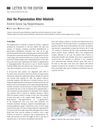 April 2025 in “Turkish Journal of Hematology”
 Nilotinib may cause gray hair to return to its original color.
29 citations
,
April 1997 in “Developmental Dynamics” Trypsin slows hair growth and affects color by causing cell death in hair follicles.
 12 citations
,
January 2020 in “Analyst”
12 citations
,
January 2020 in “Analyst” Researchers found markers that can tell if hair has been bleached, which could improve hair test accuracy.
November 2024 in “Journal of Investigative Dermatology” 2 citations
,
July 1994 in “Journal of Dermatological Science” Grafted human scalp samples on mice can produce human hair, useful for studying hair genetics.
16 citations
,
October 2004 in “Journal of Investigative Dermatology” Normal human melanocytes can avoid cell death through multiple pathways.
 July 2024 in “International Journal of Dermatology”
 New methods and treatments for skin and hair disorders are being explored.
 16 citations
,
September 2018 in “Journal of Molecular Liquids”
16 citations
,
September 2018 in “Journal of Molecular Liquids” The PS-b-PAA copolymer nanomicelles are effective for delivering a cancer treatment drug in photodynamic therapy.
Minoxidil can cause hair to turn yellow.
 1 citations
,
April 2019 in “The journal of investigative dermatology/Journal of investigative dermatology”
1 citations
,
April 2019 in “The journal of investigative dermatology/Journal of investigative dermatology” Melanocyte-associated antigens may play a key role in alopecia areata and could be targets for new treatments.
18 citations
,
January 2015 in “Experimental Dermatology” New mutations in KRT83 and KRT86 are linked to the hair disorder monilethrix.
 14 citations
,
January 2012 in “Proteins”
14 citations
,
January 2012 in “Proteins” Electrostatic interactions mainly stabilize the binding of peptides to hair keratin.
18 citations
,
March 2009 in “Skin pharmacology and physiology” Sunlight damages hair, causing cuticle loss, protein changes, and discoloration.
65 citations
,
May 2001 in “Journal of Analytical Toxicology” Basic drugs like amphetamine are absorbed more in darker hair than lighter hair.