 124 citations
,
August 1994 in “Journal of Investigative Dermatology”
124 citations
,
August 1994 in “Journal of Investigative Dermatology” Dexamethasone speeds up hair loss in mice, while cyclosporin A slows it down.
 November 2023 in “PubMed”
 Pentoxifylline is a safe and effective alternative to triamcinolone acetonide for treating localized alopecia areata.
 December 2023 in “International journal of research in dermatology”
 Adding PRP to topical mometasone improves and speeds up alopecia areata treatment.
21 citations
,
December 2014 in “Clinics in dermatology” Squaric acid dibutylester effectively treats alopecia areata.
15 citations
,
January 2015 in “International journal of medical research and health sciences” Platelet rich plasma is as effective as triamcinolone for treating alopecia areata.
October 2022 in “Dermatology practical & conceptual” Both treatments help hair regrowth, with PRP being slightly better.
2 citations
,
January 2012 in “Journal of Clinical & Experimental Dermatology Research” Fexofenadine reduces discomfort but doesn't significantly improve hair regrowth in Alopecia Areata treatment.
 1 citations
,
December 2020 in “Dermatology Archives”
1 citations
,
December 2020 in “Dermatology Archives” Systemic steroids temporarily improve severe alopecia areata in children but often lead to relapse.
May 2009 in “Faculty Opinions – Post-Publication Peer Review of the Biomedical Literature” DHEA therapy improved pubic hair growth and psychological well-being in young females with adrenal insufficiency.
12 citations
,
August 2016 in “Biomedical Chromatography” A new method accurately measures clobetasol propionate in hair and skin.
132 citations
,
November 1998 in “Journal of the American Academy of Dermatology” Topical sensitizers have mixed success in treating alopecia areata.
 2 citations
,
November 2007 in “Journal of Investigative Dermatology”
2 citations
,
November 2007 in “Journal of Investigative Dermatology” Fluocinolone acetonide slows down hair follicle stem cells but speeds up skin cell growth in mice.
 January 2015 in “Journal of evolution of medical and dental sciences”
 Topical tacrolimus is effective and safe for treating alopecia areata.
2 citations
,
March 2022 in “Dermatologic Therapy” Latanoprost 0.005% solution safely increases hair density and regrowth in scalp alopecia areata.
Both treatments for localized alopecia areata are equally effective.
164 citations
,
January 2003 in “Drugs” January 2002 in “Chinese Journal of Pharmaceuticals” A new method was developed to make a compound used in finasteride and epristeride with a 69% yield.
December 2023 in “Reactions weekly” December 2023 in “Reactions weekly” September 2013 in “Reactions weekly” 21 citations
,
October 2007 in “Australasian Journal of Dermatology” A woman with hair loss regrew white hair after taking prednisolone.
45 citations
,
May 2002 in “International Journal of Dermatology” Prednisone may cause multiple skin nodules in lupus patients.

Finasteride-loaded microemulsions, made with cinnamon oil, Tween20, propylene glycol, and water, can help maintain stemness of dermal cells, potentially aiding in hair regeneration.
 9 citations
,
November 2017 in “Journal of Glaucoma”
9 citations
,
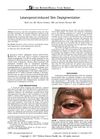
November 2017 in “Journal of Glaucoma” Latanoprost eye drops may cause skin depigmentation.
15 citations
,
April 2016 in “The Journal of Dermatology” Multiple courses of pulse corticosteroid therapy improve hair growth in alopecia areata patients with minimal side effects.
July 2021 in “The Egyptian Journal of Hospital Medicine” Intralesional Triamcinolone acetonide injections are safe and effective for treating alopecia areata.
July 1974 in “Archives of dermatology” The woman's widespread skin condition did not improve despite various treatments.
 2 citations
,
June 2024 in “International Journal of Drug Delivery Technology”
2 citations
,
June 2024 in “International Journal of Drug Delivery Technology” Advanced delivery systems can make dithranol more effective and less irritating for treating psoriasis.
 9 citations
,
July 2017 in “Dermatologic Therapy”
9 citations
,
July 2017 in “Dermatologic Therapy” Two elderly men developed scalp inflammation after using a gel for skin lesions, which healed with treatment except for some permanent hair loss.
 25 citations
,
January 2017 in “Steroids”
25 citations
,
January 2017 in “Steroids” Allopregnanolone increases growth and changes gene activity in human brain cancer cells.