March 2025 in “NATIONS UNIVERSITY INTERNATIONAL JOURNAL OF MULTI-DISCIPLINARY STUDIES” Baricitinib effectively improved skin and hair conditions in a patient with alopecia areata and atopic dermatitis.
 October 2025 in “Pharmaceutical Development and Technology”
 Cubosomal gels enhance skin absorption of cetirizine better than niosomal gels.
1 citations
,
May 2025 in “BMC Cancer” CDK4/6 inhibitors affect safety and quality of life differently, requiring careful use.
 September 2023 in “Journal of The American Academy of Dermatology”
 Reducing the dose of Baricitinib to 2mg led to a loss of hair regrowth benefits in nearly half of the patients by Week-104.
February 2020 in “Central Plains Medical Journal” Thalidomide with CHOP is more effective for peripheral T-cell lymphoma than CHOP alone.
21 citations
,
January 2021 in “Frontiers in Pharmacology” Thiopurines help treat IBD but require genetic testing to avoid side effects.
 March 2025 in “Journal of the European Academy of Dermatology and Venereology”
 Baricitinib effectively reduces hair loss in alopecia areata and is well-tolerated.

Long-term use of seizure medications can disrupt calcium metabolism, but this can be treated with vitamin D or UV light and does not affect seizure control.
 September 2024 in “Drugs & Therapy Perspectives”
 Ritlecitinib effectively regrows hair in severe alopecia areata and is well tolerated.
Baricitinib effectively regrows hair in severe alopecia areata cases.
Belimumab effectively controls SLE disease activity and reduces steroid use.
Baricitinib shows promise for treating alopecia areata with mild side effects.
January 2000 in “Cambio 16” Bcl-2 affects hair growth and pigmentation by controlling cell death.
 June 2024 in “Journal of Clinical Oncology”
 Dalpiciclib is the safest and most satisfying CDK4/6 inhibitor for advanced breast cancer patients in China.
January 2025 in “Dusunen Adam The Journal of Psychiatry and Neurological Sciences” 12 citations
,
September 2011 in “BMJ Case Reports” Quick diagnosis and biotin treatment can dramatically improve biotinidase deficiency symptoms.
 21 citations
,
March 2015 in “Journal of The American Academy of Dermatology”
21 citations
,
March 2015 in “Journal of The American Academy of Dermatology” Vemurafenib therapy can cause hair loss, but clobetasol propionate foam can help regrow hair.
![Discovery of 7-Methoxy-6-[4-(4-Methyl-1,3-Thiazol-2-yl)-1H-Imidazol-5-yl]-1,3-Benzothiazole (TASP0382088): A Potent and Selective Transforming Growth Factor-β Type I Receptor Inhibitor as a Topical Drug for Alopecia](/images/assets/9620bd26-3366-4f2a-bcac-f511697bbc41/small/35997.jpg) 6 citations
,
January 2013 in “Chemical & pharmaceutical bulletin/Chemical and pharmaceutical bulletin”
6 citations
,
January 2013 in “Chemical & pharmaceutical bulletin/Chemical and pharmaceutical bulletin” A new compound shows promise as a topical treatment for hair loss.
89 citations
,
January 2020 in “PubMed” Early detection and biotin treatment improve outcomes for biotinidase deficiency.
Finasteride may help treat childhood brain tumors by activating certain genes.
July 2024 in “Journal of Investigative Dermatology” Baicalin may help treat severe drug-induced skin reactions.
November 2025 in “SKIN The Journal of Cutaneous Medicine” Baricitinib is effective and safe for treating severe alopecia areata for up to 5 years.
August 2021 in “Journal of the American Academy of Dermatology” Oral baricitinib is effective and safe for treating alopecia areata.
September 2013 in “Oncology Times” Oncology specialists are disappointed by the discontinuation of the effective lymphoma treatment Bexxar.
 3 citations
,
September 2022 in “Journal of the American Academy of Dermatology”
3 citations
,
September 2022 in “Journal of the American Academy of Dermatology” Baricitinib is effective and safe for severe alopecia areata, working similarly with or without an atopic background.
86 citations
,
June 2018 in “Cochrane library” Mycophenolate mofetil may improve lupus nephritis remission more than cyclophosphamide but with uncertain safety.
21 citations
,
November 2018 in “Journal of the European Academy of Dermatology and Venereology” The combination of encorafenib and binimetinib caused few skin issues.
 25 citations
,
November 2022 in “British journal of dermatology/British journal of dermatology, Supplement”
25 citations
,
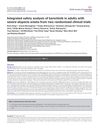
November 2022 in “British journal of dermatology/British journal of dermatology, Supplement” Baricitinib for severe alopecia areata is generally safe, with common side effects like infections and acne, and low rates of serious complications.
25 citations
,
October 2010 in “Journal of Hepatology” Budesonide alone is less effective than standard treatment for autoimmune hepatitis.
September 2025 in “Acta Dermato Venereologica” Baricitinib can help improve hair loss and skin color issues in people with Down syndrome.