September 2025 in “PubMed” Regenerative hair transplant improves hair growth and quality using stem cells.
 August 1998 in “Dermatologic Surgery”
 Dr. George A. Farber recommends using follicular unit transplantation for hair restoration because it gives a more natural look and has fewer problems compared to the older miniflap technique.
 4 citations
,
January 2015 in “Experimental Dermatology”
4 citations
,
January 2015 in “Experimental Dermatology” Human hair follicle dermal cells can help repair damaged hair follicles.

New techniques make hair transplants look more natural.
 October 2025 in “Revista fisio&terapia.”
 Proper care and management are crucial for successful hair transplants and minimizing complications.
October 2022 in “Hair Transplantation” Transgender patients use hair restoration surgery to match their hairline with their gender identity.
 5 citations
,
November 2017 in “Hair transplant forum international”
5 citations
,
November 2017 in “Hair transplant forum international” Following a standard process for FUE hair transplants leads to consistent results.
October 2022 in “Hair Transplantation” Motorized FUE with blunt punches improved hair restoration by reducing damage during graft harvesting.
 September 2007 in “PubMed”
 Implanted human scalp cells can regenerate hair-like structures in mice.
 3 citations
,
January 2018 in “Open Access Macedonian Journal of Medical Sciences”
3 citations
,
January 2018 in “Open Access Macedonian Journal of Medical Sciences” Implant safely and effectively treats hair loss.
 January 1970 in “Bangladesh journal of plastic surgery”
 Robotic hair transplantation surgery is generally effective with high satisfaction rates and minimal complications.
October 2025 in “Dermatologic Surgery” Twisted hair follicles can survive transplantation as well as intact ones.
 January 2021 in “Journal of Cutaneous and Aesthetic Surgery”
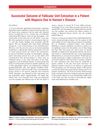
 Follicular unit extraction successfully restored hair growth in a leprosy patient without disease relapse.
July 2011 in “F1000Research”  July 2024 in “International Journal of Dermatology Venereology and Leprosy Sciences”
 Scalp tissue micrografts can effectively treat hair loss by increasing hair density and thickness.
2 citations
,
March 2023 in “Aesthetic Plastic Surgery” The new hair transplant method reduces scarring and wastage by combining two techniques.
 February 2024 in “Biomedical materials”
 Scientists created a lab-grown hair follicle model that behaves like real hair and could improve hair loss treatment research.
June 1997 in “The American Journal of Cosmetic Surgery” 70% of women with androgenetic alopecia can have successful hair transplants.
 1 citations
,
April 2020 in “Journal of Cosmetic Dermatology”
1 citations
,
April 2020 in “Journal of Cosmetic Dermatology” FUE megasession hair transplantation effectively treats large area hair loss with less discomfort and shorter operation time.
 January 2023 in “Turk Dermatoloji Dergisi”
 Injecting a cell suspension from hair follicles increased hair density in a balding patient.
 5 citations
,
May 2005 in “Seminars in Plastic Surgery”
5 citations
,
May 2005 in “Seminars in Plastic Surgery” Hair transplantation using micrografts and minigrafts is effective and safe for facial and scalp reconstruction with natural-looking results.
124 citations
,
April 2000 in “Nature biotechnology” 1 citations
,
January 2024 in “Updates in clinical dermatology”  January 2013 in “프로그램북(구 초록집)”
 Hair restoration surgery is improving, with less painful techniques like FUE and robotic systems, but they can be costly and require training.
 June 2024 in “Journal of Dermatology & Cosmetology”
 The FUL hair restoration technique is better for aesthetics and causes less scarring.
 August 2001 in “Dermatologic Surgery”
 The KNU implanter for hair transplants showed a high survival rate of 90%+ for transplanted hairs after 6 months, with benefits like natural hair direction and fewer scars.
 6 citations
,
August 2003 in “Aesthetic Surgery Journal”
6 citations
,
August 2003 in “Aesthetic Surgery Journal” Hair restoration using micrografts and minigrafts can provide natural-looking hair without scars and good density in 1 or 2 sessions.
May 2024 in “Al-Azhar International Medical Journal /Al-Azhar International Medical Journal” Combining PRP with FUE improves hair growth and healing better than FUE alone.
 March 2009 in “Medical & surgical dermatology”
 Women with androgenetic alopecia have fewer terminal hairs, phenol in nail surgery is safe, and a new hair transplant method is faster and less damaging.
 August 2024 in “Cosmoderma”
 3D-printed hair follicles could revolutionize hair loss treatments by providing unlimited hair grafts.