 8 citations
,
January 2016 in “Journal of Veterinary Medical Science”
8 citations
,
January 2016 in “Journal of Veterinary Medical Science” Lab-made tissues from dog fat stem cells can help grow hair by releasing a growth factor.
 6 citations
,
November 2021 in “Frontiers in immunology”
6 citations
,
November 2021 in “Frontiers in immunology” STAT3 signaling is important for healthy skin and hair follicles, and its disruption can lead to skin conditions like atopic dermatitis.
 2 citations
,
June 2024 in “International Journal of Drug Delivery Technology”
2 citations
,
June 2024 in “International Journal of Drug Delivery Technology” Advanced delivery systems can make dithranol more effective and less irritating for treating psoriasis.
 2 citations
,
November 2023 in “Curēus”
2 citations
,
November 2023 in “Curēus” Platelet-rich plasma (PRP) speeds up skin wound healing and has potential in medical and cosmetic uses.
 1 citations
,
May 2026 in “Signal Transduction and Targeted Therapy”
1 citations
,
May 2026 in “Signal Transduction and Targeted Therapy” Stem cell therapy shows promise but needs better safety and quality standards.
 1 citations
,
December 2023 in “npj biofilms and microbiomes”
1 citations
,
December 2023 in “npj biofilms and microbiomes” Single-cell engineered biotherapeutics show promise for skin treatment but need more research and trials.
 1 citations
,
August 2023 in “bioRxiv (Cold Spring Harbor Laboratory)”
1 citations
,
August 2023 in “bioRxiv (Cold Spring Harbor Laboratory)” Certain cells in the adult mouse ear come from cranial neural crest cells, but muscle and hair cells do not.
![Integrating Multi-Omics Analyses of Nonomuraea Dietziae to Reveal the Role of Soybean Oil in [(4′-OH)MeLeu]4-CsA Overproduction](/images/assets/0eba9759-3aa4-4a06-a70a-2d9c46be53f3/small/23018.jpg) 1 citations
,
July 2017 in “Microbial Cell Factories”
1 citations
,
July 2017 in “Microbial Cell Factories” Adding soybean oil to Nonomuraea dietziae increases production of a beneficial compound by improving metabolism and enzyme systems.
 1 citations
,
November 2015 in “Indian Journal of Clinical Biochemistry”
1 citations
,
November 2015 in “Indian Journal of Clinical Biochemistry” The conference presented findings on how vitamin D levels, genetic factors, and lifestyle choices like smoking and yoga affect various health conditions and diseases.
 July 2026 in “Organoid Research”
 A unified framework is needed to improve skin organoid construction for research and clinical use.
 June 2026 in “International Journal of Drug Delivery Technology”
 Herbal remedies show promise for managing premature hair greying but need more research.
 June 2026 in “Cell Regeneration”
 The olfactory epithelium can regenerate throughout life, aided by specific cells, genes, and new research methods.
 May 2026 in “Organoid Research”
 Hydrogel-based hair follicle organoids could help treat hair loss and improve drug testing.
 April 2026 in “Microsystems & Nanoengineering”
 HA-gel-dex hydrogels help heal wounds and regenerate tissue effectively.
 March 2026 in “Aesthetic Plastic Surgery”
 AI is revolutionizing non-surgical cosmetic procedures by improving personalization, safety, and access.
 February 2026 in “Bioimpacts”
 3D bioprinted hydrogels could improve diabetic wound healing but face challenges like limited blood supply and scalability.
 December 2025 in “Drug Discovery and Molecular Docking (DDMD)”
 Single-cell transcriptomics reveals detailed cellular diversity and key pathways in tissue regeneration.
 November 2025 in “Nanoscale Advances”
 Inorganic nanoparticle-based scaffolds can improve wound healing by fighting bacteria and helping tissue grow.
 September 2025 in “Universal library of medical and health sciences.”
 Permanent makeup can effectively restore lip shape and color after tissue loss, improving appearance and well-being.
 January 2025 in “Clinical and Medical Engineering Live”
 Implementing safety strategies is crucial to prevent radiation-related health issues.
 April 2024 in “Frontiers in pharmacology”
 Cynoglossum amabile has medicinal potential but poses safety concerns due to liver toxicity.
 February 2024 in “Frontiers in physiology”
 Lymphatic vessels are important for skin repair and could affect skin disease treatments.
 January 2023 in “Book of Abstracts”
 COVID-19 can cause different types of hair loss, with telogen effluvium being the most common.
 March 2021 in “bioRxiv (Cold Spring Harbor Laboratory)”
 A specific immune response helps control mite populations on the skin, maintaining healthy hair follicles.

Tissue from dog stem cells helped grow hair in mice.
 June 2015 in “Biomedical and biopharmaceutical research”
 The congress showed advancements in skin hydration, barrier function, and safe, effective new cosmetic formulations.
 June 2008 in “Regenerative Medicine”
 The book explains the science of tissue repair and regeneration, its medical uses, challenges, and ethical concerns.
Cadd4 effectively reduces cholesterol levels without side effects.
 29 citations
,
December 2019 in “Stem Cells Translational Medicine”
29 citations
,
December 2019 in “Stem Cells Translational Medicine” Fully regenerating human hair follicles not yet achieved.
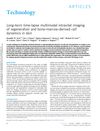 18 citations
,
September 2013 in “Technology”
18 citations
,
September 2013 in “Technology” The study introduced a new imaging technology to track skin healing and bone marrow cell activity over time.