7 citations
,
August 2025 in “Journal of Nanobiotechnology” Bioengineered microneedles and nanomedicine offer promising, precise treatments for tissue regeneration.
 69 citations
,
June 2017 in “Experimental Biology and Medicine”
69 citations
,
June 2017 in “Experimental Biology and Medicine” Advanced human skin models improve drug development and could replace animal testing.
 December 2022 in “Research Square (Research Square)”
 The QuantAnts machines can find cancer markers and create CRISPR targets for them.
2 citations
,
January 2024 in “Frontiers in Bioscience-Landmark” Humanized animal models using human stem cells can improve disease research and drug testing.
170 citations
,
September 2020 in “Viruses” Drug repositioning offers a cost-effective, lower-risk way to treat diseases and pandemics like COVID-19.
8 citations
,
August 2022 in “Microorganisms” A standardized drug development platform is essential for efficient and effective drug repurposing, especially during pandemics.
12 citations
,
September 2024 in “JID Innovations” Skin-on-a-chip devices better mimic human skin for research.
 October 2018 in “Current Opinion in Genetics & Development”
 The document emphasizes the importance of ongoing research and ethical considerations in genome editing and cellular reprogramming.
48 citations
,
December 2022 in “Biomolecules” 3D bioprinting shows promise for creating advanced skin for healing wounds and reducing animal testing.
 March 2025 in “Advanced Science”
 Bioengineered hair germs using special hydrogels can help regenerate hair follicles and treat hair loss.
124 citations
,
April 2000 in “Nature biotechnology”  14 citations
,
June 2021 in “Expert Opinion on Therapeutic Patents”
14 citations
,
June 2021 in “Expert Opinion on Therapeutic Patents” New patents show progress in developing drugs targeting the Wnt pathway for diseases like cancer and hair loss.
iEdgePathDDA effectively finds new drug-disease links, outperforming other methods.
January 2013 in “Victoria University Research Repository (Victoria University)” An elemental database for Chinese herbal remedies was created to explore the role of inorganic species in medicine.
January 2025 in “Archives of Dermatological Research”  January 2024 in “Wiadomości Lekarskie”
 Multiomics is revolutionizing biology by enabling breakthroughs in research and disease diagnosis.
 August 2023 in “Bioengineering”
 Bioprinting could greatly improve health outcomes but faces challenges like material choice and ensuring long-term survival of printed tissues.
 14 citations
,
January 2024 in “Theranostics”
14 citations
,
January 2024 in “Theranostics” Intranasal delivery of gene therapy shows promise for treating ischemic stroke.
32 citations
,
April 2024 in “Nature Biotechnology” 2 citations
,
January 2009 A natural extract-based hair growth product was developed and showed promise in preliminary tests.
 3 citations
,
November 2016 in “The journal of investigative dermatology/Journal of investigative dermatology”
3 citations
,
November 2016 in “The journal of investigative dermatology/Journal of investigative dermatology” Entrepreneurial companies are key to advancing dermatology treatments and patient care.
 October 2025 in “Advanced Materials”
 New lipid/fiber microplexes improve mRNA therapy for degenerative diseases by enhancing cell function and treatment effectiveness.
37 citations
,
December 2022 in “Acta Pharmaceutica Sinica B” Smart delivery methods for CRISPR gene editing are crucial for clinical success.
 June 2024 in “International Journal of Nanomedicine”
 CRISPR/Cas9 has improved precision and control but still faces clinical challenges.
 4 citations
,
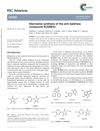
January 2014 in “RSC Advances”
4 citations
,
January 2014 in “RSC Advances” A new, less toxic and more efficient method to create the anti-baldness compound RU58841 was developed in 2014.
17 citations
,
May 2025 in “MedComm” Organoid technology is improving personalized medicine by better predicting drug responses and treatments.
 August 2018 in “bioRxiv (Cold Spring Harbor Laboratory)”
 Existing drugs, including a blood pressure medication, show promise as new treatments for influenza.
12 citations
,
April 2023 in “Molecular Pharmaceutics” A new patch can deliver stable antibodies over time for potential HIV treatment.
July 2024 in “Journal of Investigative Dermatology” CRISPR/Cas9 and prime editing can potentially fix skin disorder genes safely and effectively.
August 2022 in “Tissue Engineering Part A” Advancements in skin treatment and wound healing include promising gene therapy, 3D skin models, and potential new therapies.