117 citations
,
September 2003 in “Molecular & cellular proteomics” The technology can help diagnose and subtype autoimmune diseases by identifying specific autoantibodies.
January 2026 in “SSRN Electronic Journal”  April 2017 in “Journal of Investigative Dermatology”
 Researchers created a skin graft that senses blood glucose and could treat diabetes using CRISPR-edited stem cells.
8 citations
,
October 2022 in “Biomedical Materials” Researchers made progress in creating skin with hair by integrating special cell clusters.
 April 2021 in “Journal of Investigative Dermatology”
 An AI photographic device effectively tracked hair growth improvements in women treated for hair loss.
February 2012 in “Proceedings of SPIE, the International Society for Optical Engineering/Proceedings of SPIE” A new imaging technique can observe stem cells in living mice without harming them.
17 citations
,
September 2016 in “Stem cells translational medicine” Using bioreactors, scientists can grow more skin stem cells that keep their ability to regenerate skin and hair.
March 2019 in “SLAS TECHNOLOGY” New technologies show promise in healing wounds, treating cancer, autoimmune diseases, and genetic disorders.
 5 citations
,
August 2019 in “Journal of The American Academy of Dermatology”
5 citations
,
August 2019 in “Journal of The American Academy of Dermatology” The document presents a new way to do skin treatments with a tool that lets you use microneedling and apply PRP at the same time with one hand.
March 2026 in “Materials Today Bio” The new cryo-MAP technique enables rapid and successful hair growth by transplanting hair follicle organoids.
 2 citations
,
May 2018 in “International Society of Hair Restoration Surgery”
2 citations
,
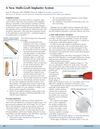
May 2018 in “International Society of Hair Restoration Surgery” The new system makes hair transplants faster and more precise.
November 2023 in “Applied sciences” Pig blood can be used to mass-produce stable, low-cost platelet dry powder for medical use.
39 citations
,
September 2019 in “Materials & Design” Combinatorial drug treatments are more effective than single drugs for cancer therapy.
 July 2023 in “BENTHAM SCIENCE PUBLISHERS eBooks”
 Platelet-rich plasma helps heal wounds and regenerate tissue in various medical fields.
 6 citations
,
July 2013 in “Molecular Imaging”
6 citations
,
July 2013 in “Molecular Imaging” The technique allowed noninvasive tracking of hair stem cell survival and growth, showing potential for hair loss research.
April 2025 in “Journal of Biophotonics” PBM therapy improves mitochondrial function and promotes tissue regeneration in dental pulp stem cells.
17 citations
,
February 2023 in “Cosmetics” 3D printed hollow microneedles could effectively treat skin wrinkles with fewer side effects.
 March 2024 in “Advanced healthcare materials/Advanced Healthcare Materials”
 Scientists developed a new way to create skin-like structures from stem cells using a special 3D gel and a device that improves cell organization and increases hair growth.
 12 citations
,
December 2021 in “Aging”
12 citations
,
December 2021 in “Aging” A new painless method to collect hair follicles helps study DNA damage and aging.
 June 2022 in “Genetic engineering & biotechnology news”
 A new hair loss treatment is being developed using reprogrammed stem cells to grow new hair follicles.
13 citations
,
February 2007 in “Biotechnology and Bioprocess Engineering”  46 citations
,
January 2020 in “Research”
46 citations
,
January 2020 in “Research” Microneedle technology has advanced for painless drug delivery and sensitive detection but faces a gap between experimental use and clinical needs.
 July 2022 in “The journal of investigative dermatology/Journal of investigative dermatology”
 Scientists improved how to make skin-like structures from stem cells using special gels and a device that controls growth signals, leading to better hair and skin features.
92 citations
,
December 2005 in “The Journal of clinical investigation/The journal of clinical investigation” Human hair follicle stem cells can be isolated using specific markers for potential therapeutic use.
July 2026 in “Acta Biomaterialia” A method was developed to create early-stage hair structures in lab-grown skin.
 June 2018 in “Journal of Acupuncture and Meridian Studies”
 New technologies in acupuncture and biosensors show promise for better medical treatments and healing.
 66 citations
,
May 2012 in “Scientific Reports”
66 citations
,
May 2012 in “Scientific Reports” Scientists successfully created and transplanted bioengineered hair follicles that function like natural ones, suggesting a new treatment for hair loss.
 12 citations
,
April 2015 in “InTech eBooks”
12 citations
,
April 2015 in “InTech eBooks” Platelet Rich Plasma (PRP) shows promise for tissue repair and immune response, but more research is needed to fully understand it and optimize its use.
6 citations
,
April 2024 in “Journal of Investigative Dermatology” CRISPR-based tools improve understanding and treatment of skin development and conditions.
12 citations
,
April 2019 in “Nature protocols” Scientists created a functional 3D skin system from stem cells that can be transplanted into wounds.