 1 citations
,
June 2025 in “Frontiers in Bioengineering and Biotechnology”
1 citations
,
June 2025 in “Frontiers in Bioengineering and Biotechnology” Glycopeptide hydrogels are promising for tissue repair, drug delivery, and healing due to their multifunctional properties.
 1 citations
,
February 2025 in “Notulae Scientia Biologicae”
1 citations
,
February 2025 in “Notulae Scientia Biologicae” Optimized emulgels with Levofloxacin effectively treat eye infections with prolonged drug release and safety.
 1 citations
,
January 2024 in “Theranostics”
1 citations
,
January 2024 in “Theranostics” Exosomes show promise for future tissue regeneration.
 1 citations
,
January 2019 in “Elsevier eBooks”
1 citations
,
January 2019 in “Elsevier eBooks” New scaffold materials help heal severe skin wounds and improve skin regeneration.
 1 citations
,
January 2016 in “Elsevier eBooks”
1 citations
,
January 2016 in “Elsevier eBooks” The document concludes that a complete skin restoration biomaterial does not yet exist, and more clinical trials are needed to ensure these therapies are safe and effective.
 June 2026 in “Frontiers in Marine Science”
 Codium sp. seaweed fractions can enhance skincare and be used for biochar, promoting sustainability.
 June 2026 in “Frontiers in Bioengineering and Biotechnology”
 Hair follicle systems are being engineered to better mimic natural hair follicles for studying hair disorders and testing treatments.
 April 2026 in “BMC Biotechnology”
 Curcumin spanlastics are the most effective for cancer therapy due to their strong antimicrobial, antioxidant, and antitumor effects.
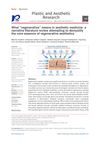 February 2026 in “Plastic and Aesthetic Research”
 Regenerative aesthetic medicine aims to restore tissue function, but needs more consistent evidence and standardized practices.
 January 2026 in “Nano-Micro Letters”
 4D scaffolds made with melt electrowriting can change shape for use in medicine.
 January 2026 in “Frontiers in Materials”
 Metal-organic frameworks help heal wounds by effectively delivering medicine.
 December 2025 in “Frontiers in Immunology”
 Restoring nerve-macrophage communication may help treat autoimmune diseases.
 September 2025 in “Advanced Pharmaceutical Bulletin”
 Genosomes are promising for safe and effective gene delivery in therapy.
 July 2025 in “Frontiers in Bioengineering and Biotechnology”
 More research and standardization are needed for effective hypospadias treatment using tissue engineering.

Polarized microscopy helps identify hair irregularities in genetic disorders.
 November 2024 in “Journal of Scientific Agriculture”
 Silk proteins are great for cosmetics because they protect and improve skin and hair while being eco-friendly.

Bee pollen, green tea, essential oils, and various plant extracts improve skin and hair health.
 September 2023 in “bioRxiv (Cold Spring Harbor Laboratory)”
 The mTurq2-Col4a1 mouse model shows that cells can divide while attached to stable basement membranes during development.

PlacMA hydrogels from human placenta are versatile and useful for cell culture and tissue engineering.

Chemicals and stem cells combined have advanced regenerative medicine with few safety concerns, focusing on improving techniques and treatment effectiveness.
May 2026 in “Journal of Controlled Release”  2 citations
,
December 2018 in “Novos Estudos Jurídicos”
2 citations
,
December 2018 in “Novos Estudos Jurídicos” Predictive computational analyses have evolved biopower by using technology to track and predict individual and group behaviors.
 April 2023 in “Journal of Investigative Dermatology”
 A new pain-measuring system using sensors and AI can effectively detect pain in mice, which may help assess pain in humans and develop treatments.
73 citations
,
April 2006 in “BioTechniques” Protein microarrays are highly sensitive tools useful for disease diagnosis and studying proteins.

The new sensor can detect a toxic chemical in water with high sensitivity and accuracy.
2 citations
,
November 2025 in “Comprehensive Reviews in Food Science and Food Safety” Combining advanced sensors with portable devices could enhance on-site food safety monitoring.
May 2010 in “Europe PMC (PubMed Central)” Near-infrared probes can safely and effectively image cysteine protease activity for disease diagnosis.
September 2023 in “Membranes” 3D-printed membranes with smart sensors can greatly improve tissue healing and have many medical applications.
26 citations
,
October 2020 in “Biomedicines” Bioengineered skin models help reduce animal testing and advance research in cosmetics and skin disease.
 November 2023 in “ACS Nano”
 The device helps restore sensation and grow new hair follicles after skin burns.