 November 2024 in “International Journal of Dermatology”
 LC-OCT is a useful noninvasive tool for diagnosing and monitoring alopecia areata.
254 citations
,
December 2003 in “Journal of the American Academy of Dermatology” Accurate diagnosis and aggressive treatment are crucial to prevent permanent hair loss in cicatricial alopecia.
13 citations
,
January 2018 in “Skin Appendage Disorders” Dermoscopy improves diagnosis and treatment planning for trichostasis spinulosa.
25 citations
,
October 1975 in “Journal of Cutaneous Pathology” Hair growth in alopecia areata is hindered due to impaired cell activity in the surrounding tissue.
Understanding hair follicle structure and techniques improves hair restoration outcomes.
13 citations
,
June 2012 in “European journal of medical genetics” Identical twins had different symptoms because one had more cells with an extra chromosome fragment in different tissues.
January 2008 in “Anhui nongye kexue” Mongolia sheep hair follicles grew well in a serum-free medium for 19 days.
55 citations
,
November 2010 in “Development” Hair follicles in mutant mice self-organize into ordered patterns within a week.
 11 citations
,
January 1961 in “Archives of dermatology”
11 citations
,
January 1961 in “Archives of dermatology” Corticosteroid injections helped eyebrow hair regrow in men with alopecia areata.
11 citations
,
March 2016 in “Cell cycle/Cell cycle (Georgetown, Tex. Online)” Old hair follicles grew better when moved to a young environment.
January 2015 in “Chinese Veterinary Science” Recognizing ultrastructures of cashmere goat hair follicles helps identify and locate follicle layers.
36 citations
,
April 2010 in “The journal of investigative dermatology/Journal of investigative dermatology” Canine hair follicles have stem cells similar to human hair follicles, useful for studying hair disorders.
 August 2017 in “Journal of evolution of medical and dental sciences”
 Trichoscopy is effective for diagnosing different types of non-scarring hair loss.
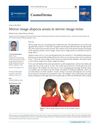
Mirror-image twins can have alopecia areata on opposite sides of their heads.
 February 2026 in “South Asian Research Journal of Biology and Applied Biosciences”
 Alopecia areata patients have higher hormone levels, suggesting hormonal screening could help in treatment.
June 2025 in “British Journal of Dermatology” Hair transplantation has evolved significantly, becoming more effective and popular despite challenges.
May 2024 in “Al-Azhar International Medical Journal /Al-Azhar International Medical Journal” Combining PRP with FUE improves hair growth and healing better than FUE alone.
August 2012 in “Faculty Opinions – Post-Publication Peer Review of the Biomedical Literature” FGF18 controls hair cycle rest and growth phases.
24 citations
,
January 2018 in “Development” Frizzled 3 and Frizzled 6 together control the orientation of mouse hair follicles.
8 citations
,
March 2023 in “BMC Research Notes” Laser-capture microdissection effectively analyzes hair follicle microbiomes, revealing region-specific bacterial differences.

Growing hair follicles from cultured cells could potentially treat baldness, but more research is needed.
January 2016 in “Minerva Access (University of Melbourne)” Hair follicle transplantation can improve wound healing and nerve growth.
 March 2026 in “Frontiers in Medicine”
 FUE effectively corrects poorly designed hairlines in men with androgenetic alopecia.
9 citations
,
February 2002 in “International Journal of Dermatology” The patient's symptoms improved with treatment but recurred when the steroid dose was reduced, requiring ongoing therapy.
 December 2014 in “PubMed”
 A scalp biopsy can help confirm hair loss types when other methods don't provide a clear diagnosis.
April 2014 in “Zhonghua shiyan waike zazhi” Improved wigs showed good compatibility and no adverse reactions after transplantation.
16 citations
,
February 1999 in “American Journal of Dermatopathology” Lymphocytes may hinder hair stem cells, causing hair loss without scarring.
June 2026 in “Journal of Craniofacial Surgery” Scalp necrosis is a rare but serious complication of hair transplantation that requires early detection and treatment.
2 citations
,
March 2021 in “Clinical Cosmetic and Investigational Dermatology” Tracking invalid extraction rates can improve hair transplant outcomes by assessing surgeon skill.
FGF5 spliceosomes inhibit rabbit hair growth by affecting gene expression.