 March 2025 in “Dental Journal (Majalah Kedokteran Gigi)”
 The sponge effectively controls bleeding and prevents infection after tooth extraction.
 2 citations
,
November 2008 in “Industrial & Engineering Chemistry Research”
2 citations
,
November 2008 in “Industrial & Engineering Chemistry Research” Impure benzeneseleninic anhydride samples cause lower finasteride intermediate yields.
17 citations
,
October 2023 in “Science Progress” Polycaprolactone and barium titanate composites show promise for use in biomedical applications.
29 citations
,
September 2020 in “Polymers” The PCL/PHB blend allows for slower, more controlled curcumin release than individual polymers.
 January 2004 in “Analytical Sciences: X-ray Structure Analysis Online”
 The document explains how to make a compound called 3.BETA.-Benzoyloxy-4-pregnen-16.ALPHA.,17.ALPHA.-epoxy-6,20-dione and describes its crystal structure.
January 2026 in “Regenerative Biomaterials” Strontium and cerium are most effective for tissue repair.
35 citations
,
October 2005 in “European journal of pharmaceutics and biopharmaceutics” Polymers increased skin permeation and stability of steroid hormones in liposomal formulations.
71 citations
,
September 2013 in “Materials Science and Engineering C” Keratin-based hydrogels from human hair and wool are promising for wound dressings and are more eco-friendly.
 April 2017 in “Journal of Investigative Dermatology”
 HPH-15, a new compound, effectively reduces skin fibrosis in experiments without causing harm.
1 citations
,
June 2019 in “Journal of Cutaneous Immunology and Allergy” Squaric acid dibutylester can cause severe skin reactions in people with allergies.
 March 2026 in “DergiPark (Istanbul University)”
 Biotinoyl tripeptide-1 nanoparticles protect hair from heat damage.
 6 citations
,
October 2016 in “Food Science and Biotechnology”
6 citations
,
October 2016 in “Food Science and Biotechnology” The water extract of Bituminaria bituminosa, high in phenolic compounds, shows strong antioxidant and enzyme inhibitory potential.
 14 citations
,
January 2020 in “Biomaterials Science”
14 citations
,
January 2020 in “Biomaterials Science” Created microspheres show potential for safe and effective use in prostate artery embolization.
43 citations
,
July 2017 in “International journal of pharmaceutics” Using β-cyclodextrin derivatives improves the solubility and bioavailability of steroidal drugs.
31 citations
,
February 1972 in “Experientia” The diphosphonate was the most effective at preventing calcification in rats.
2 citations
,
January 1999 in “Dermatology”  2 citations
,
April 2024 in “Science & Technology Indonesia”
2 citations
,
April 2024 in “Science & Technology Indonesia” Albizia saponaria bark extract, especially the ethyl acetate fraction, is a strong antioxidant source.
 2 citations
,
January 2008 in “Journal of Society of Cosmetic Chemists of Japan”
2 citations
,
January 2008 in “Journal of Society of Cosmetic Chemists of Japan” PMS nanoparticles improve damaged hair by protecting and restoring its surface and color.
 2 citations
,
May 2023 in “Al Mustansiriyah Journal of Pharmaceutical Sciences”
2 citations
,
May 2023 in “Al Mustansiriyah Journal of Pharmaceutical Sciences” Pterostilbene significantly reduces prostate enlargement and has strong antioxidant effects.
June 2025 in “Healthy-Mu Journal” The optimized Cinchonine gel effectively fights acne bacteria and is safe for twice-daily use.
 4 citations
,
January 2018 in “Cosmetics”
4 citations
,
January 2018 in “Cosmetics” Spin traps like PBN could protect skin from pollution and sunlight in cosmetics but need more research for safe use.
22 citations
,
December 2020 in “mSphere” A fungal enzyme was used to make compounds more soluble, aiding drug discovery and crop protection.
 12 citations
,
January 2009 in “Journal of Oleo Science”
12 citations
,
January 2009 in “Journal of Oleo Science” Sterol surfactants can effectively dissolve UV ray absorbers.
August 2025 in “Anais Brasileiros de Dermatologia” Phenol is effective for skin treatments but poses serious health risks and must be used cautiously by trained doctors.
4 citations
,
April 2022 in “Microorganisms” Povidone iodine reduced skin bacteria more than chlorhexidine gluconate, but neither met FDA reduction standards.
 37 citations
,
September 2003 in “Journal of Medicinal Chemistry”
37 citations
,
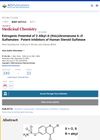
September 2003 in “Journal of Medicinal Chemistry” A substance called Compound 2g can strongly block STS (a hormone-related enzyme) without affecting estrogen levels, making it potentially good for treating breast cancer.
23 citations
,
October 2008 in “Journal of medicinal chemistry” PF-998425 is a new, effective, and non-phototoxic treatment for skin conditions related to androgens.
 May 2026 in “Journal of Health Sciences and Medicine”
 Biotinoyl tripeptide-1 nanoparticles effectively protect hair from heat damage.
 60 citations
,
January 2004 in “The journal of investigative dermatology/Journal of investigative dermatology”
60 citations
,
January 2004 in “The journal of investigative dermatology/Journal of investigative dermatology” Applying a specific inhibitor lightens skin and hair color.
Prussian Blue causes hair cuticles to detach, weakening the hair.