Search
for
Sort by
Research
480-510 / 1000+ results
research 8 Hair follicles and associated glands as androgen targets
Androgens like testosterone affect hair growth and oil production differently across body parts and individuals.
research Local structure of human hair spatially resolved by sub-micron X-ray beam
Human hair has a new region with ordered filaments and the cuticle contains β-keratin sheets.
research Melanogenesis During the Anagen-Catagen-Telogen Transformation of the Murine Hair Cycle
Hair stops producing melanin as it transitions from the growth phase to the resting phase.
research Dermoscopic Approach to a Small Round to Oval Hairless Patch on the Scalp
Dermoscopic examination helps diagnose different types of hair loss conditions by showing specific patterns.

research A technique for more precise distinction between catagen and telogen human hair follicles ex vivo
Researchers developed a new method using methylene blue staining to more accurately identify the growth stage of human hair follicles.

research Fine structure and immunocytochemistry of monotreme hairs, with emphasis on the inner root sheath and trichohyalin‐based cornification during hair evolution
Monotreme hair structure and protein distribution are similar to other mammals, but their inner root sheath cornifies differently, suggesting a unique evolution from reptile skin.
research Linear trichoepithelioma on the neck of a 15-year-old girl
A 15-year-old girl has a benign skin tumor on her neck.

research Morphological Approach to Hair Disorders
Accurate clinical, histological, and genetic methods are key for understanding and treating hair disorders.
research Hair structure anatomy and comparative anatomy1 1Dedicated to the memory of the late Dr. R. E. Rivett whose untimely death prevented his role in co-authorship.
Human hair is complex and grows in cycles starting from embryonic life.
research Monilethrix
A 12-year-old girl was diagnosed with monilethrix, a genetic condition causing fragile, beaded hair that breaks easily, with no effective treatment available.

research Lipid loses and barrier function modifications of the brown‐to‐white hair transition
White hair has less lipid content and absorbs water differently than brown hair.

research Disseminated Nonsegmental Vitiligo Associated With Halo Nevi and Premature Gray Hair
A rare combination of halo nevi, nonsegmental vitiligo, and early gray hair can occur together.
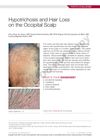
research Hypotrichosis and Hair Loss on the Occipital Scalp
A baby girl has a hair disorder called monilethrix, causing fragile hair that may improve over time.

research Hair greying & its palliative management
Hair greying is seen as a sign of aging; temporary fixes like hair dye are used, but a balanced diet and hair care can help manage it.
research The failure behavior of the anchorage of hairs during slow extraction
Growing hairs are easier to pull out than resting hairs due to different anchorage strengths.

research Viable terminal scalp hair follicles constitute a necessary and sufficient biological end‐organ that conditions clinical efficacy of finasteride in males with male pattern hair loss without implying reversal of miniaturized follicles
Finasteride works for hair loss by maintaining existing hair follicles, not reversing miniaturization.
research Variations of scalp, pubic and axillary hair
Pubic hair is thicker than axillary and scalp hair, useful for forensic identification.

research A discrete transition zone between cuticle and cortex layers of a human hair fibre: changes observed in the presence of breast cancer
Breast cancer alters specific molecular structures in hair, which revert after cancer removal.
research Hair removal evaluated with a filterless flashlamp‐based system: a preliminary study in 10 patients
The filterless flashlamp-based system effectively delays hair regrowth and improves skin condition.
research 15. Hair and Nails
Hair and nail conditions can stabilize or improve over time, and new treatments show promise.
research Keratin expression in the human hair follicle
research Suitability of hair type for dermatophytes perforation and differential diagnosis of T. mentagrophytes from T. verrucosum
Human black hair is best for distinguishing between T. mentagrophytes and T. verrucosum.
research Clinicopathological insights into the phenotypic variation of autosomal recessive hypotrichosis/wooly hair by c.736T>A LIPH mutation
The conclusion is that the variation in hair thinness in patients is mostly due to the amount of underdeveloped hairs, and treatments that thicken fine hairs might work for those with mild to severe conditions.
research The upper dermal sheath has a potential to regenerate the hair in the rat follicular epidermis
The upper dermal sheath can regenerate hair in rats.
research Depilation treatment ofhypertrichosis
research Trichoscopy in Asian Patients
Asian patients show different trichoscopy features compared to Caucasians, like thicker hair and different alopecia signs.

research Hair(y) Matters in Melanoma Biology
The document concludes that the immune-inhibitory environment of the hair follicle may prevent melanoma development.
research HAIR DIAMETER IN FEMALE BALDNESS
Women with thinning hair have thinner hair strands than women without hair loss.

research Unruly hair
The document concludes that unruly hair can be congenital or acquired, often lacks specific treatments, and can be managed with oils and short hairstyles.