 December 2020 in “Journal of Aesthetic Nursing”
 Injecting platelet-rich plasma into the scalp stimulates hair growth, increases hair density, and treats hair loss effectively with minimal side effects.
20 citations
,
April 2022 in “Frontiers in Bioengineering and Biotechnology” Regenerative medicine in Malaysia shows promise for treating diseases but faces ethical and safety challenges.
October 2025 in “Journal of Advanced Trends in Medical Research” Exosomes and PRP both show promise for hair loss treatment, but more research is needed.
 July 2023 in “JAAD International”
 Two drugs, finasteride and minoxidil, are approved for hair loss treatment, but new therapies are being developed.
Injecting patients' own PRP into their thyroid improved thyroid function and symptoms in most hypothyroidism cases.
 May 2024 in “bioRxiv (Cold Spring Harbor Laboratory)”
 KAP-depleted hair causes less immune response and is more biocompatible for implants.
February 2026 in “Cureus” Crisaborole may help regrow hair in children with alopecia areata.
 May 2024 in “Clinical Cosmetic and Investigational Dermatology”
 Manipulating cell cleanup processes could help treat hair loss.
6 citations
,
June 2021 in “The Journal of Experimental Medicine” Understanding signaling in blood cells is complex and still limited.
3 citations
,
January 2021 in “Journal of dermatology & cosmetology” Current alopecia treatments manage symptoms but don't cure, and better treatments are needed.
 1 citations
,
January 2014 in “Journal of Cutaneous and Aesthetic Surgery”
1 citations
,
January 2014 in “Journal of Cutaneous and Aesthetic Surgery” Regenerative medicine shows promise for aesthetic surgery, but needs more research for widespread use.
May 2026 in “Ibero-American Journal of Health Science Research” Regenerative therapies like PRP and stem cells are promising for skin rejuvenation and repair.
July 2025 in “Microscopy and Microanalysis” Intermittent compression therapy is safe and doesn't harm tissue.
 March 2025 in “Nature Communications”
 NSC167409 can effectively inhibit the virus causing hand, foot, and mouth disease.
 January 2025 in “International Research Journal of Innovations in Engineering and Technology”
 PRP shows promise in healing but needs standardization for better results.
September 2019 in “Encyclopedia of Life Sciences” Wound healing involves complex signaling that stops bleeding, reduces damage, and repairs skin, sometimes without scarring.
PRP therapy is effective and safe for treating hair loss, increasing hair follicles and reducing hair loss after at least 4 treatments.
 May 2012 in “Scientific American”
 Blocking a compound called prostaglandin D₂ might help treat hair loss.
Thymosin β4 helps heal corneal wounds.
January 2015 in “Chinese Veterinary Science” Recognizing ultrastructures of cashmere goat hair follicles helps identify and locate follicle layers.
February 2016 in “Seoul National University Open Repository (Seoul National University)” Photodynamic therapy can temporarily remove nonpigmented hair but is less effective than lasers for black hair.
January 2023 in “The Egyptian Journal of Hospital Medicine” PRP therapy is a promising and effective treatment for hair loss with minimal side effects.
 July 2022 in “Asian Journal of Biochemistry, Genetics and Molecular Biology”
 Ageratum conyzoides may lower blood sugar and improve blood lipid levels in diabetic rats.
 160 citations
,
April 2012 in “Journal of Cellular and Molecular Medicine”
160 citations
,
April 2012 in “Journal of Cellular and Molecular Medicine” Telocytes might help with skin repair and regeneration.
 40 citations
,
November 2019 in “Frontiers in Endocrinology”
40 citations
,
November 2019 in “Frontiers in Endocrinology” Metabolic Syndrome is linked to several skin conditions, and stem cell therapy might help treat them.
9 citations
,
May 2025 in “Stem Cell Research & Therapy” Extracellular vesicles can both worsen and help treat age-related diseases and are useful for early diagnosis.
 5 citations
,
January 2016 in “Elsevier eBooks”
5 citations
,
January 2016 in “Elsevier eBooks” Using a specific binding agent and low doses of FK506 can stimulate stem cells, speeding up skin healing by 25% and improving skin quality in rats and mice.
 5 citations
,
March 2015 in “Clinical and Experimental Dermatology”
5 citations
,
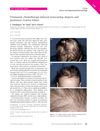
March 2015 in “Clinical and Experimental Dermatology” Chemotherapy caused a woman's permanent hair loss and early menopause.
 June 2024 in “Synthetic and systems biotechnology”
 A fragment of human type XVII collagen shows great potential for skin health and wound healing.
 April 2023 in “JAAD international”
 Patients with Frontal fibrosing alopecia in Morocco often have skin conditions and thyroid disorders.