18 citations
,
January 2018 in “BMC dermatology” A new mutation in the PLEC gene causes a rare condition with skin blistering, muscle weakness, and hair loss.
 11 citations
,
May 2015 in “Stem Cells Translational Medicine”
11 citations
,
May 2015 in “Stem Cells Translational Medicine” Megestrol acetate helps fat-derived stem cells grow, move, and turn into fat cells through a specific receptor.
 59 citations
,
April 2016 in “Cell Reports”
59 citations
,
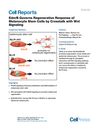
April 2016 in “Cell Reports” EdnrB signaling helps melanocyte stem cells regenerate and could be targeted to treat pigmentation issues.
4 citations
,
June 2021 in “Frontiers in Pharmacology” Bone marrow stem cells and their medium help hair regrowth.
 April 2023 in “Journal of Investigative Dermatology”
 The research shows that skin cancer likely originates from hair follicles and that certain cell populations expand to promote skin cancer growth.
201 citations
,
August 2006 in “Cell and Tissue Research” 2 citations
,
September 2024 in “PLoS ONE” Bendamustine combined with tucidinostat may effectively treat adult T-cell leukemia.
1 citations
,
October 2023 in “European Journal of Dermatology” Combining hair transplantation with PRP is more effective for treating hair loss than hair transplantation alone.
 1 citations
,
March 2022 in “Journal of Dermatological Science”
1 citations
,
March 2022 in “Journal of Dermatological Science” Adding TERT and BMI1 to certain skin cells can improve their ability to create hair follicles in mice.
 July 2022 in “The journal of investigative dermatology/Journal of investigative dermatology”
 A patient with a PLEC mutation has epidermolysis bullosa, muscular dystrophy, and myasthenia gravis, which improved with steroid treatment.
16 citations
,
March 2011 in “Ophthalmic genetics” A patient with Birt-Hogg-Dubé Syndrome also had choroidal melanoma, suggesting the need for careful eyelid exams in such patients.
 April 2016 in “Journal of Investigative Dermatology”
 MEK and BRAF inhibitors increase sebum production and accumulation, which could cause acne-like side effects.
18 citations
,
July 2016 in “Genetica” BMP4 gene is crucial for hair follicle development in Liaoning cashmere goats.
 211 citations
,
May 2013 in “Journal of Nutrition Health & Aging”
211 citations
,
May 2013 in “Journal of Nutrition Health & Aging” MK-0773 safely increased muscle mass but did not improve muscle strength or function in elderly women with sarcopenia.
4 citations
,
November 2024 in “Journal of Advanced Research” Targeting NMMHC IIA may help treat blood-brain barrier damage.
February 2026 in “ACS Applied Materials & Interfaces” Carbon dots from Cinnamomum burmannii leaves can promote hair growth and regeneration.
18 citations
,
January 2013 in “Evidence-based Complementary and Alternative Medicine” Aconiti Lateralis Preparata Radix helps mouse stem cells grow and turn into bone cells faster than usual methods.
10 citations
,
December 2015 in “International Journal of Dermatology” CK 15, follistatin, and Bmi-1 can help differentiate basal cell carcinoma from squamous cell carcinoma.
March 2026 in “ACS Applied Materials & Interfaces” MCP@G improves diabetic wound healing by reducing stress and promoting tissue repair.
92 citations
,
September 2013 in “Journal of Investigative Dermatology” BMAL1 and Period1 genes can influence human hair growth.
25 citations
,
November 2010 in “Journal of Molecular Structure” Raman micro-spectroscopy can help distinguish basal cell carcinoma from hair follicles in skin tissue.
September 2023 in “Journal of the American Academy of Dermatology”  93 citations
,
May 2010 in “European Journal of Cancer”
93 citations
,
May 2010 in “European Journal of Cancer” BI 2536 had limited effectiveness against several advanced cancers and caused significant side effects.
June 2020 in “Zenodo (CERN European Organization for Nuclear Research)” The DNMT3B -579G>T polymorphism may increase the risk of colorectal cancer.
April 2025 in “Journal of Biophotonics” PBM therapy improves mitochondrial function and promotes tissue regeneration in dental pulp stem cells.
12 citations
,
November 2011 in “Pediatric dermatology” A 16-year-old boy had a rare case of Becker's nevus on his face and mouth.
November 2025 in “The Journal of Immunology” BST2 is highly expressed in certain immune cells in alopecia areata, suggesting a role in the disease.
January 2026 in “China CDC Weekly” Large language models can accurately identify monkeypox from medical records.
January 2026 in “Materialia” Porcine ADM scaffold helps hair growth in mice.
 72 citations
,
November 2012 in “PloS one”
72 citations
,
November 2012 in “PloS one” The protein folliculin, involved in a rare disease, works with another protein to control how cells stick together and their organization, and changes in this interaction can lead to disease symptoms.