8 citations
,
September 2013 in “Molecular carcinogenesis” Rapamycin reduces skin cell growth and tumor development by affecting cell signaling in mice.
 9 citations
,
December 2023 in “Journal of Neuroimmune Pharmacology”
9 citations
,
December 2023 in “Journal of Neuroimmune Pharmacology” NDP-MSH protects brain cells and reduces inflammation in Parkinson's disease by activating MC1R and involving Tregs.
15 citations
,
May 2017 in “Journal of Cellular Biochemistry” The hairless protein is important for skin, hair, and may influence cancer development.
84 citations
,
September 2008 in “Developmental biology” Retinoic acid-binding proteins in skin are regulated by β-catenin and Notch signalling.
8 citations
,
June 2004 in “Journal of Investigative Dermatology” Certain peptides can prevent hair loss in young rats caused by a cancer drug.
22 citations
,
August 1999 in “Mechanisms of Development” Pmg-1 and Pmg-2 are new genes important for skin and mammary gland development.
1 citations
,
October 2023 in “Heliyon” An infant with Hutchinson-Gilford Progeria Syndrome had successful surgery to fix breathing issues caused by a new genetic mutation.
 6 citations
,
October 2012 in “Journal of Heredity”
6 citations
,
October 2012 in “Journal of Heredity” The Itpr3 gene causes a specific hair pattern in mice.
 April 2016 in “Journal of Investigative Dermatology”
 MEK and BRAF inhibitors increase sebum production and accumulation, which could cause acne-like side effects.
 12 citations
,
February 1998 in “Gene”
12 citations
,
February 1998 in “Gene” The B2 genes are crucial for hair growth in rats.
 6 citations
,
June 2011 in “British Journal of Dermatology”
6 citations
,
June 2011 in “British Journal of Dermatology” People with alopecia areata have higher levels of RBP4 protein and antibodies against it.
14 citations
,
June 2021 in “British Journal of Dermatology” The BIOMAP glossary standardizes data to improve research on atopic dermatitis and psoriasis.
 1 citations
,
March 2015 in “Journal of the European Academy of Dermatology and Venereology”
1 citations
,
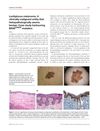
March 2015 in “Journal of the European Academy of Dermatology and Venereology” A clinically suspected melanoma appeared benign under the microscope but was confirmed by specific tests and a rare mutation.
 January 2017 in “IMC Journal of Medical Science”
 A rare endocrine disorder, APS 1, was diagnosed in a 26-year-old man in Bangladesh.
 98 citations
,
June 2001 in “Journal of biological chemistry/The Journal of biological chemistry”
98 citations
,
June 2001 in “Journal of biological chemistry/The Journal of biological chemistry” A cluster of sulfur-rich hair protein genes was found on chromosome 17.
 5 citations
,
September 2013 in “The Journal of Dermatology”
5 citations
,
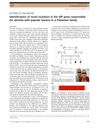
September 2013 in “The Journal of Dermatology” Researchers found a new mutation in the HR gene causing hair loss and skin bumps in a Pakistani family.
14 citations
,
March 2022 in “Plant Cell & Environment” The protein AtRXR3 limits root hair growth in Arabidopsis, affecting phosphorus uptake.
 4 citations
,
January 2025 in “Translational Psychiatry”
4 citations
,
January 2025 in “Translational Psychiatry” Remote photobiomodulation improves brain injury outcomes and behavior in rats.
 7 citations
,
September 2024 in “BMC Genomics”
7 citations
,
September 2024 in “BMC Genomics” Two genes, ERBB4 and ROR1, may cause the unique pigmentation in Lanping black-boned sheep.
Matriptase-2 helps control iron levels by suppressing hepcidin, and its deficiency can cause iron-deficiency anemia.
2 citations
,
January 2014 in “Photochemical & photobiological sciences” Grasp protein helps maintain skin health after UVB exposure.
 April 2016 in “The journal of investigative dermatology/Journal of investigative dermatology”
 BMP signaling controls hair growth and skin color.
June 2025 in “Albus Scientia” MC1R gene variations affect skin, hair color, UV sensitivity, and melanoma risk.
26 citations
,
September 2001 in “Journal of Investigative Dermatology” BSSP may help skin tumors grow and could be a marker or target for skin cancer treatment.
 10 citations
,
September 1997 in “Molecular carcinogenesis”
10 citations
,
September 1997 in “Molecular carcinogenesis” Mirex seems to promote a unique group of skin cells different from those affected by another tumor promoter, TPA.
January 2007 in “Journal of Southwest University” The ND1 gene of the Asian black bear Sichuan subspecies is similar to other bear species.
 February 2026 in “International Journal of Molecular Sciences”
 New biological pathways and potential treatment targets for male pattern baldness were identified.
52 citations
,
July 2011 in “PubMed” TRPS1 is crucial for bone, kidney, and hair follicle development.
 7 citations
,
January 2022 in “Plants”
7 citations
,
January 2022 in “Plants” Rice husk and bran extracts from the Bue Bang 3 CMU variety can potentially treat hair loss due to their antioxidant, anti-inflammatory, and anti-androgenic properties.
13 citations
,
July 2016 in “Indian Journal of Dermatology” DPR can show different hair characteristics, as seen in two brothers with normal hair.