 June 2024 in “Journal of Clinical Oncology”
 Dalpiciclib is the safest and most satisfying CDK4/6 inhibitor for advanced breast cancer patients in China.
4 citations
,
March 2008 in “Journal of the American Academy of Dermatology” January 2023 in “Cutaneous and Ocular Toxicology”  March 2005 in “Inpharma Weekly”
 China approved Sinovac's flu vaccine, Japan approved RiUP for female hair loss, and Nippon Kayaku's three cancer drugs.
 1 citations
,
July 2025 in “SKIN The Journal of Cutaneous Medicine”
1 citations
,
July 2025 in “SKIN The Journal of Cutaneous Medicine” Ritlecitinib is effective and safe for long-term treatment of alopecia areata.
 September 2022 in “Journal of the American Academy of Dermatology”
 The registry showed that tofacitinib is promising for treating hair loss in children with alopecia areata, but more research is needed.
3 citations
,
January 2025 in “SAGE Open Medical Case Reports” Deucravacitinib helped regrow hair and reduce plaques in a woman with discoid lupus erythematosus without side effects.
September 2023 in “Journal of the American Academy of Dermatology” BAP1 mutations are rare in pediatric melanocytic tumors and may develop later in life.
 15 citations
,
October 2014 in “Journal of Investigative Dermatology”
15 citations
,
October 2014 in “Journal of Investigative Dermatology” New treatments targeting the Hedgehog pathway can help treat advanced skin cancer but may have side effects and their effectiveness in early stages is unknown.
 2 citations
,
November 2023 in “Acta dermato-venereologica”
2 citations
,
November 2023 in “Acta dermato-venereologica” Tofacitinib is effective and safe for treating alopecia areata with a good drug survival rate.
 March 2026 in “Journal of Pakistan Association of Dermatologists”
 Tofacitinib helps hair regrowth in alopecia areata but relapse is common after stopping treatment.
3 citations
,
April 2020 in “PubMed” Combining DEB-BACE with chemotherapy is more effective and has fewer side effects than chemotherapy alone for treating unresectable lung squamous cell carcinoma.
 July 2023 in “Clinical and Experimental Dermatology”
 Combining baricitinib with low-dose corticosteroids significantly improved severe hair loss in eight patients.
19 citations
,
September 2008 in “Journal of Cellular Physiology” Blocking EGFR can cause skin inflammation by disrupting IL-1 signaling.
97 citations
,
December 2011 in “New England Journal of Medicine” The FDA did not approve certain drugs for prostate cancer prevention due to concerns about their effectiveness and potential risks.
January 2015 in “프로그램북(구 초록집)” Two patients with stubborn hair loss grew hair after PDRN injections.
 17 citations
,
June 2017 in “British Journal of Dermatology”
17 citations
,
June 2017 in “British Journal of Dermatology” The article concludes that hair loss is a common side effect of drugs treating skin cancer by blocking the hedgehog pathway, but treatment should continue, and more selective drugs might prevent this side effect.

Baricitinib quickly improved severe alopecia areata, with almost total hair regrowth in three months.
3 citations
,
November 2024 in “Clinical Research” Deuruxolitinib is FDA-approved for treating severe alopecia areata.
Loss of the p53 gene alone causes tumors, and losing both p53 and Rb genes speeds up aggressive skin cancer.
 October 2025 in “Clinical Case Reports”
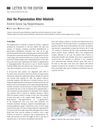
 PRP injection for hair growth can cause reversible vision loss due to inflammatory optic neuropathy.
 November 2025 in “Mendeley Data”
 Unorthodox dosing of tofacitinib and baricitinib is safe but less effective than standard dosing for treating alopecia areata in kids.
 10 citations
,
November 2018 in “Nature Biotechnology”
10 citations
,
November 2018 in “Nature Biotechnology” Drugmakers are optimistic about targeting the Wnt pathway for new treatments despite past challenges.
Skin cells can naturally limit the growth of cancerous changes by balancing cell renewal and differentiation.
August 2010 in “Oncology Times” Provenge extends prostate cancer survival by about 4 months.
 April 2025 in “Turkish Journal of Hematology”
 Nilotinib may cause gray hair to return to its original color.
November 2025 in “Journal of Investigative Dermatology” Combining MMP-9 and JAK inhibitors can effectively prevent skin depigmentation in vitiligo.
 9 citations
,
May 2019 in “Journal of dermatological treatment”
9 citations
,
May 2019 in “Journal of dermatological treatment” Apremilast helps regrow hair in hard-to-treat alopecia areata.
13 citations
,
February 2017 in “Clinical rheumatology” Tofacitinib may help treat nail dystrophy, especially when other treatments fail.
1 citations
,
May 2024 in “Pediatric Blood & Cancer” Trametinib can effectively treat severe kaposiform lymphangiomatosis when other treatments fail.