4 citations
,
August 2018 in “Journal of pediatric neurology” Becker's Nevus Syndrome is a rare condition with a skin patch and possible bone and muscle abnormalities, treated mainly for appearance.
12 citations
,
March 2013 in “The American journal of dermatopathology/American journal of dermatopathology” Birt–Hogg–Dubé Syndrome requires genetic testing for accurate diagnosis due to its similarities with tuberous sclerosis.
1 citations
,
January 2022 in “Indian dermatology online journal” Fine needle aspiration with rapid on-site evaluation is useful for diagnosing pilomatrixoma.
A woman with a rare hair loss condition developed skin cancer in the bald area.
June 1967 in “Journal of Cellular Physiology” The 3D hair follicle model improves understanding of hair growth and drug testing.
4 citations
,
December 2018 in “International Journal of Research -GRANTHAALAYAH” Biomagnetic forces can deform red blood cells, not just mechanical factors.
January 2022 in “Clinical Cases in Dermatology” A woman's scalp nodule was a common, harmless pilar cyst, treated by surgical removal.
1 citations
,
August 2024 in “Journal of Cosmetic Dermatology” Oscillatory punches work better for soft scalps or deep punches in FUE surgery.
 July 2022 in “The journal of investigative dermatology/Journal of investigative dermatology”
 Hair growth cycles need varied signals in space and time.
A runner developed tangled armpit hairs from shirt friction, preventable by shaving or wearing smooth shirts.
 5 citations
,
July 2019 in “Atlas of the Oral and Maxillofacial Surgery Clinics”
5 citations
,
July 2019 in “Atlas of the Oral and Maxillofacial Surgery Clinics” Tissue expansion for head and neck reconstruction has good blood supply and doesn't need capsule removal, but expect temporary hair loss with normal growth resuming after 6-8 months.
561 citations
,
April 2003 in “Journal of Investigative Dermatology” CD34 is a marker for isolating stem-like cells in mouse hair follicles.
5 citations
,
October 2020 in “Bioengineering & translational medicine” Researchers used a laser to create advanced skin models with hair-like structures.
 57 citations
,
November 1998 in “Wound Repair and Regeneration”
57 citations
,
November 1998 in “Wound Repair and Regeneration” Hair papilla cells can create and regenerate hair bulbs under the right conditions.
22 citations
,
September 1982 in “Journal of ultrastructure research” Wool follicle cells are more complex than previously thought.
July 2024 in “Indian Dermatology Online Journal” A benign tumor on the cheek, called trichoadenoma, should be surgically removed for cosmetic reasons.
July 2025 in “Journal of Investigative Dermatology” Tissue-engineered skin substitutes can model junctional epidermolysis bullosa and may help develop gene therapy.
 September 2016 in “Journal of Dermatological Science”
 Björnstad syndrome causes twisted hair from birth.
January 2019 in “CLINICAL AND EXPERIMENTAL MORPHOLOGY” 29 citations
,
June 2014 in “Experimental Cell Research” EGF–FGF2 helps mouse stem cells grow and become more like nerve cells.
5 citations
,
January 1996 in “Theriogenology” 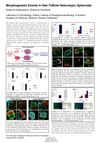
Researchers developed a method to create artificial hair follicles that may help with hair loss treatment and research.
7 citations
,
September 1980 in “Zoological Journal of the Linnean Society” Dendritic cells help regulate skin development and hair growth in mice.
 5 citations
,
May 2004 in “Dermatologic Surgery”
5 citations
,
May 2004 in “Dermatologic Surgery” A hair restoration technique was introduced that mixes different types of hair groupings to reduce procedure time, limit damage, and potentially increase hair density, suggesting more hair can be transplanted than previously thought.
 June 2021 in “bioRxiv (Cold Spring Harbor Laboratory)”
 KIF18B is important for correctly positioning cell division machinery in skin cells, affecting hair follicle development.
6 citations
,
May 2024 in “Developmental Biology”  125 citations
,
May 2007 in “Journal of The American Academy of Dermatology”
125 citations
,
May 2007 in “Journal of The American Academy of Dermatology” The BASP classification is a detailed and accurate way to categorize hair loss in both men and women.
 September 1984 in “Journal of Biological Education”
 Human hair growth involves active, resting, and intermediate phases, and examining plucked hairs can teach students about hair biology and diseases.
January 2016 in “eScholarship (California Digital Library)” HBCs in the olfactory epithelium can self-renew or differentiate into other cell types, with specific patterns during regeneration.
 January 2025 in “Cellular and Molecular Life Sciences”
 BMP4 helps stem cells turn into pigment-producing cells, affecting hair color and growth.