 1 citations
,
January 1997 in “Skin research”
1 citations
,
January 1997 in “Skin research” Hinokitiol and pantothenylethylether in hair products can cause strong allergic reactions.
21 citations
,
September 2021 in “New Phytologist” HB24 helps convert IBA to IAA, promoting root hair growth.
12 citations
,
November 2024 in “International Journal of Molecular Sciences” Hydroxytyrosol helps reduce liver injury by blocking certain inflammation pathways.
 16 citations
,
October 2003 in “Journal of applied polymer science”
16 citations
,
October 2003 in “Journal of applied polymer science” 2-iminothiorane hydrochloride improves hair waving permanence without damage.
 3 citations
,
January 2009 in “Sen'i Gakkaishi”
3 citations
,
January 2009 in “Sen'i Gakkaishi” Using both TGA and DTDG in hair straightening reduces hair damage compared to using TGA alone.
12 citations
,
July 2017 in “International Journal of Cosmetic Science” N‐AOHPA is a promising alternative to traditional surfactants for better hair conditioning.
75 citations
,
September 2015 in “Acta biomaterialia” Alkylation of human hair keratin allows for adjustable drug release rates in hydrogels for medical use.
 7 citations
,
March 2022 in “Molecules”
7 citations
,
March 2022 in “Molecules” 5-Bromo-3,4-dihydroxybenzaldehyde could potentially help hair growth by activating certain cell pathways and inhibiting others.
1 citations
,
June 2019 in “Journal of Cutaneous Immunology and Allergy” Squaric acid dibutylester can cause severe skin reactions in people with allergies.
 70 citations
,
January 2000 in “Drug Development Research”
70 citations
,
January 2000 in “Drug Development Research” New butyric acid prodrugs show promise for cancer treatment, anemia management, and protecting hair from chemotherapy damage.
179 citations
,
May 1982 in “The Journal of clinical investigation/The journal of clinical investigation” High levels of 3 alpha-diol glucuronide in the blood are a marker of increased androgen action in women with excessive hair growth of unknown cause.
 January 2017 in “Nasza Dermatologia Online”
 Both treatments helped hair regrowth in alopecia areata, with isopropanol being better tolerated.
16 citations
,
October 2009 in “Xenobiotica” The tested hair dye ingredients do not form harmful oxidized metabolites in the liver.
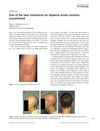 1 citations
,
June 2018 in “International Journal of Dermatology”
1 citations
,
June 2018 in “International Journal of Dermatology” DNCB is highly effective for treating alopecia areata with minimal long-term side effects.
21 citations
,
May 2014 in “Toxicological Sciences” Toluene diisocyanate exposure can cause immune sensitization by interacting with proteins in hair follicles and sebaceous glands.
June 2025 in “Korean Journal of Pharmacognosy” Isoalantolactone promotes hair growth by activating specific cell pathways.
 7 citations
,
June 1989 in “Steroids”
7 citations
,
June 1989 in “Steroids” Researchers successfully made new compounds for hormone level tests, but one attempt led to an unexpected product, correcting a past error.
2 citations
,
October 2024 in “Journal of Cosmetic Dermatology” Thioglycolate compounds in brow lamination can cause skin irritation and other health issues.
 December 2024 in “Turkish Society of Clinical Biochemistry”
 Higher BPA levels may be linked to idiopathic hyperandrogenemia in women.
8 citations
,
October 1979 in “PubMed” Jute-batching oil alone didn't cause cancer in mice, but it may promote cancer when combined with another carcinogen.
 August 2019 in “Journal of The American Academy of Dermatology”
 Bleach baths with 0.005% hypochlorite help manage atopic dermatitis by affecting skin cells and reducing itchiness.
 January 2026 in “Applied Biological Chemistry”
 Ishophloroglucin A from Ishige okamurae may be a natural alternative for treating hair loss by inhibiting 5α-reductase and promoting hair growth.
6 citations
,
November 2019 in “Journal of Cosmetic Dermatology” The compound improved hair growth and reduced hair loss.
10 citations
,
March 2016 in “Toxicology and applied pharmacology” Using A132 hair dye with sunlight can cause skin damage and hair loss.
October 2020 in “The American journal of gastroenterology” Para-aminobenzoic acid in hair supplements can cause autoimmune hepatitis.
 September 2017 in “Journal of Investigative Dermatology”
 HIF-1A may aid hair growth, Backhousia citriodora improves skin, autologous cells stabilize hair loss, infrared thermography assesses alopecia, and a new treatment preserves hair.
 December 2024 in “Journal of Cancer Therapy and Research”
 Artocarpus heterophyllus seed extract may help treat prostate inflammation without side effects.
 May 2026 in “International Journal of Molecular Sciences”
 Hydroxytyrosol may help treat hair loss by reducing inflammation and oxidative stress.
 May 2024 in “Journal of cosmetic dermatology”
 Heat-treated Limosilactobacillus fermentum with menthol, salicylic acid, and panthenol promotes hair growth and balances scalp microbiome in people with androgenetic alopecia.
8 citations
,
October 2013 in “Chemistry Central Journal” Metabolite 7 is a strong inhibitor for Alzheimer's disease management.