 April 2019 in “Journal of Investigative Dermatology”
 DPP4-positive fibroblasts play a major role in producing proteins that lead to skin fibrosis.
30 citations
,
February 2008 in “Journal of Investigative Dermatology” 47 citations
,
April 2000 in “Experimental Dermatology” A new gene mutation causes a rare type of hair loss.
28 citations
,
January 2015 in “Journal of Cell Science” PINCH-1 is crucial for skin cell adhesion and movement, working with EPLIN and ILK.
11 citations
,
January 1992 in “PubMed” TGF-beta 1 and IGF-II mRNA have specific patterns in pig subcutaneous tissue, affecting fat and muscle development.
May 2026 in “Electronic Journal of General Medicine” Irisin and betatrophin levels change differently in PCOS, which may help assess metabolic risks.
September 2025 in “Animals” The KRTAP22-2 gene in sheep does not significantly affect wool traits.
The scant hair in snthr-1Bao mice is likely caused by a deletion affecting the Plcd1 gene.
41 citations
,
December 1988 in “Journal of Investigative Dermatology” 37 citations
,
January 2010 in “Human Molecular Genetics” FTase and GGTase-I are essential for skin keratinocyte health.
66 citations
,
December 1999 in “Journal of Investigative Dermatology” New mutations in the hairless gene may cause hair loss and affect bone development.
189 citations
,
July 2009 in “The Journal of clinical investigation/The journal of clinical investigation” Epidermolysis bullosa simplex causes easily blistered skin due to faulty skin cell proteins, leading to new treatment ideas.
 January 2022 in “Archiv für Tierzucht”
 EPHA4 and Ephrin A3 are found in the skin of Aohan fine-wool sheep.
15 citations
,
January 1988 Hair follicles have unique proteins that vary by species and are influenced by nutrition.
 September 2024 in “Journal of Medicine and Life”
 A specific gene mutation causes a severe skin disorder in a family.
 November 2022 in “Journal of Investigative Dermatology”
 Low oxygen levels affect the behavior of certain proteins in human skin cells.
7 citations
,
May 2021 in “EBioMedicine” Increased methylation of the Filip1l gene may contribute to aggressive skin cancer.
14 citations
,
May 2016 in “International Journal of Molecular Sciences” PP2Acα is essential for proper hair and skin development.
43 citations
,
April 1996 in “Journal of Investigative Dermatology”  November 2022 in “Journal of Investigative Dermatology”
 Scientists developed a new way to study mutations in a skin condition using blood cells, which may help diagnose and treat the disease.
26 citations
,
June 2010 in “Electrophoresis” New techniques helped identify rare wool proteins by reducing dominant ones.
 3 citations
,
January 2019 in “Journal of Dermatology”
3 citations
,
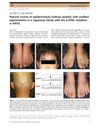
January 2019 in “Journal of Dermatology” The p.P25L mutation in the KRT5 gene causes a rare skin condition that worsens over time and may lead to hair loss starting in young adulthood.
33 citations
,
October 2012 in “Journal of Morphology” Reptile skin hardens by layering beta-proteins on keratin.
 5 citations
,
February 2019 in “PloS one”
5 citations
,
February 2019 in “PloS one” Bald thigh syndrome in sighthounds is caused by structural defects in hair shafts due to downregulated genes and proteins.
25 citations
,
September 2014 in “SpringerPlus” Sheep have a unique gene, KAP8-2, that humans don't have, which may affect wool properties.
 60 citations
,
January 2004 in “The journal of investigative dermatology/Journal of investigative dermatology”
60 citations
,
January 2004 in “The journal of investigative dermatology/Journal of investigative dermatology” Applying a specific inhibitor lightens skin and hair color.
November 2018 in “Journal of dermatology & cosmetology” The document reports the first case of a rare skin condition in Colombia, the 19th case worldwide.
29 citations
,
August 1999 in “Journal of Investigative Dermatology” New mutations in hair keratin genes cause the rare hair disorder monilethrix.
175 citations
,
September 1998 in “British Journal of Dermatology” Keratin 17 gene mutations cause both steatocystoma multiplex and pachyonychia congenita type 2.
10 citations
,
July 2023 in “Pharmaceutics” Activating PKM2 and Wnt/β-catenin signaling speeds up wound healing.