July 2025 in “Clinical Case Reports” A new genetic mutation in the TRPS1 gene causes Trichorhinophalangeal Syndrome, leading to specific hair, dental, and bone issues.
Melanocytes can regenerate around hair follicles in bullous pemphigoid, especially in patients with darker skin.
 39 citations
,
January 2015 in “Annals of dermatology/Annals of Dermatology”
39 citations
,
January 2015 in “Annals of dermatology/Annals of Dermatology” Three new types of a skin blistering disease were found, caused by specific gene mutations.
159 citations
,
October 1986 in “The Histochemical Journal” 10 citations
,
July 2001 in “PubMed” A new type of pachyonychia congenita may exist, caused by a different keratin mutation.
27 citations
,
December 1999 in “American Journal of Dermatopathology” Necrobiosis lipoidica may need new criteria for accurate diagnosis due to similarities with another condition.
 10 citations
,
June 2011 in “Archives of Dermatology”
10 citations
,
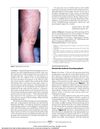
June 2011 in “Archives of Dermatology” Finasteride caused blisters on hands and feet.
 6 citations
,
January 2024 in “Annals of Dermatology”
6 citations
,
January 2024 in “Annals of Dermatology” Dickkopf-related Protein 2 can help hair grow by activating a specific cell pathway.
 51 citations
,
February 2009 in “Journal of dermatological science”
51 citations
,
February 2009 in “Journal of dermatological science” Pitx2 helps outer root sheath cells differentiate but can't start hair growth on its own.
July 2011 in “Journal of Pediatric and Adolescent Gynecology” A 15-year-old girl has a skin condition causing blisters on her feet, likely inherited from her family.
4 citations
,
May 2023 in “Cells” Baricitinib and its combination with lonafarnib improve fat cell formation in certain genetic disorders.
 98 citations
,
June 2001 in “Journal of biological chemistry/The Journal of biological chemistry”
98 citations
,
June 2001 in “Journal of biological chemistry/The Journal of biological chemistry” A cluster of sulfur-rich hair protein genes was found on chromosome 17.
 80 citations
,
April 2011 in “Plant physiology”
80 citations
,
April 2011 in “Plant physiology” White lupin uses specific genes to grow root hairs and access phosphorus when it's scarce.
September 2016 in “Journal of Dermatological Science” Polarizing light microscopy can easily and reliably diagnose congenital keratinizing disorders like Netherton syndrome.
54 citations
,
December 1999 in “Journal of Investigative Dermatology Symposium Proceedings” 54 citations
,
January 1995 in “Human Molecular Genetics” Monilethrix is linked to a gene cluster on chromosome 12.
17 citations
,
May 2013 in “Journal of Investigative Dermatology” Mutations in β1 integrins cause embryonic death but have milder effects on skin.
1 citations
,
May 2020 in “PubMed” Activating autophagy might reverse skin fibrosis.
2 citations
,
October 2023 in “Philosophical Transactions of the Royal Society B Biological Sciences” Different PADI isoforms help cells develop diverse functions.
51 citations
,
January 2007 in “The journal of investigative dermatology/Journal of investigative dermatology” Scientists discovered a unique hair protein, KAP24.1, with a special structure, found only in the upper part of hair cuticles.
7 citations
,
April 2004 in “International Journal of Dermatology” The newborn's skin blistering is due to a genetic condition called epidermolytic hyperkeratosis.
April 2023 in “Journal of Investigative Dermatology” CD8+ T cells attack hair follicle stem cells, causing scarring and hair loss.
92 citations
,
April 1999 in “The journal of investigative dermatology/Journal of investigative dermatology” Nonpalmoplantar skin cells can be made to express keratin 9 by interacting with palmoplantar fibroblasts.
 April 1974 in “Pediatric Research”
 The Naked (N) trait in mice is linked to lower glycine and tyrosine in hair proteins.
22 citations
,
July 1998 in “Journal of Investigative Dermatology” The 4C32 gene may help in mouse skin development and differentiation.
13 citations
,
August 1999 in “Journal of Investigative Dermatology” Bikunin is found on the cell boundaries of certain skin layers and may help regulate skin and hair functions.
 August 2018 in “Pediatric Dermatology”
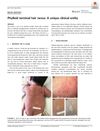
 A baby had a unique skin condition with a pale patch and surrounding dark hairs, not linked to other health issues.
7 citations
,
September 2013 in “Familial cancer” Birt–Hogg–Dubé syndrome is a rare genetic condition causing skin lesions, lung cysts, and a higher chance of kidney cancer.
MFN2 mutations cause mitochondrial problems, unusual fat distribution, and low leptin despite high body fat.
Bovines can have rare inherited skin diseases with specific symptoms like hair loss, fragile skin, and abnormal porphyrin buildup.