 4 citations
,
March 2018 in “Daehan han'yi hag'hoeji/Journal of Korean medicine”
4 citations
,
March 2018 in “Daehan han'yi hag'hoeji/Journal of Korean medicine” Astragalus membranaceus helps regrow hair and reduce hair loss symptoms.
2 citations
,
November 2019 in “PubMed” Henna significantly promotes hair growth and reduces androgen levels in mice with alopecia.
 April 2024 in “Cellular signalling”
 Activating TRPMLs helps human cells important for hair growth and increases hair growth in mice.
 October 2023 in “FASEB bioAdvances”
 Akkermansia muciniphila may help prevent testosterone-related hair loss.
The transgenic safflower oil with oleosin-rhFGF9 improved hair growth and wound healing in mice.
January 2010 in “Xiandai yaowu yu linchuang” Yangxue Shengfa Capsules promote hair growth by increasing blood flow and hair follicles.
January 2005 in “Chinese Journal of Veterinary” Hairless mice lose hair by 3-4 weeks, develop thicker, folded skin, and show pigmentation differences.
February 2019 in “Chin J Injury Repair and Wound Healing(Electronic Edition)” Porcine acellular dermal matrix helps hair growth by boosting specific proteins and signals.
 December 2020 in “bioRxiv (Cold Spring Harbor Laboratory)”
 Stress can cause a type of hair loss in mice lacking the CCHCR1 gene.
 1 citations
,
March 2015 in “Journal of Visualized Experiments”
1 citations
,
March 2015 in “Journal of Visualized Experiments” Researchers developed a new, precise method to measure hair loss in mice using image analysis.
Botulinum toxin A helped stop hair loss and grow new hair in mice.
 March 2026 in “Trends in Sciences”
 A mouse model was created to study hair loss similar to humans.
December 2007 in “한국미용학회지” Peppermint and rosemary oil mixture promotes hair growth similar to minoxidil and has antibacterial effects.
56 citations
,
September 2010 in “Veterinary pathology” Certain mouse strains develop a skin condition similar to a human hair loss disease due to genetic defects.
 October 2025 in “Records of Natural Products”
 Kaempferol promotes hair growth and could be a natural treatment for hair loss.
December 2013 in “대한피부미용학회지” Wheat sprout extract (fr. 5) promotes hair growth similar to minoxidil.
 84 citations
,
July 2003 in “European journal of biochemistry”
84 citations
,
July 2003 in “European journal of biochemistry” Mouse skin can produce and process serotonin, with variations depending on hair cycle, body location, and mouse strain.
1 citations
,
January 2013 in “Asian Journal of Beauty and Cosmetology” Wheat sprout extract can promote hair growth similar to minoxidil.
 January 2026 in “Magazine Portal Bibliotech Digital (Universidad Nacional de Colombia)”
 Rosemary extracts promote more hair growth than 5% minoxidil.
1 citations
,
April 2014 in “Dong-ui saengni byeongni hakoeji/Dong'ui saengli byeongli haghoeji” Samhwang-Sasimtang extract may promote hair growth and act as a natural hair growth agent.
January 2006 in “Chinese Journal of Aesthetic Medicine” Lipo-minoxidil increases VEGF expression more than regular minoxidil.
 3 citations
,
January 2016 in “Biotechnology and Bioprocess Engineering”
3 citations
,
January 2016 in “Biotechnology and Bioprocess Engineering” Laminaria japonica extract with IGF-1 improved mouse hair growth and could be a potential alopecia treatment.
Rosemary extracts promote hair growth better than minoxidil.
161 citations
,
June 1994 in “The journal of investigative dermatology/Journal of investigative dermatology” Hair stops producing melanin as it transitions from the growth phase to the resting phase.
 13 citations
,
September 2010 in “Journal of Dermatological Science”
13 citations
,
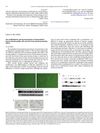
September 2010 in “Journal of Dermatological Science” Researchers made a cell line that grows quickly and can help with hair growth research.
 June 2010 in “Melanoma research”
 LDE225 is a promising skin-applied treatment for basal cell carcinoma with good skin penetration and effectiveness.
 6 citations
,
January 1998 in “Journal of Investigative Dermatology”
6 citations
,
January 1998 in “Journal of Investigative Dermatology” Estrogen receptors may not affect mouse hair growth as previously thought, and oxybenzone in sunscreen is stable in sunlight.
130 citations
,
December 1998 in “The journal of investigative dermatology/Journal of investigative dermatology” Hair follicle melanocytes die during hair regression.
 42 citations
,
March 2014 in “European Journal of Pharmacology”
42 citations
,
March 2014 in “European Journal of Pharmacology” Ginsenoside F2 from ginseng may increase hair growth better than standard treatments by affecting cell growth signals.
35 citations
,
October 2014 in “Wound Repair and Regeneration” The model helps understand scar contraction and develop new treatments.