 41 citations
,
October 2008 in “The American journal of pathology”
41 citations
,
October 2008 in “The American journal of pathology” Blocking a specific protein signal can make hair grow on mouse nipples.
 5 citations
,
August 2019 in “iScience”
5 citations
,
August 2019 in “iScience” Deleting the Trf1 protein in mice is safe and may help prevent cancer without major side effects.
14 citations
,
December 2001 in “Journal of autoimmunity” Rats can develop an immune response to prion protein peptides, but it may cause severe skin issues in older rats.
99 citations
,
February 2000 in “PubMed” Overexpressing PKCepsilon in mice reduces papillomas but increases carcinomas.
16 citations
,
July 2008 in “BMC Genomics” Alpha 6 + /MHCI - cells have stem cell traits and are similar to mouse hair follicle stem cells.
November 2025 in “Probiotics and Antimicrobial Proteins” 65 citations
,
March 2004 in “Journal of Clinical Investigation” Inhibiting ornithine decarboxylase may help prevent certain skin cancers.
 6 citations
,
August 2007 in “Journal of Surgical Research”
6 citations
,
August 2007 in “Journal of Surgical Research” Mice genetically modified to produce more Del1 protein had faster hair regrowth.
 418 citations
,
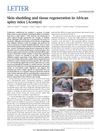
September 2012 in “Nature”
418 citations
,
September 2012 in “Nature” African spiny mice can regenerate skin, hair, and cartilage, but not muscle, and their unique abilities could be useful for regenerative medicine.
 29 citations
,
January 2004 in “Experimental Dermatology”
29 citations
,
January 2004 in “Experimental Dermatology” Topical anthralin helped regrow hair in mice with a condition similar to human alopecia.
128 citations
,
December 2006 in “Journal of Biological Chemistry” Altering SSAT affects fat metabolism and body fat in mice.
 5 citations
,
January 2022 in “PloS one”
5 citations
,
January 2022 in “PloS one” Deleting the p63 gene in certain cells causes problems in thymus development and severe hair loss in mice.
The S-2 herbal extract significantly promotes hair growth.
11 citations
,
August 1995 in “Journal of Investigative Dermatology”  32 citations
,
June 2013 in “Journal of Investigative Dermatology”
32 citations
,
June 2013 in “Journal of Investigative Dermatology” Mice without certain skin proteins had abnormal skin and hair development.
3 citations
,
January 2021 in “Veterinary dermatology” A litter of cats had a hair condition similar to a mouse mutation, leading to hair loss and abnormal hair and skin.
 January 2016 in “Experimental Dermatology”
 New findings suggest potential treatments for melanoma, hyperpigmentation, hair defects, and multiple sclerosis, and show skin microbiome changes don't cause atopic dermatitis.
2 citations
,
May 2011 in “Pigment Cell & Melanoma Research” Collagen XVII is crucial for preventing hair and pigmentation loss by maintaining melanocyte stem cells.
14 citations
,
June 2016 in “Biomaterials” MAA beads improved wound healing in male mice by activating the Shh pathway, but not in females.
 52 citations
,
October 1999 in “Developmental Dynamics”
52 citations
,
October 1999 in “Developmental Dynamics” Mutations in the hairless gene in mice affect its expression and lead to a range of developmental issues in multiple tissues.
January 2013 in “Biology of blood and marrow transplantation” Rapamycin increased survival in mice with severe chronic graft-versus-host disease by expanding regulatory T cells.
22 citations
,
July 2016 in “Cellular and Molecular Life Sciences” Genetic changes in mice help understand skin and hair disorders, aiding treatment development for acne and hair loss.
35 citations
,
March 2010 in “British journal of dermatology/British journal of dermatology, Supplement” The study showed that mouse eyelashes can be used to study eyelash growth and that bimatoprost makes them longer and more numerous.
8 citations
,
December 2022 in “International journal of molecular sciences” Mice without the enzyme HSD17B3 still produce normal testosterone, suggesting they have different ways to make it compared to humans.
 October 2013 in “Journal of Investigative Dermatology”
 Collagen VII helps skin heal and stay strong, sirolimus may lower skin cancer risk in kidney transplant patients, high-molecular-mass hyaluronan helps naked mole rats resist cancer, dermal γδ T cells aid in hair growth in rodents, and overexpression of IL-33 in mouse skin causes itchiness, offering a model for studying allergic inflammation treatments.
150 citations
,
June 1999 in “Oncogene” January 2008 in “HAL (Le Centre pour la Communication Scientifique Directe)” The mutant HR bmh protein affects hair follicle formation by failing to repress vitamin D receptor activity.
January 2023 in “Faculty of 1000 Research Ltd” Androgen loss may speed up hair greying.
8 citations
,
March 2007 in “The journal of investigative dermatology/Journal of investigative dermatology” The near-naked hairless mutation causes hair loss but is not due to a mutation in the hairless gene itself.
45 citations
,
March 1997 in “Journal of Investigative Dermatology”