 1 citations
,
October 2010 in “Faṣlnāmah-i bīmārīhā-yi pūst”
1 citations
,
October 2010 in “Faṣlnāmah-i bīmārīhā-yi pūst” Methotrexate with corticosteroids can help regrow hair in severe alopecia areata but may cause relapses and side effects.
 July 2026 in “Dermatology Practical & Conceptual”
 Methotrexate via microneedling is more effective than triamcinolone for treating stubborn alopecia areata.
 July 2023 in “Clinical and Experimental Dermatology”
 Combining baricitinib with low-dose corticosteroids significantly improved severe hair loss in eight patients.
May 2025 in “Pakistan Armed Forces Medical Journal” Dithranol is more effective than Tacrolimus for hair regrowth in alopecia areata.
December 2020 in “Aktualʹnì problemi sučasnoï medicini” Combining betamethasone and PRP injections works best for treating alopecia areata.
69 citations
,
February 1987 in “Archives of Dermatology” Topical cyclosporine lotion led to hair regrowth in a man with alopecia universalis.
6 citations
,
December 2015 in “Journal of Dermatological Case Reports” Intradermal testing can better detect corticosteroid allergies than patch testing.
14 citations
,
May 2009 in “Journal of the American Academy of Dermatology” The patient's scalp lesions stabilized with a combination of treatments after initial therapies failed.
 May 2015 in “Journal of The American Academy of Dermatology”
 Combination therapy with cyclosporine and low-dose corticosteroid shows favorable long-term results for treating alopecia areata.
 2 citations
,
December 2017 in “Skin appendage disorders”
2 citations
,
December 2017 in “Skin appendage disorders” An elderly man's non-healing scalp lesion was successfully treated with a strong topical steroid.
 1 citations
,
October 2015 in “The American journal of gastroenterology”
1 citations
,
October 2015 in “The American journal of gastroenterology” Stopping infliximab and using strong topical steroids can regrow hair lost due to psoriasiform alopecia.
1 citations
,
August 2024 in “Skin Health and Disease” Topical immunotherapy with DPCP led to some hair regrowth in most pediatric alopecia areata patients, especially those with milder cases and longer treatment.
 1 citations
,
July 2018 in “Journal of dermatology & cosmetology”
1 citations
,
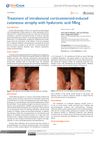
July 2018 in “Journal of dermatology & cosmetology” Hyaluronic acid successfully treated skin atrophy caused by corticosteroid injections.
 January 2017 in “Nasza Dermatologia Online”
 Both treatments helped hair regrowth in alopecia areata, with isopropanol being better tolerated.
3 citations
,
April 2024 in “JAAD Case Reports” DPCP may be safe for treating alopecia during pregnancy, but more research is needed.
1 citations
,
August 2024 in “Journal of Pharmacy & Pharmaceutical Sciences” The DPCP/HPβCD complex improves solubility and anti-inflammatory effects for alopecia areata treatment.
 4 citations
,
September 2014 in “Elsevier eBooks”
4 citations
,
September 2014 in “Elsevier eBooks” Use some skin medications with caution during pregnancy; avoid strong steroids, certain eczema treatments, and systemic retinoids, but many topical treatments and nasal sprays are safe.
 July 2025 in “Journal of the European Academy of Dermatology and Venereology”
 A new treatment plan helps manage folliculitis decalvans effectively.
1 citations
,
January 2004 Low-dose intermittent corticosteroid therapy can effectively treat alopecia areata.
4 citations
,
December 2024 in “Archives of Dermatological Research”  18 citations
,
January 2017 in “Journal der Deutschen Dermatologischen Gesellschaft”
18 citations
,
January 2017 in “Journal der Deutschen Dermatologischen Gesellschaft” High and low doses of prednisolone helped 62% of children with severe alopecia regrow hair with some weight gain and mild acne as side effects.
 80 citations
,
November 1975 in “Acta dermato-venereologica”
80 citations
,
November 1975 in “Acta dermato-venereologica” Large doses of glucocorticoids are not suitable for general use in treating severe alopecia areata due to inconsistent results and risks.
 5 citations
,
August 2018 in “PubMed”
5 citations
,
August 2018 in “PubMed” An 8-year-old with severe hair loss regrew all hair after six months of tofacitinib treatment.
4 citations
,
January 2022 in “Dermatology Research and Practice” Methotrexate alone is as effective and safe as combining it with prednisolone for treating Lichen planopilaris.
37 citations
,
February 2015 in “Journal of the European Academy of Dermatology and Venereology” Oral isotretinoin is the most effective treatment for folliculitis decalvans.
1 citations
,
January 2021 in “Dermatologic Therapy” Candida antigen is an effective and promising treatment for alopecia areata.
24 citations
,
March 2009 in “Archives of dermatological research” The combination of oral PUVA and corticosteroids helps regrow hair in severe alopecia areata.
 January 2012 in “The Year book of dermatology”
 Many treatments for alopecia areata have inconsistent results; for under 10s, use minoxidil with a corticosteroid, and for over 10s, add ILC and consider diphenylcyclopropenone for widespread cases.
9 citations
,
December 1958 in “Journal of Investigative Dermatology” February 1968 in “PubMed”