 November 2025 in “International Journal of Apllied Mathematics”
 Numerical methods help analyze alopecia drugs' properties effectively.
7 citations
,
June 2017 in “The Journal of Dermatology” 
TCA injections are more effective and safer than cryotherapy for treating alopecia areata.
5 citations
,
May 2025 in “Journal of the American Academy of Dermatology”  September 2024 in “Journal of the European Academy of Dermatology and Venereology”
 Baricitinib effectively reduces hair loss in severe alopecia areata with mild side effects.
 1 citations
,
January 2015 in “Springer eBooks”
1 citations
,
January 2015 in “Springer eBooks” The document says a skin condition called alopecia areata causes hair loss and stress, and is treated with strong skin creams, injections, or other therapies, but treatment success varies.
 August 2010 in “The Journal of Dermatology”
 The document concludes that low-dose acne treatment is most suitable for moderate acne, with high patient satisfaction and low relapse rates.
5 citations
,
January 1998 in “Journal of dermatological treatment” Vitamin D3 ointments are effective and safe for treating scalp psoriasis.
 30 citations
,
December 1972 in “Archives of dermatology”
30 citations
,
December 1972 in “Archives of dermatology” The steroid solution can regrow hair but often causes skin issues and doesn't work long-term.
 1 citations
,
July 2020 in “Journal of cosmetic dermatology”
1 citations
,
July 2020 in “Journal of cosmetic dermatology” A woman on immunosuppressants developed two rare scalp conditions, which improved with specific treatments.
31 citations
,
February 1982 in “Archives of dermatology” Etretinate was effective for certain skin conditions, but caused side effects like chapped lips, dry mucous membranes, and hair loss.
 2 citations
,
January 2018 in “International journal of research in dermatology”
2 citations
,
January 2018 in “International journal of research in dermatology” Intralesional corticosteroids are the best for limited alopecia areata, oral steroids are less effective, and PRP is safe and promising, especially for children and severe cases.
 74 citations
,
March 1963 in “Archives of Dermatology”
74 citations
,
March 1963 in “Archives of Dermatology” Triparanol therapy can cause hair loss and skin dryness without inflammation or damage to hair follicles or skin structures.
28 citations
,
January 2016 in “Dermatology” Methotrexate with corticosteroids can effectively treat severe alopecia areata but often requires long-term maintenance.
March 2026 in “Minia Journal of Medical Research” Topical corticosteroids improve hair regrowth in alopecia areata.
10 citations
,
July 1994 in “Journal of Dermatological Science” Cyclosporin extends hair growth in mice, but high-dose corticosteroids block this effect.
 10 citations
,
January 2018 in “Postępy Dermatologii i Alergologii”
10 citations
,
January 2018 in “Postępy Dermatologii i Alergologii” Treating alopecia areata every 3 weeks with diphenylcyclopropenone is more effective than weekly treatments.
 January 2023 in “Journal of cosmetic dermatology”
 The synthetic retinoid EC23 thickens skin and promotes hair growth more effectively and with a lower dose than natural retinoids.
July 2024 in “Journal of Investigative Dermatology” Topical corticosteroids are recommended first for treating pediatric alopecia areata due to safety and ease of use.
January 2012 in “Human health handbooks” Shampoos with specific ingredients are effective and safe for treating scalp psoriasis.
 5 citations
,
April 2015 in “HSOA journal of clinical dermatology & therapy”
5 citations
,
April 2015 in “HSOA journal of clinical dermatology & therapy” Triamcinolone acetonide mesotherapy may be effective for treating patchy hair loss in alopecia areata.
 December 1989 in “Inpharma (Balgowlah)”
 Cyproterone helps women with hair loss caused by genetics. More research is needed to confirm the best dose.
A 21-year-old with lichen planopilaris was successfully treated, stopping disease progression and preventing crusts.
13 citations
,
March 2008 in “Journal of the European Academy of Dermatology and Venereology” Triamcinolone acetonide therapy for hair loss may cause a skin condition called linear lichen planus.
 1 citations
,
June 2024 in “British Journal of Dermatology”
1 citations
,
June 2024 in “British Journal of Dermatology” Mycophenolate mofetil effectively improved skin pigmentation and itching in a woman with lichen planus pigmentosus and frontal fibrosing alopecia.
 9 citations
,
November 2017 in “Journal of Glaucoma”
9 citations
,
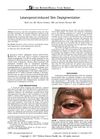
November 2017 in “Journal of Glaucoma” Latanoprost eye drops may cause skin depigmentation.
 January 2024 in “International Journal of Dermatology Research”
 PRP is more effective than triamcinolone for treating alopecia areata.
 March 2005 in “Journal of The American Academy of Dermatology”
 The two lotions used day and night may be a good alternative to minoxidil for hair loss treatment with better cosmetic effects and tolerance.
 September 2024 in “Journal of Cosmetic Dermatology”
 Ectoin helps prevent cortisone-induced skin problems and supports skin health.
December 2018 in “International journal of women’s dermatology” Early diagnosis and strong corticosteroids are crucial for managing lymphocytic cicatricial alopecia.