8 citations
,
November 2010 in “British journal of dermatology/British journal of dermatology, Supplement” Vitamin D protects skin cells from damage caused by captopril.
 7 citations
,
June 2016 in “Bone Research”
7 citations
,
June 2016 in “Bone Research” A Chinese family had a child with a specific gene mutation causing vitamin D-resistant rickets, but the child improved with calcium and low-dose calcitriol.
7 citations
,
May 1985 in “Archives of dermatology” Vitamin D is important for more than just bone health.
 6 citations
,
May 2008 in “Current Opinion in Oncology”
6 citations
,
May 2008 in “Current Opinion in Oncology” 2007 research improved understanding of prostate cancer risk, diagnosis, and treatment, but also showed the need for personalized treatment and further study on certain therapies' risks.
 6 citations
,
August 1989 in “European journal of pediatrics”
6 citations
,
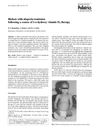
August 1989 in “European journal of pediatrics” Child with rickets improved with a specific vitamin D therapy, but alopecia did not change.
 4 citations
,
March 2023 in “Current Oncology”
4 citations
,
March 2023 in “Current Oncology” Scalp cooling is the only FDA-approved method to prevent hair loss from chemotherapy, but other treatments like minoxidil and PRP are being tested.
 3 citations
,
January 1992 in “Clinical Pediatric Endocrinology”
3 citations
,
January 1992 in “Clinical Pediatric Endocrinology” Patients with the same vitamin D receptor mutation showed different symptoms due to other factors.
2 citations
,
July 2013 in “Journal of Life Sciences” A 2-year-old girl with a rare vitamin D disorder had rickets and hair loss, but treatment was ineffective due to poor compliance.
1 citations
,
October 2024 in “The American Journal of Gastroenterology” Switching from infliximab to Ustekinumab improved both hair loss and Crohn's symptoms in the patient.
 1 citations
,
May 2019 in “Journal of pediatric endocrinology & metabolism/Journal of pediatric endocrinology and metabolism”
1 citations
,
May 2019 in “Journal of pediatric endocrinology & metabolism/Journal of pediatric endocrinology and metabolism” Intravenous calcium therapy is a safe and effective treatment for a rare type of rickets.
November 2023 in “Biomolecules” The research showed that Vitamin D and its receptor are important for healthy bones and normal hair and skin in rats.
July 2023 in “Media Dermato Venereologica Indonesiana” Vitamin D supplements should be used cautiously in sarcoidosis patients, with regular monitoring to avoid high calcium levels.
 January 2023 in “International Journal of Contemporary Pediatrics”
 A rare genetic disease causes rickets and often hair loss in young children, which can improve with specific treatments.
January 2022 in “Clinical Cases in Dermatology” Scalp psoriasis is hard to treat and may need various medications.
 August 2019 in “International journal of contemporary pediatrics”
 A child with a rare type of rickets showed some improvement with high doses of vitamin D, but such conditions often respond poorly to treatment.
 July 2018 in “Elsevier eBooks”
 Some drugs can cause reversible hair loss, but certain chemotherapy drugs may lead to permanent hair loss; drugs can also change hair color and texture.
 April 2018 in “Journal of Investigative Dermatology”
 Nonmelanoma skin cancers have higher levels of certain osteopontin variants than normal skin.
 December 2017 in “Elsevier eBooks”
 The vitamin D receptor helps maintain hair and bone health even without binding vitamin D.
July 2013 in “International Society of Hair Restoration Surgery” Vitamin D might help with hair growth and hair loss treatments.
September 2005 in “CRC Press eBooks” Vitamin D is important for skin cell growth and health, and its active form and receptor play key roles in skin and hair processes.
 October 2004 in “Radiotherapy and oncology”
 Active vitamin D3 might protect hair follicles from radiation damage.
October 1990 in “Pediatric Research” Nocturnal calcium infusions improved a boy's severe rickets without causing hair loss.
 June 2020 in “The journal of investigative dermatology/Journal of investigative dermatology”
 Topical treatments led to hair regrowth in a man with linear morphea.
 August 1994 in “Drugs & Therapy Perspectives”
 Psoriasis treatments range from topical creams to systemic medications with serious side effects, and while treatments can manage symptoms, there is no cure.
February 2023 in “Reactions Weekly” 49 citations
,
November 2013 in “JAMA dermatology” Clobetasol propionate, 0.05%, is more effective and safe for treating childhood alopecia areata than hydrocortisone, 1%.
 13 citations
,
July 2011 in “Journal of Dermatological Treatment”
13 citations
,
July 2011 in “Journal of Dermatological Treatment” Clobetasol and pimecrolimus are similarly effective for alopecia areata, but pimecrolimus has fewer side effects and is preferred for long-term use.
 9 citations
,
February 2011 in “Biologics: Targets & Therapy”
9 citations
,
February 2011 in “Biologics: Targets & Therapy” Topical calcineurin inhibitors, especially 0.1% tacrolimus ointment, are effective and well-tolerated for treating cutaneous lupus erythematosus but require more research for standard treatment guidelines.
 July 2025 in “Pakistan Journal of Intensive Care Medicine”
 Clobetasol propionate 0.05% ointment is more effective than tacrolimus 0.1% ointment for treating alopecia areata.
12 citations
,
August 2016 in “Biomedical Chromatography” A new method accurately measures clobetasol propionate in hair and skin.