 3 citations
,
January 2022 in “Journal of Infection”
3 citations
,
January 2022 in “Journal of Infection” Some early COVID-19 mutations in patients predicted future common virus mutations.
 8 citations
,
August 1997 in “Australasian Journal of Dermatology”
8 citations
,
August 1997 in “Australasian Journal of Dermatology” Most HIV patients develop skin symptoms that can indicate the stage of their disease.
61 citations
,
March 1966 in “Archives of Dermatology” Nevoid basal cell carcinomas start in the skin and hair follicles.
 February 2023 in “JAAD case reports”
 Reducing immunosuppression and using antiviral creams improved the woman's skin condition.
 4 citations
,
April 2023 in “Cutis”
4 citations
,
April 2023 in “Cutis” COVID-19 can cause or worsen skin issues.
 9 citations
,
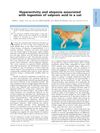
May 2001 in “Journal of the American Veterinary Medical Association”
9 citations
,
May 2001 in “Journal of the American Veterinary Medical Association” A cat's hyperactivity and hair loss were caused by eating valproic acid but improved after stopping access to the drug.
 April 2017 in “Journal of Investigative Dermatology”
 Targeted siRNA therapy may be a promising treatment for KID syndrome by reducing mutant gene expression and improving cell communication.
 January 2025 in “SKIN The Journal of Cutaneous Medicine”
 Calcipotriol's effectiveness for treating alopecia areata is unclear and needs more research.
46 citations
,
January 2002 in “Paediatric drugs” Tinea capitis, a scalp fungal infection in children, is best treated with newer antifungal agents for shorter periods.
 23 citations
,
September 2021 in “Frontiers in Medicine”
23 citations
,
September 2021 in “Frontiers in Medicine” A rare skin rash after COVID-19 vaccination shouldn't stop future vaccinations.
 March 2014 in “Journal of clinical microbiology”
 Kerion, a scalp fungal infection, requires lab confirmation and is treated with antifungal medication and medicated shampoo.
September 2007 in “The American Journal of Gastroenterology” Cronkhite-Canada syndrome causes chronic diarrhea and has a poor prognosis despite treatment.
60 citations
,
September 2004 in “Pediatric Dermatology” A girl developed vitiligo and psoriasis after hepatitis B treatment, and stopping the treatment didn't help.
 1 citations
,
June 2023 in “BMC Pediatrics”
1 citations
,
June 2023 in “BMC Pediatrics” Most children recovered from COVID-19 in 4 weeks, but some experienced long-term symptoms, especially older kids.
8 citations
,
January 2023 in “Journal of Research in Pharmacy” Compounds from turmeric and bitter show strong potential as antiviral agents against the influenza A virus.
 4 citations
,
July 2022 in “Veterinary medicine international”
4 citations
,
July 2022 in “Veterinary medicine international” Mange in rabbits is a serious disease that can spread to humans and is treated with medications and supportive care.
2 citations
,
July 2013 in “Journal of Life Sciences” A 2-year-old girl with a rare vitamin D disorder had rickets and hair loss, but treatment was ineffective due to poor compliance.
9 citations
,
April 1970 in “Biochemical pharmacology” Stilbamidine and hydroxystilbamidine inhibit enzyme release from lysosomes and have effects similar to cortisol and chloroquine.
 30 citations
,
August 2021 in “Oncogene”
30 citations
,
August 2021 in “Oncogene” miR-22 helps skin cancer grow and spread by activating specific cell signals.
 September 2022 in “JAAD Case Reports”
 COVID-19 may worsen hair loss in people with a certain type of scarring alopecia, but early treatment can help improve symptoms and hair regrowth.
6 citations
,
January 2022 in “Veterinary Sciences” Feline cutaneous lymphocytosis is likely reactive, while canine cutaneous lymphocytosis needs more study to understand its nature.
10 citations
,
October 2000 in “PubMed” E6/E7 oncogenes in hair follicles cause continuous hair growth by skipping the resting phase.
 September 2025 in “Cermin Dunia Kedokteran”
 Candida nail infections need lab tests for accurate diagnosis and treatment.
 June 2025 in “ARSHI Veterinary Letters”
 The cat's skin condition improved and hair regrew after antifungal treatment.
 January 2025 in “Clinical Pediatric Endocrinology”
 Calcium supplements improved bone deformities but not skin papules or hair loss.
 November 2021 in “Journal of the European Academy of Dermatology and Venereology”
 2021 saw a slow return to normalcy and increased scientific engagement despite COVID-19 challenges.
76 citations
,
December 1987 in “International Journal of Dermatology” AIDS patients often have specific skin conditions that help in early diagnosis and management.
 January 2023 in “Revista Brasileira de Parasitologia Veterinária/Brazilian Journal of Veterinary Parasitology”
 A single dose of fluralaner effectively treats mite infestations in cats without side effects.
317 citations
,
August 1997 in “The Plant Journal” Calcium is crucial for sustaining root hair growth in Arabidopsis thaliana.
January 2022 in “Annals of Institute of Biology University of Sarajevo” Medicinal plants may help treat coronavirus infections by offering promising natural antiviral compounds.