 51 citations
,
November 2013 in “Drug Discovery Today”
51 citations
,
November 2013 in “Drug Discovery Today” Small molecule drugs show promise for advancing regenerative medicine but still face development challenges.
6 citations
,
April 2022 in “The Breast” Scalp cooling reduces hair loss during chemotherapy but doesn't help hair regrow after.
 4 citations
,
April 2001 in “European journal of cancer”
4 citations
,
April 2001 in “European journal of cancer” Scalp cooling prevented hair loss in half of the patients, despite significant side effects.
82 citations
,
March 2013 in “PLoS ONE” Vemurafenib causes skin side effects similar to RASopathies, requiring regular skin checks and UVA protection.
 January 2019 in “Revista Medicina Cutánea Ibero-Latino-Americana”
 Vitamin D is important for skin health and can help improve various skin conditions.
 15 citations
,
February 2017 in “Nursing Clinics of North America”
15 citations
,
February 2017 in “Nursing Clinics of North America” Targeted cancer therapies can cause skin side effects, which should be treated early to help patients' quality of life and treatment adherence.
 23 citations
,
July 2018 in “Journal of Cosmetic Dermatology”
23 citations
,
July 2018 in “Journal of Cosmetic Dermatology” Chemotherapy caused hair loss with specific patterns, but most patients had hair regrowth after treatment, while some had lasting hair loss.
 January 2018 in “Springer eBooks”
 Cancer treatments targeting specific cells often cause skin, hair, and nail problems, affecting patients' lives and requiring careful management.
3 citations
,
August 2025 in “International Journal of Molecular Sciences” Induced pluripotent stem cells are a major breakthrough in regenerative medicine.
 June 2021 in “bioRxiv (Cold Spring Harbor Laboratory)”
 Gene therapy in mice increased lifespan and improved health without causing cancer.
 February 2023 in “Sibirskij onkologičeskij žurnal”
 Chemotherapy often causes hair loss in cancer patients, affecting their mental health, but scalp cooling can help prevent it.
27 citations
,
March 2008 in “Cell stress & chaperones” Localized heat or specific injections can prevent chemotherapy-induced hair loss without affecting cancer treatment.
 4 citations
,
January 2016 in “Dermatology Review”
4 citations
,
January 2016 in “Dermatology Review” Cancer treatments often cause skin, nail, and hair problems.
March 2023 in “International Journal of Trichology” A man developed temporary hair loss after taking a cancer drug, which might indicate a better treatment response.
 19 citations
,
June 2001 in “Annals of Internal Medicine”
19 citations
,
June 2001 in “Annals of Internal Medicine” Tamoxifen can cause total hair loss but its benefits outweigh this side effect.
 2 citations
,
January 2021 in “Turkiye Klinikleri Journal of Internal Medicine”
2 citations
,
January 2021 in “Turkiye Klinikleri Journal of Internal Medicine” Cancer treatments often cause hair loss, and more research is needed to prevent and treat it.
 103 citations
,
December 2011 in “Journal of the American Academy of Dermatology”
103 citations
,
December 2011 in “Journal of the American Academy of Dermatology” Chemotherapy often causes temporary hair loss, which is distressing and needs better treatment and support.
 49 citations
,
October 1994 in “Annals of Oncology”
49 citations
,
October 1994 in “Annals of Oncology” Minoxidil not effective in preventing chemotherapy-induced hair loss.
 2 citations
,
May 2018 in “Australasian Journal of Dermatology”
2 citations
,
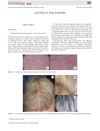
May 2018 in “Australasian Journal of Dermatology” Some patients' hair grew back black and white after chemotherapy.
 November 2025 in “Eurasian journal of applied biotechnology”
 Combining L-cysteine, NAC, and a MET inhibitor significantly kills cervical cancer cells.
 July 2023 in “Dermatology practical & conceptual”
 Some lung cancer patients treated with EGFR inhibitors may develop a hair loss condition similar to folliculitis decalvans.
 16 citations
,
March 2015 in “Clinical Cancer Research”
16 citations
,
March 2015 in “Clinical Cancer Research” The document concludes that side effects from Smoothened inhibitor drugs for skin cancer are reversible and can be managed with a team approach to maintain quality of life.
 3 citations
,
October 2003 in “Annals of Oncology”
3 citations
,
October 2003 in “Annals of Oncology” A woman with low thyroid function did not lose her hair during chemotherapy, possibly because her hair follicles were less affected by the treatment.
 36 citations
,
May 2015 in “Australasian Journal of Dermatology”
36 citations
,
May 2015 in “Australasian Journal of Dermatology” Low dose oral minoxidil helps regrow hair in permanent chemotherapy-induced alopecia.
 9 citations
,
October 2014 in “Clinical and Experimental Dermatology”
9 citations
,
October 2014 in “Clinical and Experimental Dermatology” Temporary hair loss can occur after brain AVM treatment but usually regrows in 8 weeks.
 3 citations
,
February 2005 in “Journal of Quantitative Spectroscopy & Radiative Transfer/Journal of quantitative spectroscopy & radiative transfer”
3 citations
,
February 2005 in “Journal of Quantitative Spectroscopy & Radiative Transfer/Journal of quantitative spectroscopy & radiative transfer” Iron and zinc levels in hair are not linked to hair loss from chemotherapy.
 30 citations
,
August 2016 in “Advances in radiation oncology”
30 citations
,
August 2016 in “Advances in radiation oncology” Researchers developed a mouse model that successfully mimics the bladder damage seen in humans after radiation therapy.
 1 citations
,
January 2006 in “Elsevier eBooks”
1 citations
,
January 2006 in “Elsevier eBooks” Cats lose fur due to various reasons, including allergies, infections, genetics, hormones, diet, cancer, stress, and some conditions are treatable while others are not.
 7 citations
,
May 2016 in “SpringerPlus”
7 citations
,
May 2016 in “SpringerPlus” Some breast cancer patients on hormone therapy experience hair loss, and treatments like certain topical inhibitors and supplements may help without harming their cancer prognosis.
 97 citations
,
September 2006 in “Pharmaceutical Research”
97 citations
,
September 2006 in “Pharmaceutical Research” No treatment fully prevents hair loss from chemotherapy yet.