 September 2024 in “Seven Editora eBooks”
 Dermatophylosis sporadically affects adult sheep in Sertão da Paraíba, causing alopecic and crusty skin lesions.
 January 2026 in “The Pharma Innovation”
 A kitten with mange was cured using selamectin, shampoo, supplements, and ointment.
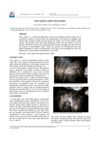
An adult Libyan woman was successfully treated for a rare scalp infection usually seen in children.
10 citations
,
November 1964 in “Zentralblatt für Veterinärmedizin Reihe A” Benign epithelial tumors in dogs don't spread or become cancerous.
 April 2023 in “Journal of Investigative Dermatology”
 An elderly woman's upper lip lump, thought to be a mucocele, was actually a rare type of lymphoma usually found on legs, treated successfully with chemotherapy and radiation.
January 2014 in “ACTA SCIENTIAE VETERINARIAE” The cat's skin condition was resistant to treatment and did not improve.
2 citations
,
January 2023 in “Frontiers in Veterinary Science” Buffalo flies and Stephanofilaria nematodes cause severe skin lesions in beef cattle, and treatment should target both.
 April 2023 in “Jurnal Sain Veteriner”
 A young Persian cat had a skin infection and low platelets, treated with various medications.
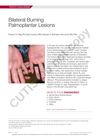
The woman was diagnosed with lichen sclerosus, a rare skin condition, after initial misdiagnosis and ineffective treatments.
 3 citations
,
May 2018 in “The American Journal of Medicine”
3 citations
,
May 2018 in “The American Journal of Medicine” A woman's long-term scalp issues were diagnosed as a rare skin disorder called cutaneous Langerhans cell histiocytosis.
 1 citations
,
July 2022 in “BMJ Case Reports”
1 citations
,
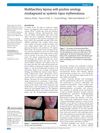
July 2022 in “BMJ Case Reports” A woman was wrongly diagnosed with lupus but actually had leprosy.
2 citations
,
January 2017 in “Indian dermatology online journal” A woman had a rare infection of both white piedra and head lice, which improved after 10 weeks of antifungal treatment.
September 2013 in “Helda (University of Helsinki)” Mutations in specific genes cause certain congenital defects in dogs, aiding in understanding similar human diseases.
6 citations
,
October 1998 in “PubMed” Antifungal treatment can improve severe skin infections with cutaneous horns.
 October 2023 in “Russian Journal of Veterinary Pathology”
 Microneedling, oral melatonin, trilostane, and deslorelin acetate implants are the best treatments for alopecia X in dogs.
 January 2008 in “Pratique médicale & chirurgicale de l'animal de compagnie”
 Alopecia X in dogs is a cosmetic issue, not a hormonal disorder, and harmful treatments should be avoided.
33 citations
,
March 1996 in “Veterinary Quarterly” Amitraz effectively treated ferrets with demodicosis without side effects.
 January 2015 in “VetPharma”
 Alopecia X causes hair loss in young plush-coated dogs and can be treated with various therapies, but hair may regrow and then fall out again.
 January 2012 in “The Japanese Journal of Veterinary Dermatology”
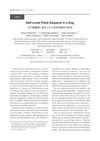
 The dog's hair loss healed on its own without treatment.
 August 2024 in “Indian Journal of Entomology”
 Rabbits with mange recovered after ivermectin treatment.
 31 citations
,
April 2018 in “Royal Society open science”
31 citations
,
April 2018 in “Royal Society open science” Sarcoptes scabiei infection causes significant health and behavior changes in wombats.
 1 citations
,
January 2013
1 citations
,
January 2013 About 20% of red foxes and jackals in western Iran have at least one type of ectoparasite, with fleas being the most common.
About 19% of foxes and 18% of jackals in southwest Iran have at least one type of ectoparasite, mainly fleas.
 28 citations
,
January 2022 in “PLoS ONE”
28 citations
,
January 2022 in “PLoS ONE” Sarcoptic mange nearly wiped out vicuñas and guanacos in an Argentine park.
 22 citations
,
September 2014 in “Veterinary Dermatology”
22 citations
,
September 2014 in “Veterinary Dermatology” Low-level laser therapy seems to help dogs with noninflammatory alopecia grow hair back.
3 citations
,
December 2004 in “PubMed” A fungal infection caused skin lesions in farmed mink kits, but they remained healthy.
 58 citations
,
November 2000 in “Journal of the American Veterinary Medical Association”
58 citations
,
November 2000 in “Journal of the American Veterinary Medical Association” Lufenuron effectively and quickly treats fungal infections in dogs and cats without side effects.
 4 citations
,
January 2017 in “Ciência Rural”
4 citations
,
January 2017 in “Ciência Rural” A horse in Brazil with skin and gut issues was diagnosed with a severe disease and had to be euthanized.
1 citations
,
September 2020 in “The Indian journal of veterinary sciences and biotechnology” Mange in camels causes blood and organ damage, especially in older females.
 October 2020 in “Our Dermatology Online”
 Chronic bacterial infections of hair follicles can cause ongoing skin inflammation.