55 citations
,
January 2000 in “Cell biochemistry and function” Alopecia patients have lower antioxidants and higher lipid damage in their blood.
December 2008 in “Al-Mağallaẗ al-ʻirāqiyyaẗ li-l-ṣaydalaẗ” Antioxidants improved hair growth in alopecia areata patients regardless of disease duration.
 January 2023 in “Journal for ReAttach Therapy and Developmental Diversities”
 Carthamus oxyacantha may help treat BPH by inhibiting 5α-reductase.
2 citations
,
April 2021 in “International Journal of Cosmetic Science” The sunscreen with two antioxidants offers quick and lasting skin protection from sun damage.
 December 2022 in “Acta Ophthalmologica”
 Dutasteride potentially improves cell survival and reduces retinal damage in retinitis pigmentosa.
1 citations
,
June 2025 in “Pharmacognosy Research” The F4 polyherbal sunscreen is a promising natural alternative with effective UV protection and antioxidant benefits.
 42 citations
,
August 1999 in “The American journal of pathology”
42 citations
,
August 1999 in “The American journal of pathology” Basal cell carcinomas have much higher levels of Vitamin D3 receptors compared to healthy skin.
14 citations
,
July 2022 in “Nutrients” Vitamin A is important for healthy skin and hair, influencing hair growth and skin healing, but UV light reduces its levels.
 November 2022 in “Journal of Investigative Dermatology”
 Dynlt3 is important for melanosome transport and skin coloration.
 36 citations
,
November 2018 in “BMC plant biology”
36 citations
,
November 2018 in “BMC plant biology” ROXY proteins help plants respond to nitrate shortage by affecting nutrient sensing and growth.

Lysine carboxymethyl cysteinate (LCC) protects skin from UVB damage by activating autophagy.
July 2025 in “Journal of Investigative Dermatology” Solid Lipid Particle technology makes retinol more stable, effective, and gentle on the skin.
January 1987 in “Toxicological sciences” SMR-2 and SMR-6 are much more toxic than retinoic acid, causing severe symptoms and organ damage in mice.
6 citations
,
December 1987 in “Mayo Clinic proceedings” Retinoids are effective for severe acne and psoriasis but can cause serious side effects and birth defects.
 March 2020 in “The journal of investigative dermatology/Journal of investigative dermatology”
 Suppressing very long chain fatty acids is linked to skin cancer.
4 citations
,
October 2025 in “Molecules” Fermented pumpkin extracts can be effective for anti-aging and skin protection.
June 2025 in “British Journal of Dermatology” Premature canities is linked to low vitamin D and B12, family history, and higher MHR.
24 citations
,
February 2022 in “Journal of Biological Chemistry” Carvacrol activates the TRPV3 channel, which may help design new skin treatments.
 3 citations
,
April 2014 in “Journal of Dietary Supplements”
3 citations
,
April 2014 in “Journal of Dietary Supplements” CARI ONE helps start hair growth and makes hair follicles bigger and more numerous.

Nanoformulations improve luteolin's effectiveness as a cancer treatment.
July 2025 in “JAAD Case Reports” June 2004 in “Journal of Investigative Dermatology” Increased pigmentation may protect skin from UVB, new targets for skin disease treatments were identified, sunscreen ingredients don't affect hormones, TNF-α inhibitors may help diabetic wounds, and certain treatments could prevent chemotherapy-induced hair loss.
1 citations
,
March 2021 in “F1000Research” Plant-based compounds might be effective, low-side-effect treatments for prostate cancer by blocking a specific enzyme.
3 citations
,
May 2021 in “Genetics and Biodiversity Journal” Citrullus colocynthis fruit extract has strong antioxidant and cancer-fighting potential.
 April 2018 in “Journal of Investigative Dermatology”
 Kaempferol helps skin stem cells grow and may improve skin thickness due to its 3-OH group.
December 2024 in “Naunyn-Schmiedeberg s Archives of Pharmacology”  10 citations
,
October 2018 in “Plant Biotechnology”
10 citations
,
October 2018 in “Plant Biotechnology” Researchers found two enzymes in Avicennia marina that help produce maslinic acid and corosolic acid, which have medicinal benefits.
8 citations
,
February 2025 in “Cell Systems” Engineered bacteria can deliver antioxidants to protect skin.
16 citations
,
January 1998 in “PubMed” Sun exposure and genetics increase skin cancer risk from precancerous lesions.
 August 2024 in “Journal of Dermatology & Cosmetology”
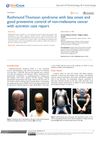
 Acitretin effectively prevented skin cancer in a patient with late-onset Rothmund-Thomson syndrome.