 61 citations
,
June 2010 in “European Journal of Pharmaceutics and Biopharmaceutics”
61 citations
,
June 2010 in “European Journal of Pharmaceutics and Biopharmaceutics” Cationic polymers improved liposome stability and increased skin absorption of aciclovir and minoxidil.
1 citations
,
August 1999 in “ACS symposium series” Polymer JR400 sticks to hair but washes off with detergent.
 1 citations
,
January 2015 in “ADMET and DMPK”
1 citations
,
January 2015 in “ADMET and DMPK” Hyaluronan is a good drug delivery material because it sticks to mucosal areas and its drug release can be improved by changing its properties.
3 citations
,
January 2002 in “Springer eBooks” Alkaline hair relaxers damage hair, but cationic and non-ionic polymers can help reduce this damage.
2 citations
,
December 1994 in “International Journal of Cosmetic Science” Polymer complexation makes hyaluronic acid stick to hair better, enhancing its moisturizing effects.
 68 citations
,
March 2002 in “Journal of pharmaceutical sciences”
68 citations
,
March 2002 in “Journal of pharmaceutical sciences” Nonionic liposomes are the best for delivering genes to skin cells.
November 2016 in “University of the Arts London Research Online (University of the Arts London)” Shampoos with polymers and dyes help maintain and enhance hair color vibrancy.
January 2011 in “Zhongguo nongye Kexue” Transgenic sheep cells with spider silk gene were successfully created for future sheep hair expression.
 40 citations
,
February 2002 in “International Journal of Dermatology”
40 citations
,
February 2002 in “International Journal of Dermatology” Permanent hair dye damages hair but it mostly recovers after 8 weeks; using certain hair care products can help repair it.
 17 citations
,
July 2019 in “Scientific reports”
17 citations
,
July 2019 in “Scientific reports” Surface and internal treatments can help prevent hair lipid loss during washing.
 13 citations
,
March 2006 in “International Journal of Cosmetic Science”
13 citations
,
March 2006 in “International Journal of Cosmetic Science” The study found that a polymer treatment changes the charge on hair surfaces, making bleached hair smoother and less porous.
Cassia HPTC is an effective hair conditioner, better than some traditional options.
5 citations
,
August 2016 in “International Journal of Cosmetic Science” Shampoo coacervates can cause scalp irritation due to released surfactants.
 2 citations
,
March 2005 in “International Journal of Cosmetic Science”
2 citations
,
March 2005 in “International Journal of Cosmetic Science” Human hair structure varies by ethnicity, and certain treatments can improve hair condition and appearance.
 2 citations
,
January 2004 in “PubMed”
2 citations
,
January 2004 in “PubMed” Conditioners with PQ-10 soften the flat part of hair cuticles but harden the edges.
1 citations
,
September 2008 in “International Journal of Cosmetic Science” Cassia HPTC is an effective hair conditioner, better than some traditional formulas.
 March 2005 in “International Journal of Cosmetic Science”
 DVI provides detailed 3D imaging of hair and shows how various products protect and enhance hair.
January 2010 in “EPub Bayreuth (University of Bayreuth)” Polyquaternium-87 reduces hair friction the most among tested polymers.
 43 citations
,
September 2001 in “Scanning”
43 citations
,
September 2001 in “Scanning” Hair treatments like bleaching increase friction by exposing tiny pores on the hair surface.
 1 citations
,
March 2005 in “International Journal of Cosmetic Science”
1 citations
,
March 2005 in “International Journal of Cosmetic Science” Twisting hair weakens it, but strength can be recovered at low twist levels.
 March 2005 in “International Journal of Cosmetic Science”
 A new method helps understand hair shine and various products improve hair care.
Modern shampoos use a mix of surfactants and other ingredients to clean, reduce irritation, and improve performance.
 7 citations
,
August 2022 in “Journal of Nanobiotechnology”
7 citations
,
August 2022 in “Journal of Nanobiotechnology” Advancements in nanoformulations for CRISPR-Cas9 genome editing can respond to specific triggers for controlled gene editing, showing promise in treating incurable diseases, but challenges like precision and system design complexity still need to be addressed.
19 citations
,
July 2024 in “Drug Delivery” Polymer-based nanocarriers can improve acne treatment by delivering drugs through hair follicles more effectively.
January 2009 in “Xumu shouyi xuebao” Sheep cells were successfully modified to include a spider silk protein gene.
1 citations
,
January 2004 in “Cosmetics and toiletries” Polyquaternium-64 helps damaged hair look healthy again.
 1 citations
,
July 2019 in “Microscopy Today”
1 citations
,
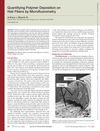
July 2019 in “Microscopy Today” Microfluorometry effectively measures how much polymer coats and penetrates hair, useful for evaluating hair products.
 4 citations
,
November 2017 in “Journal of Cosmetic Dermatology”
4 citations
,
November 2017 in “Journal of Cosmetic Dermatology” Certain polymers can stick to hair and increase volume, working best at a pH of 7 to 9.
 42 citations
,
January 2009 in “Colloids and Surfaces B: Biointerfaces”
42 citations
,
January 2009 in “Colloids and Surfaces B: Biointerfaces” A certain surfactant sticks to human hair, making it change from water-repelling to water-attracting, which could help in hair conditioning.
 263 citations
,
February 2013 in “Wiley interdisciplinary reviews. Nanomedicine and nanobiotechnology”
263 citations
,
February 2013 in “Wiley interdisciplinary reviews. Nanomedicine and nanobiotechnology” Polymeric nanoparticles show promise for treating skin diseases.