High CCL11 levels may indicate poor response to baricitinib in severe alopecia areata.
58 citations
,
July 2018 in “Journal of Allergy and Clinical Immunology” Alopecia areata severity is linked to increased TH1 and TH2 activity.
 2 citations
,
April 2018 in “Journal of Investigative Dermatology”
2 citations
,
April 2018 in “Journal of Investigative Dermatology” Frontal fibrosing alopecia shows increased inflammation and JAK-STAT pathway activity without reduced hair proteins.
1 citations
,
September 2025 in “Frontiers in Immunology” Alopecia areata involves complex immune dysregulation, mainly driven by Th1 activity, suggesting broader treatment strategies.
September 2025 in “Figshare” Alopecia areata involves complex immune responses, suggesting broader treatments could help.
September 2025 in “Figshare” Alopecia areata involves complex immune activity, mainly Th1, with potential benefits from broader immune treatments.
September 2025 in “Figshare” Alopecia areata involves complex immune responses, suggesting broader treatments could help.
 September 2024 in “Archives of Medical Science”
 Alopecia areata is linked to immune system differences, with specific biomarkers like CXCL9 and CXCL10 being key for diagnosis and potential treatment targets.
 86 citations
,
April 2016 in “Nature Communications”
86 citations
,
April 2016 in “Nature Communications” Notch1 helps skin heal by attracting specific immune cells.
65 citations
,
December 2015 in “Experimental dermatology” Corticosteroid treatment reduces inflammation and alters hair keratins in alopecia areata.
42 citations
,
December 2011 in “The journal of immunology/The Journal of immunology” RANKL causes lymph nodes to grow by making certain cells multiply.
 40 citations
,
December 2012 in “PLoS ONE”
40 citations
,
December 2012 in “PLoS ONE” Removing Ctip2 in skin cells causes skin inflammation similar to atopic dermatitis.
 22 citations
,
August 2009 in “Evidence-based Complementary and Alternative Medicine”
22 citations
,
August 2009 in “Evidence-based Complementary and Alternative Medicine” The composition with carnitine, thioctic acid, and saw palmetto extract may effectively reduce inflammation in hair follicle cells.
11 citations
,
August 2021 in “Aging” Collagen and TGF-β2 help maintain hair cell shape and youthfulness.
 9 citations
,
July 2022 in “EMBO molecular medicine”
9 citations
,
July 2022 in “EMBO molecular medicine” Blocking certain immune signals can reduce skin damage from radiation therapy.
6 citations
,
November 2023 in “JCI Insight” Exogenous stem cells can effectively integrate into hair follicles, promoting hair growth.
June 2026 in “Immunity Inflammation and Disease” Dandruff involves inflammation and increased skin cell growth, not just flaking.
Deucravacitinib improves symptoms and reduces inflammation in Lichen Planopilaris.
July 2024 in “Journal of Investigative Dermatology” OR101 may effectively treat atopic dermatitis and similar skin conditions.
October 2017 in “Journal of Investigative Dermatology” Pemphigus vulgaris involves specific immune cells and B cells that produce antibodies causing skin blisters.
 January 2014 in “Durham e-Theses (Durham University)”
 Notch1 helps skin heal by attracting cells that aid repair.
June 2005 in “Journal of Investigative Dermatology” A bull with a gene mutation was asymptomatic, synthetic retinoids cause hair loss, and new therapeutic targets were identified for skin diseases.
 68 citations
,
November 2015 in “The Journal of Allergy and Clinical Immunology”
68 citations
,
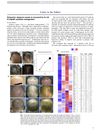
November 2015 in “The Journal of Allergy and Clinical Immunology” Blocking IL-12/IL-23p40 helped reverse severe hair loss in patients.
 April 2018 in “Journal of Investigative Dermatology”
 Kaempferol helps skin stem cells grow and may improve skin thickness due to its 3-OH group.
 April 2018 in “Journal of Investigative Dermatology”
 Removing STAT5 from 3D-cultured human skin cells reduces their ability to grow hair.
 April 2018 in “Journal of Investigative Dermatology”
 Ginsenoside Rd may help improve skin aging by increasing collagen in the skin.
 April 2018 in “Journal of Investigative Dermatology”
 Aging reduces skin cell renewal and defense against germs due to TGFbeta, but blocking TGFbeta could help restore these functions.
 April 2018 in “Journal of Investigative Dermatology”
  36 citations
,
January 2021 in “Scientific Reports”
36 citations
,
January 2021 in “Scientific Reports” Key genes and pathways, including Wnt, NF-Kappa, and JAK-STAT, are crucial for starting Pashmina fiber growth in goats.
 3 citations
,
May 2019 in “Cytotherapy”
3 citations
,
May 2019 in “Cytotherapy” ATIR101 improves survival in stem cell transplant patients; Australian stem cell treatment decisions are influenced by regulation changes.