 9 citations
,
January 2017 in “Virchows Archiv”
9 citations
,
January 2017 in “Virchows Archiv” LGR5 and LGR6 are expressed differently in various skin tumors, which may offer clues about their origins.
 December 2025 in “Babcock University Medical Journal”
 CD27 and IL-35 can help diagnose alopecia areata linked to bacterial infections.
42 citations
,
August 1995 in “British journal of dermatology/British journal of dermatology, Supplement” RXR-alpha is strongly expressed in both normal and psoriatic skin and may help in skin cell differentiation and hair growth.
32 citations
,
February 2024 in “The Journal of Experimental Medicine” CXCL12+ fibroblasts help recruit neutrophils to fight skin infections.
November 2025 in “Journal of Investigative Dermatology”  4 citations
,
January 2004 in “Biological and Pharmaceutical Bulletin”
4 citations
,
January 2004 in “Biological and Pharmaceutical Bulletin” AgK114 protein helps in hamster skin injury recovery.
 1 citations
,
December 2018 in “Journal of cutaneous pathology”
1 citations
,
December 2018 in “Journal of cutaneous pathology” Some skin growths with mucin can form hair follicles and resemble skin cancer, but a special stain can help tell them apart.
7 citations
,
May 1993 in “Journal of the European Academy of Dermatology and Venereology” Cell adhesion molecules are important in the development of certain skin diseases.
5 citations
,
February 2024 in “Journal of Investigative Dermatology” Alopecia areata patients have fewer protective regulatory B cells, which may contribute to the disease.
December 2023 in “Journal of Investigative Dermatology” A specific type of immune cell plays a key role in causing alopecia areata and could be a target for treatment.
 1 citations
,
April 2019 in “JAAD case reports”
1 citations
,
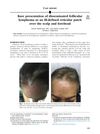
April 2019 in “JAAD case reports” A woman with lymphoma had a rare skin rash on her scalp and forehead, which was hard to diagnose but responded well to treatment.
 1 citations
,
August 2018 in “bioRxiv (Cold Spring Harbor Laboratory)”
1 citations
,
August 2018 in “bioRxiv (Cold Spring Harbor Laboratory)” A new mutation in the TMEM173 gene and a risk allele in IFIH1 cause a unique set of immune-related symptoms.
14 citations
,
February 2003 in “Journal of the American Academy of Dermatology” Folliculotropic mycosis fungoides can affect the central nervous system in advanced stages.
 September 2024 in “Journal of the American Academy of Dermatology”
 PRO-C22 can help diagnose and monitor the severity of hidradenitis suppurativa.
September 2024 in “Dokumentenrepositorium der RUB (Ruhr University Bochum)” Higher monocyte counts predict less effective adalimumab treatment in hidradenitis suppurativa patients.
 April 2026 in “Frontiers in Cell and Developmental Biology”
 CD200- cells in hair follicles have a higher ability to regenerate hair.
 2 citations
,
May 2023 in “Cancer medicine”
2 citations
,
May 2023 in “Cancer medicine” KRT80 may worsen cancer by increasing growth and spread, but its full effects on treatment and outcomes need more research.
 20 citations
,
November 2005 in “Journal of Investigative Dermatology Symposium Proceedings”
20 citations
,
November 2005 in “Journal of Investigative Dermatology Symposium Proceedings” IFN-γ and IL-2 are important for T cell activation in hair loss in mice.
 April 2019 in “The journal of investigative dermatology/Journal of investigative dermatology”
 Machine learning can predict how well patients with alopecia areata will respond to certain treatments.
20 citations
,
September 2003 in “Journal of Investigative Dermatology” Targeting MIG and MCP-1 may help treat inflammation in alopecia areata.
28 citations
,
February 2014 in “Journal of Cutaneous Pathology” Keratoacanthoma changes as it grows, showing different hair follicle characteristics at each stage.

Modern skin cancer treatments can cause skin side effects and hair loss, affecting patients' quality of life.
13 citations
,
August 2000 in “Blood” Measuring minimal residual disease on day 15 helps identify high-risk leukemia patients.
 68 citations
,
November 2011 in “The American journal of pathology”
68 citations
,
November 2011 in “The American journal of pathology” Abnormal Hedgehog signaling in blood cancers may help tumors grow and resist chemotherapy, suggesting potential for targeted treatments.
 September 1997 in “Journal of the European Academy of Dermatology and Venereology”
 People with acne have more CD4+ immune cells in their skin than healthy people.
July 2025 in “Journal of Investigative Dermatology” Complex basal cell carcinomas need personalized treatment due to unique genetic mutations.
33 citations
,
May 2018 in “Stem Cell Reports” Krt15+ cells in the mouse intestine resist radiation and can start tumors.
July 2024 in “Journal of Investigative Dermatology” Brepocitinib improves cicatricial alopecia and reduces key immune markers.
13 citations
,
August 1985 in “The Journal of Dermatology” HKN-2 antibody targets specific skin and hair cells, showing keratin complexity.
 November 2023 in “The journal of investigative dermatology/Journal of investigative dermatology”
 ARQ-234, a protein designed to treat atopic dermatitis, shows increased effectiveness in early testing.