January 2026 in “Scientific Reports” Certain blood cell ratios are higher in kids with alopecia areata and might help predict the disease.
 14 citations
,
March 2002 in “The journal of investigative dermatology/Journal of investigative dermatology”
14 citations
,
March 2002 in “The journal of investigative dermatology/Journal of investigative dermatology” Patients with severe alopecia areata have higher levels of MIF, which decrease after successful treatment.
13 citations
,
March 2014 in “Journal of Clinical Laboratory Analysis” Higher MIF levels in alopecia areata patients suggest it could be a treatment target and disease predictor.
 25 citations
,
August 2007 in “Molecular Therapy”
25 citations
,
August 2007 in “Molecular Therapy” Researchers found a safe and effective way to pick genetically modified skin cells with high growth potential using CD24.
 April 2023 in “The journal of investigative dermatology/Journal of investigative dermatology”
 People with alopecia areata have fewer IL-10 producing immune cells, which might contribute to the condition.
 12 citations
,
March 2004 in “International Journal of Dermatology”
12 citations
,
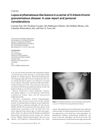
March 2004 in “International Journal of Dermatology” A woman with X-linked chronic granulomatous disease developed lupus-like skin lesions, improved with treatment, suggesting a unique skin condition in carriers.
 10 citations
,
July 2021 in “Archiv für Pathologische Anatomie und Physiologie und für Klinische Medicin”
10 citations
,
July 2021 in “Archiv für Pathologische Anatomie und Physiologie und für Klinische Medicin” LRIG1 is linked to better survival in Merkel cell carcinoma.
 February 2009 in “Journal of The American Academy of Dermatology”
 Certain immune system genes are linked to a higher risk of psoriasis and psoriatic arthritis, while others may offer protection.
 22 citations
,
February 2013 in “Wound Repair and Regeneration”
22 citations
,
February 2013 in “Wound Repair and Regeneration” Mice genetically modified to produce more CD109 in their skin had less inflammation and better healing with less scarring.
 January 2024 in “International Journal of Molecular Sciences”
 Blocking the protein CXCL12 with a specific antibody can increase hair growth in common hair loss conditions.

New methods efficiently isolate dermal papilla cells from hair follicles, preserving their characteristics better than traditional methods.
233 citations
,
October 2004 in “Differentiation” Stem cells are in deep skin layers, while differentiating cells are in shallow layers.
7 citations
,
February 2009 in “Cell and tissue biology” March 2025 in “Medical Science Journal for Advance Research” miR-155 levels in blood could help identify alopecia areata.
1 citations
,
September 2025 in “Frontiers in Immunology” Alopecia areata involves complex immune dysregulation, mainly driven by Th1 activity, suggesting broader treatment strategies.
July 2025 in “Journal of Investigative Dermatology” Enhancing Tregs can protect against alopecia areata.
 4 citations
,
April 2019 in “Cell Stem Cell”
4 citations
,
April 2019 in “Cell Stem Cell” Certain immune cells in the skin can stop hair from growing.
April 2017 in “The journal of investigative dermatology/Journal of investigative dermatology” Researchers found that certain miRNAs, which affect immune system regulation, are differently expressed in mice with a hair loss condition compared to healthy mice.

DOPE:DOPC liposomes can improve targeted cancer drug delivery, reducing side effects and increasing effectiveness.
Deleting the MAD2L1 gene in mice led to rapid tumor growth despite chromosomal instability.
 2 citations
,
December 2019 in “Al-ʻulūm al-ṣaydalāniyyaẗ”
2 citations
,
December 2019 in “Al-ʻulūm al-ṣaydalāniyyaẗ” The CTLA-4 gene change studied does not affect Polycystic Ovarian Syndrome in the women tested.
 30 citations
,
August 2021 in “Oncogene”
30 citations
,
August 2021 in “Oncogene” miR-22 helps skin cancer grow and spread by activating specific cell signals.
550 citations
,
December 2005 in “The Journal of clinical investigation/The journal of clinical investigation” Researchers successfully isolated and identified key markers of stem cell-enriched human hair follicle bulge cells.
 January 2019 in “ISGE series”
 Estrogen helps prevent artery plaque by stopping monocyte capture in blood vessels.
 January 2012 in “Journal of Investigative Dermatology”
 Small molecule DMF improves psoriasis and multiple sclerosis, adult skin cells can be made to grow new hair, certain skin cells initiate hair growth, IL-17C controls gut health and can cause skin inflammation, and skin cells produce IL-17 that can lead to psoriasis.
 5 citations
,
December 2017 in “Tissue and cell/Tissue & cell”
5 citations
,
December 2017 in “Tissue and cell/Tissue & cell” Researchers found stem cells in dog hair follicles using specific markers.
 April 2023 in “Authorea (Authorea)”
 A young woman with a rare skin cancer was diagnosed late because her symptoms were unusual for the disease.
1 citations
,
November 2018 in “immuneACCESS” Expanded CD8+ T cells are linked to Alopecia Areata and may cause relapse after treatment.
October 2024 in “Journal of the Endocrine Society” Recognizing macro-TSH is crucial to avoid unnecessary treatments.
1 citations
,
November 2016 in “Frontiers in neurology” Steroid treatment improved both gut and nerve symptoms in a man with Cronkhite–Canada syndrome.