June 2024 in “Clinical and Experimental Obstetrics & Gynecology” Blood count parameters are not reliable for predicting recurrent implantation failure.
7 citations
,
January 2021 in “bioRxiv (Cold Spring Harbor Laboratory)” Skin cells control immune cell placement, helping the skin respond better to challenges.
 21 citations
,
September 2021 in “Fertility and Sterility”
21 citations
,
September 2021 in “Fertility and Sterility” A blood test level of 3.2 ng/mL of Antimüllerian hormone is good for identifying polycystic ovarian morphology in European women aged 25–45.
 2 citations
,
November 1998 in “Journal of The European Academy of Dermatology and Venereology”
2 citations
,
November 1998 in “Journal of The European Academy of Dermatology and Venereology” Prednisone reduces organ mast cell infiltration but does not alter the abnormal appearance of mast cells in systemic mastocytosis.
5 citations
,
March 2020 in “Thoracic Cancer” CT-707 is effective and safe for treating certain Chinese lung cancer patients.
 6 citations
,
January 1985 in “ACTA HISTOCHEMICA ET CYTOCHEMICA”
6 citations
,
January 1985 in “ACTA HISTOCHEMICA ET CYTOCHEMICA” Tumor cells in calcifying epithelioma of Malherbe resemble hair follicle cells.
 April 2020 in “Research Square (Research Square)”
 Women with PCOS may have a reduced ability to fight breast tumor cells over time.
13 citations
,
December 2021 in “Journal of Cellular and Molecular Medicine” Exosome-enriched vesicles from placental cells improved skin condition in a patient with chronic graft-versus-host disease.
3D models from confocal microscopy improve melanoma detection on sun-damaged skin.
Higher PD-1 levels mean fewer CD8+ T cells in alopecia areata hair follicles.
6 citations
,
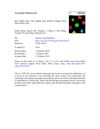
January 2023 in “International journal of molecular sciences” Mast cells and CD8 T cells interact closely in skin diseases, affecting each other's behavior and contributing to conditions like psoriasis and eczema.
 16 citations
,
February 2019 in “Gene”
16 citations
,
February 2019 in “Gene” Researchers found a good way to isolate hair follicle stem cells from newborn goats for further study.
 April 2017 in “Journal of Investigative Dermatology”
 Cow milk sugars increase fat production and inflammation in skin oil cells.
July 2026 in “Clinical Case Reports” ADMSC-derived exosomes may effectively treat steroid-resistant alopecia areata.
 April 2019 in “Journal of Investigative Dermatology”
 Non-coding RNA boosts retinoic acid production and signaling, aiding regeneration.
 May 2015 in “Actas Dermo-Sifiliográficas”
 A young man was unexpectedly diagnosed with basal cell carcinoma after a scalp examination and confocal microscopy.
 23 citations
,
December 2017 in “Scientific Reports”
23 citations
,
December 2017 in “Scientific Reports” ARL15 is important for fat cell development and the release of the hormone adiponectin.
 November 2023 in “Journal of Dermatological Science”
 Cells that move well may improve hair loss treatments by entering hair follicles.
 May 2024 in “British journal of dermatology/British journal of dermatology, Supplement”
 CYLD deficiency in skin tumors disrupts hair follicle cell processes and protein secretion.
28 citations
,
April 2024 in “Immunity” CD80 on skin stem cells helps expand Treg cells to aid wound healing.
 5 citations
,
January 2021 in “iScience”
5 citations
,
January 2021 in “iScience” Using a combination of specific cell cycle regulators is better for safely keeping hair root cells alive indefinitely compared to cancer-related methods.
1 citations
,
July 2025 in “Scientific Reports” CD133+ cells are crucial for hair growth.
 January 2024 in “Theranostics”
 Exosomes from special stem cells help treat ulcerative colitis by reducing inflammation and stress.
 8 citations
,
March 2020 in “Frontiers in Cell and Developmental Biology”
8 citations
,
March 2020 in “Frontiers in Cell and Developmental Biology” Researchers created immortal human skin cells with constant testosterone receptor activity to study hair loss and test treatments.
November 2023 in “Journal of Investigative Dermatology” Adipose stem cell exosomes may effectively treat atopic dermatitis by reducing inflammation and improving skin health.
15 citations
,
June 2020 in “The journal of investigative dermatology/Journal of investigative dermatology” Mice with extra human KLK14 had hair and skin problems, including weaker cell bonds and inflammation, linked to Netherton syndrome.
5 citations
,
February 2022 in “Molecular genetics & genomic medicine” New gene variants linked to a rare inherited hair loss disorder were found in three Chinese families.
 October 2017 in “Indian heart journal”
 Higher levels of small, dense LDL cholesterol are linked to a greater risk of heart attack in young adults.
January 2008 in “Zhongguo zuzhi gongcheng yanjiu yu linchuang kangfu” Vaginal mucosa stem cells can be effectively isolated and cultured using specific methods.
5 citations
,
March 2016 in “Experimental and molecular pathology” Mice with alopecia areata had wider lymphatic vessels in their skin.